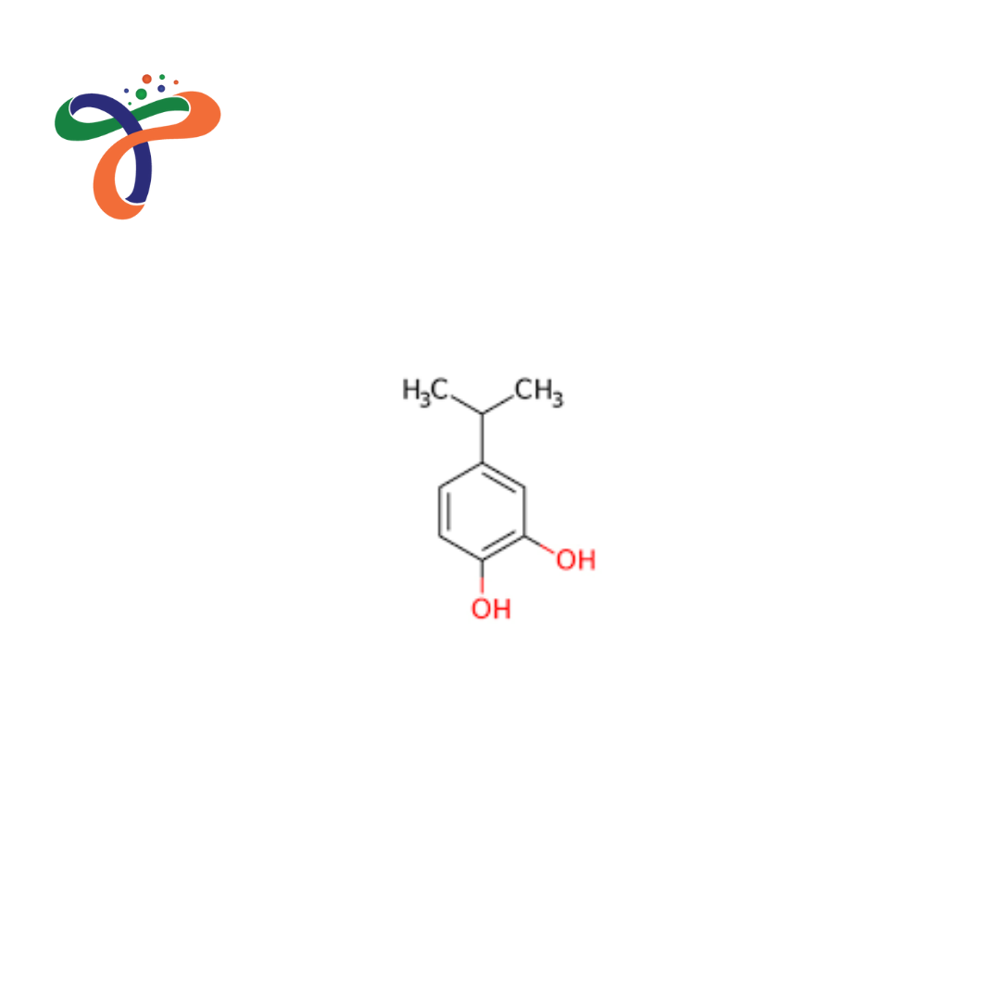
About 4-Isopropylcatechol (2138-43-4) (C9H12O2)
We are Supplier, Exporter and Contract Manufacturer.
Technical profile of 4-Isopropylcatechol, a high-purity raw chemical material supplied by Triveni Chemicals for industrial manufacturing and laboratory synthesis.
Technical Specifications:
CAS Number: 2138-43-4
Synonyms: 4-Isopropyl Pyrocatechol
Chemical Formula: C9H12O2
Industrial Uses & Applications:
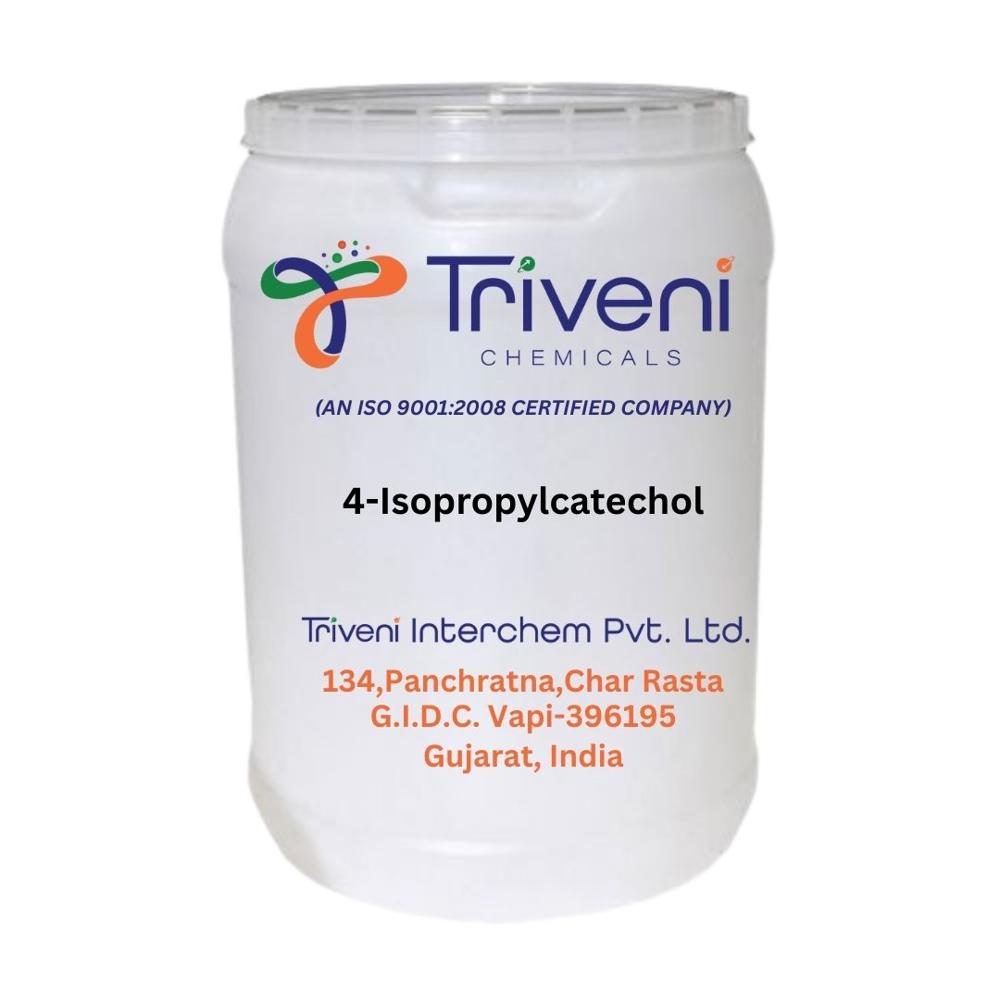
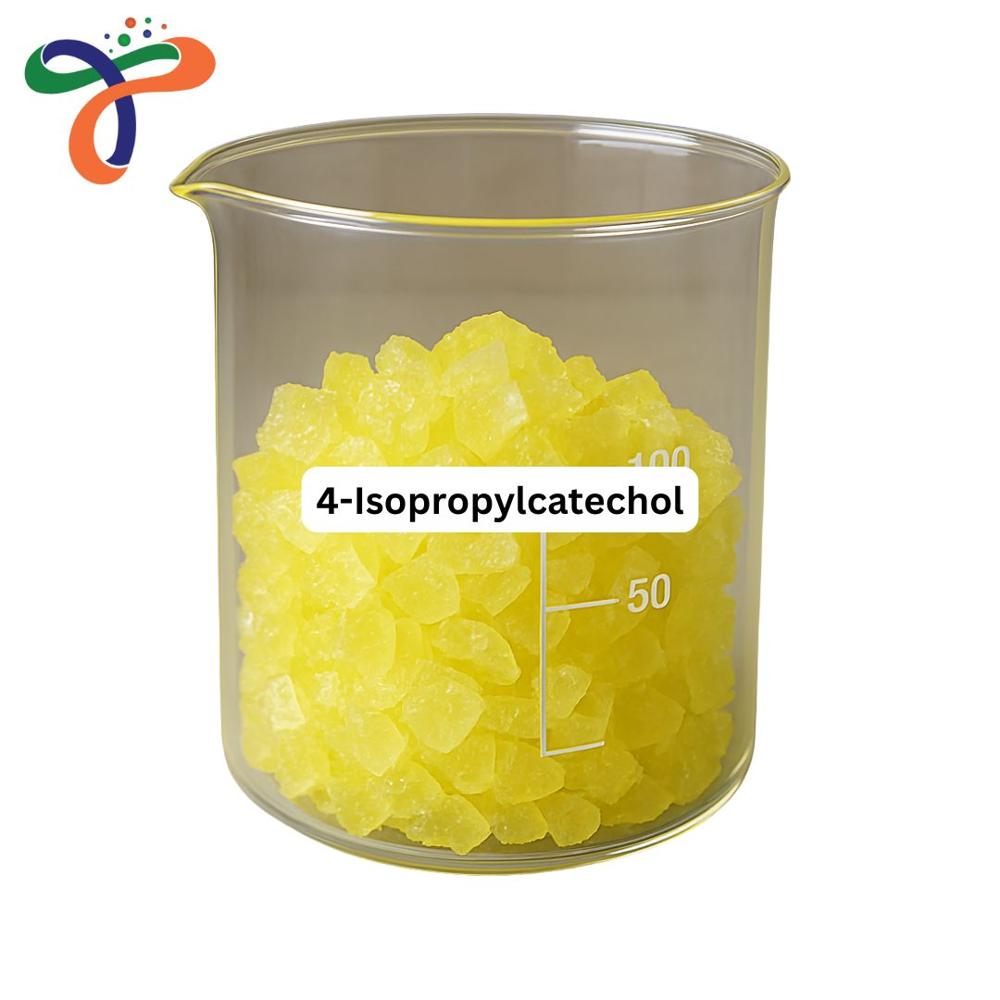
It Appears As A White To Pale Beige Crystalline Solid That May Darken On Exposure To Air Due To Oxidation. 4-Isopropylcatechol Is Primarily Used As A Polymerization Inhibitor And Antioxidant, Especially In The Manufacture And Storage Of Styrenic And Acrylic Monomers.
Applications in Industry4-Isopropylcatechol is extensively used as a flavor and fragrance intermediate, supporting fine chemical synthesis in the food and personal care sector. Additionally, it is a key ingredient in the manufacture of dyes and specialized polymers. Owing to its unique structure, it acts as a potent polymerization inhibitor, making it essential in stabilizing reactive monomers during storage and transportation.
Distinctive Chemical PropertiesThis compound stands out due to its substituted catechol core with an isopropyl group, conferring high stability and efficacy for industrial uses. Its melting point is 80C, with a refractive rate of 1.54. The solid is slightly soluble in water but dissolves well in organic solvents such as ethanol and acetone, broadening its utility in diverse laboratory and industrial settings.
FAQ's of 4-Isopropylcatechol (2138-43-4) (C9H12O2):
Q: How is 4-Isopropylcatechol commonly used in industrial applications?
A: 4-Isopropylcatechol is primarily utilized as a polymerization inhibitor in the chemical industry, helping to stabilize reactive monomers. It also serves as an intermediate in producing flavors, fragrances, dyes, and specialty polymers.
Q: What is the process of using 4-Isopropylcatechol as a polymerization inhibitor?
A: It is added to monomer storage containers to prevent undesired polymerization during storage and transportation, thereby maintaining the purity and usability of monomers for subsequent processing.
Q: When should 4-Isopropylcatechol be used during chemical synthesis?
A: It is typically introduced during the early stages of synthesis when there is a need to inhibit unwanted polymerization or as a building block when preparing specialty antioxidants, pharmaceuticals, or advanced materials.
Q: Where can 4-Isopropylcatechol be obtained for industrial use?
A: This compound can be sourced from chemical manufacturers and suppliers in India, known for delivering high-purity 4-Isopropylcatechol suitable for industrial and research needs.
Q: What are the benefits of using 4-Isopropylcatechol as an intermediate?
A: Its chemical stability and specialized structure enable effective inhibition of polymerization and facilitate the synthesis of high-value products, leading to improved safety, product quality, and process efficiency.
Q: How soluble is 4-Isopropylcatechol in various solvents?
A: 4-Isopropylcatechol is slightly soluble in water but readily dissolves in organic solvents such as ethanol and acetone, enhancing its applicability across different manufacturing processes.







 Send Inquiry
 Send Inquiry
 Send Inquiry
 Call Me Free
 English
 Spanish
 French
 German
 Italian
 Chinese (Simplified)
 Japanese
 Korean
 Arabic
 Portuguese