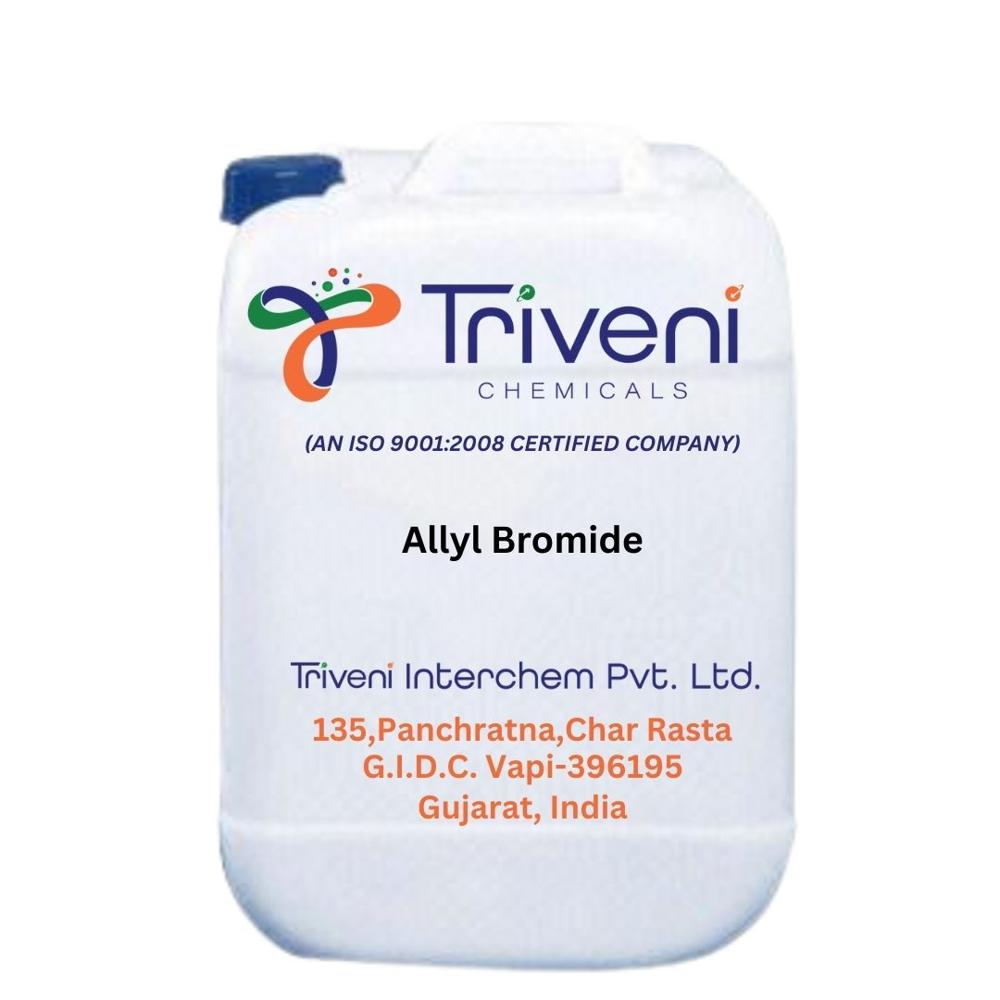
Allyl Bromide (106-95-6) About
We are Supplier, Exporter and Contract Manufacturer.
Technical profile of Allyl Bromide, a high-purity raw chemical material supplied by Triveni Chemicals for industrial manufacturing and laboratory synthesis.
Technical Specifications:
CAS Number: 106-95-6
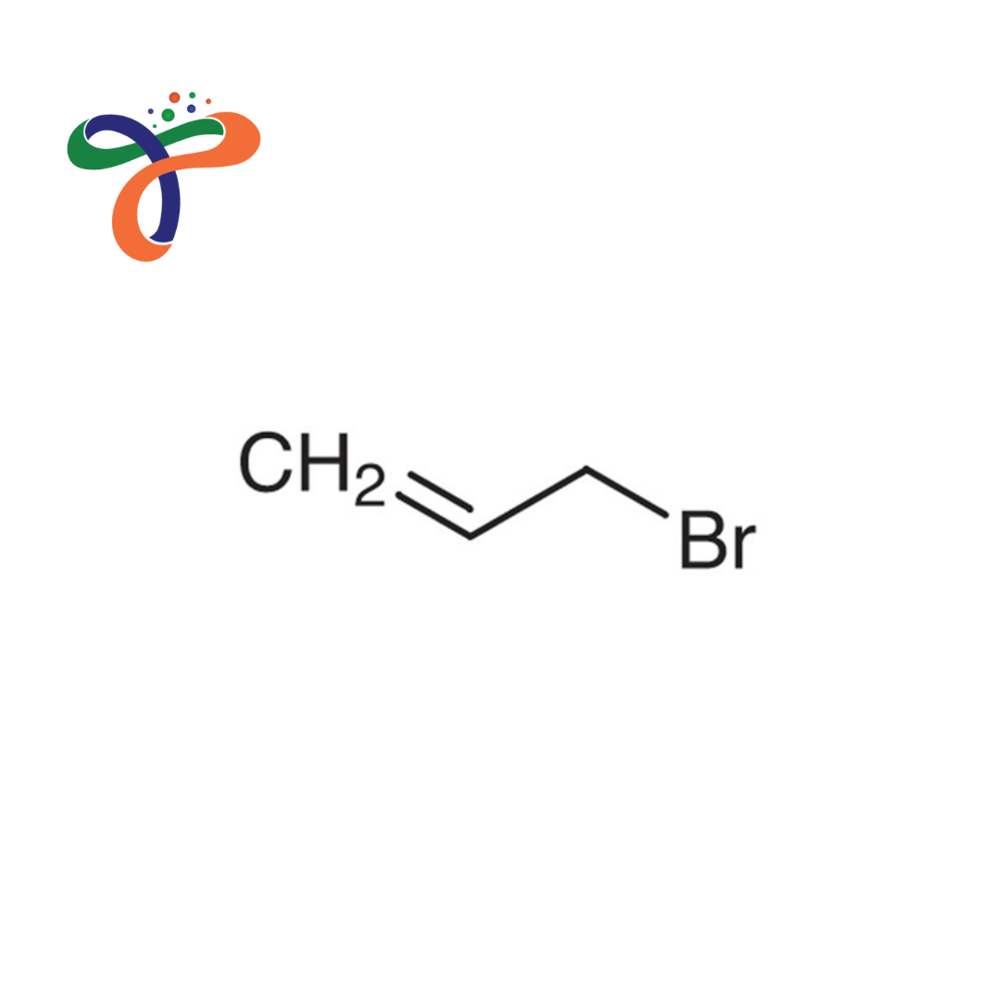
Synonyms: 3-Bromo-1-propene
Chemical Formula: C3H5Br
Industrial Uses & Applications:
It Is Widely Used As An Alkylating Agent And Intermediate In The Manufacture Of Pharmaceuticals, Agrochemicals, Resins, Plastic Additives, And Specialty Chemicals. Allyl Bromide Is An Unsaturated Alkyl Halide Containing Both A Carbon Carbon Double Bond And A Reactive Bromine Atom, Making It Highly Versatile In Substitution And Addition Reactions.
Versatile Applications in SynthesisAllyl Bromide is widely employed in organic synthesis for introducing allyl groups into various pharmacological agents, fine chemicals, and polymers. Its reactivity allows chemists to perform substitution reactions, enhancing compound diversity and functionality. This utility makes it a valuable asset in research and industrial production settings alike.
Safety and Handling PrecautionsDue to its classification as a toxic substance and its low flash point, Allyl Bromide requires enforced safety measures during transport and usage. Proper storage in sealed containers, ideally HDPE drums or glass bottles, and adherence to regulatory guidelines are vital to minimize harmful exposure and ensure workplace safety.
Stable Storage and Shelf LifeAllyl Bromide remains stable under typical storage conditions for up to two years when sealed. It decomposes on heating and must be kept away from strong oxidizers, acids, and bases. Ensuring appropriate storage conditions extends its shelf life and preserves product integrity for ongoing industrial needs.
FAQ's of Allyl Bromide (106-95-6):
Q: How should Allyl Bromide be safely stored and transported?
A: Allyl Bromide should be stored in tightly sealed HDPE drums or glass bottles away from direct heat, strong acids, bases, and oxidizing agents. During transport, it is classified as a hazardous (toxic) substance, so proper labeling and adherence to national and international regulations (UN 1099, Hazard Class 6.1) are mandatory to ensure safety.
Q: What are the primary uses and benefits of Allyl Bromide in industry?
A: Allyl Bromide's main advantage lies in its role as a reactive alkylating agent in organic synthesis. It is instrumental for introducing allyl groups into pharmaceuticals, polymers, and fine chemicals, enabling the creation of complex molecules and enhancing the functionality of materials.
Q: When is it advisable to use Allyl Bromide in chemical processes?
A: Allyl Bromide is most effectively used in controlled industrial or laboratory settings where its allyl group is needed to facilitate substitution reactions. It is especially beneficial when synthesizing compounds that require functional handles for further chemical modification.
Q: Where does compatibility become an issue with Allyl Bromide?
A: Compatibility issues arise when Allyl Bromide is exposed to strong oxidizing agents, acids, or bases. Such interactions can trigger hazardous reactions or decomposition, which is why it's essential to segregate it from incompatible substances during storage and handling.
Q: What precautions should be taken during the handling process of Allyl Bromide?
A: Handling Allyl Bromide requires the use of appropriate personal protective equipment, such as gloves and goggles, and working in a well-ventilated area or under a fume hood. Immediate action should be taken to contain any spills, and skin or eye contact must be avoided due to its toxic nature.
Q: What is the recommended shelf life and how can it be maximized?
A: When kept in sealed containers under prescribed storage conditions, Allyl Bromide can be safely stored for up to two years. To maximize its shelf life, avoid exposure to heat and incompatible chemicals, ensuring containers remain tightly closed when not in use.







 Send Inquiry
 Send Inquiry
 Send Inquiry
 English
 Spanish
 French
 German
 Italian
 Chinese (Simplified)
 Japanese
 Korean
 Arabic
 Portuguese