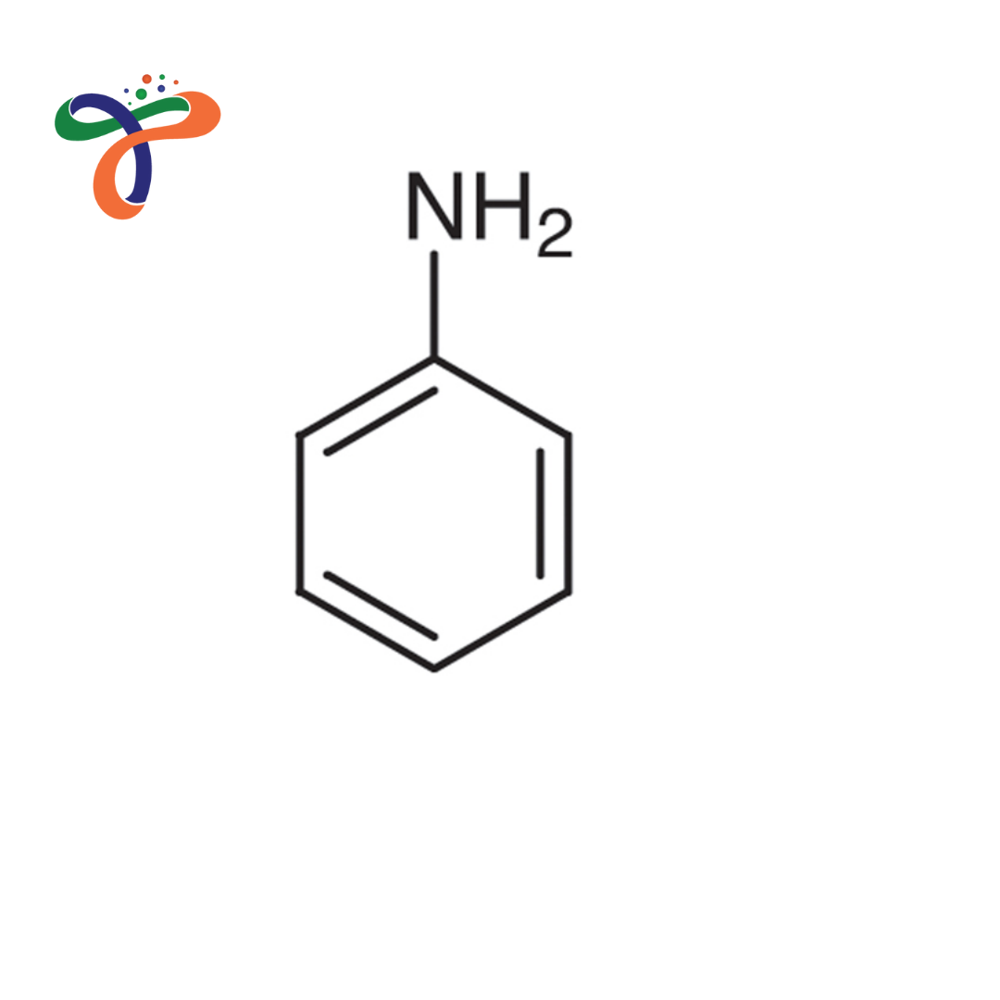
About Aniline (62-53-3) (C6H5NH2)
We are Supplier, Exporter and Contract Manufacturer.
Technical profile of Aniline, a high-purity raw chemical material supplied by Triveni Chemicals for industrial manufacturing and laboratory synthesis.
Technical Specifications:
CAS Number: 62-53-3
Synonyms: Benzenamine, Phenylamine, Aminobenzene
Chemical Formula: C6H5NH2
Industrial Uses & Applications:
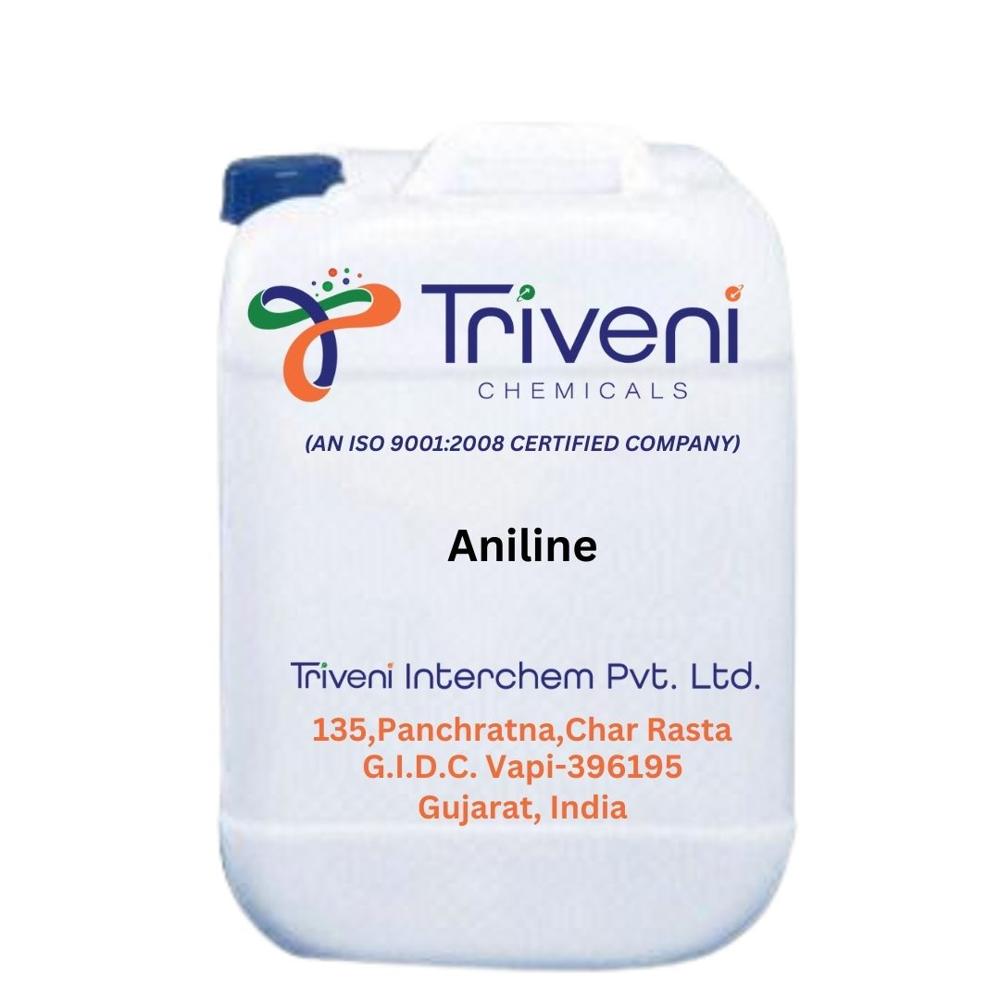
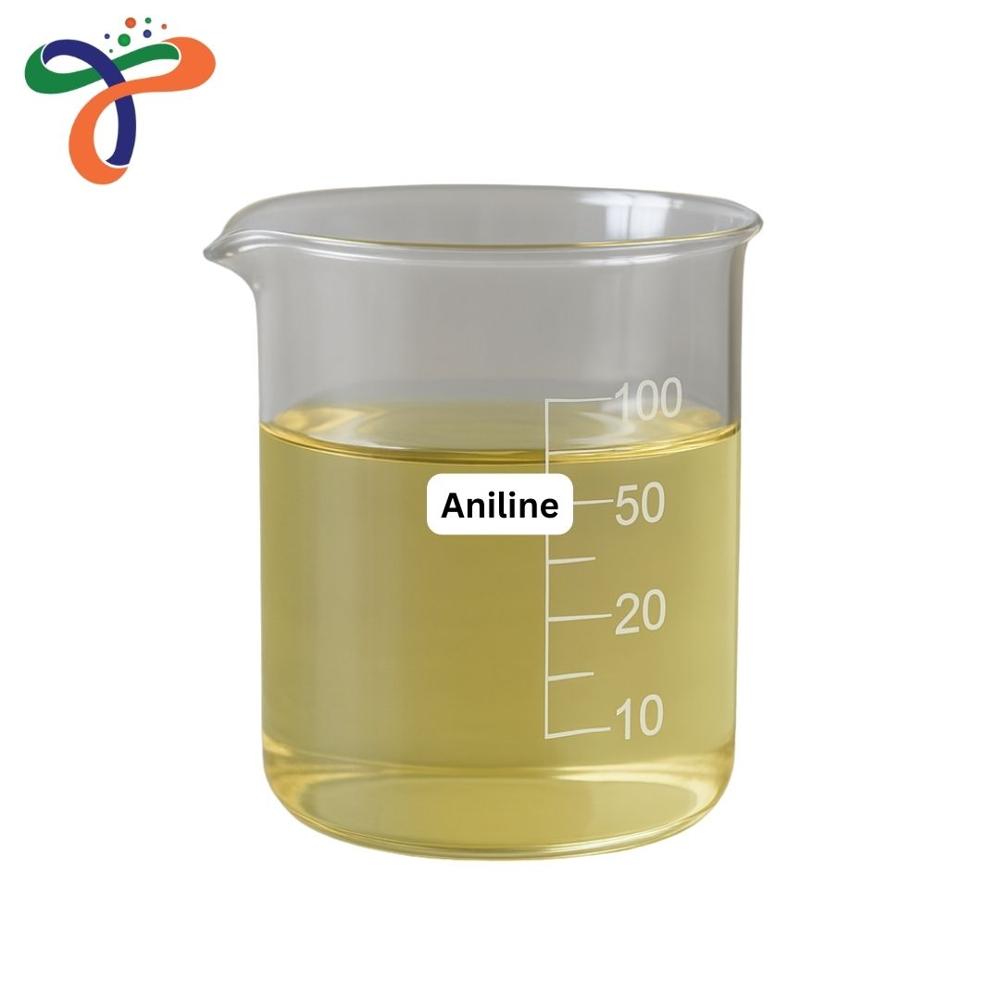
Aniline Is A Clear, Colorless To Pale Yellow Oily Liquid With A Characteristic Amine Like Odor That Darkens On Exposure To Air And Light. It Is A Key Aromatic Amine Used Primarily As An Intermediate In The Manufacture Of Dyes, Pigments, Pharmaceuticals, Agrochemicals, Rubber Processing Chemicals, And Polyurethane Precursors.
Key Industrial Applications of AnilineAniline is indispensable in the production of polyurethane foams through its role as a primary precursor for MDI. It also serves as a fundamental intermediate in the creation of a vast array of products, including dyes, pharmaceuticals, rubber processing chemicals, and high-performance agricultural aids. Its versatility makes aniline a core raw material in numerous global industrial sectors.
Physical and Chemical PropertiesWith a colorless to pale yellow appearance and a refractive index of 1.59, aniline is a slightly water-soluble liquid. It features a molecular weight of 93.13 g/mol and a melting point of -6C. Its solubility in ethanol, acetone, and ether enables broad compatibility with various chemical processes. High purity levels (99-99.5%) ensure suitability for sensitive applications.
FAQ's of Aniline (62-53-3) (C6H5NH2):
Q: How is aniline commonly used in the chemical industry?
A: Aniline is primarily used as a precursor for methylene diphenyl diisocyanate (MDI), which is essential for manufacturing polyurethane foams. Additionally, it serves as an intermediate in the synthesis of dyes, pharmaceuticals, rubber accelerators, and agricultural chemicals.
Q: What are the main benefits of using aniline as an intermediate?
A: Aniline's main benefits include its high reactivity and versatility, making it a valuable intermediate for producing a wide range of products. Its purity and chemical properties enable efficient synthesis of dyes, polymers, pharmaceuticals, and specialty chemicals.
Q: Where is aniline mainly applied in industrial processes?
A: Aniline is mainly applied in industries such as plastics (for polyurethane foams), dyes and pigments, pharmaceuticals, rubber processing, and agricultural chemicals. These applications exploit its ability to act as a chemical building block for various high-performance products.
Q: What physical form does aniline take and what are its solubility characteristics?
A: Aniline is supplied as a liquid, appearing colorless to pale yellow. It is slightly soluble in water but is completely miscible with acetone and ether, and soluble in ethanol. This allows it to be easily incorporated into numerous industrial reactions.
Q: How is aniline safely handled and stored in industrial settings?
A: Aniline should be handled with appropriate personal protective equipment due to its toxic nature. It must be stored in tightly closed containers in a cool, ventilated area away from sources of ignition and incompatible substances such as strong oxidizers.
Q: When should aniline be used in production processes?
A: Aniline should be used whenever a reliable and pure aromatic amine intermediate is needed in the synthesis of products like MDI, dyes, pharmaceuticals, or agricultural chemicals. Its selection depends on the desired end-product and process specifications.






 Send Inquiry
 Send Inquiry
 Send Inquiry
 Call Me Free
 English
 Spanish
 French
 German
 Italian
 Chinese (Simplified)
 Japanese
 Korean
 Arabic
 Portuguese