Back to top
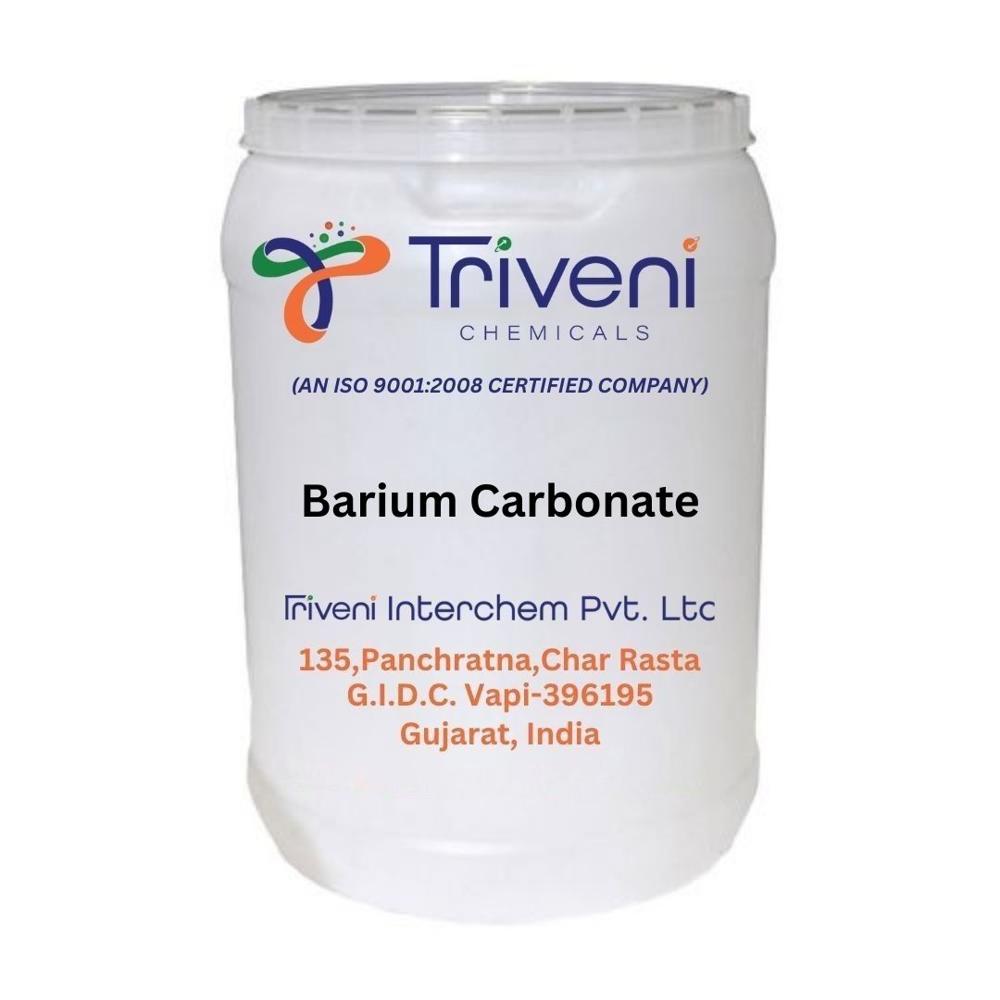
Barium Carbonate (513-77-9)

Barium Carbonate (513-77-9)

Price 80.0 INR/ Kilograms

MOQ : 25 Kilograms

Barium Carbonate (513-77-9) Specification

  • Appearance
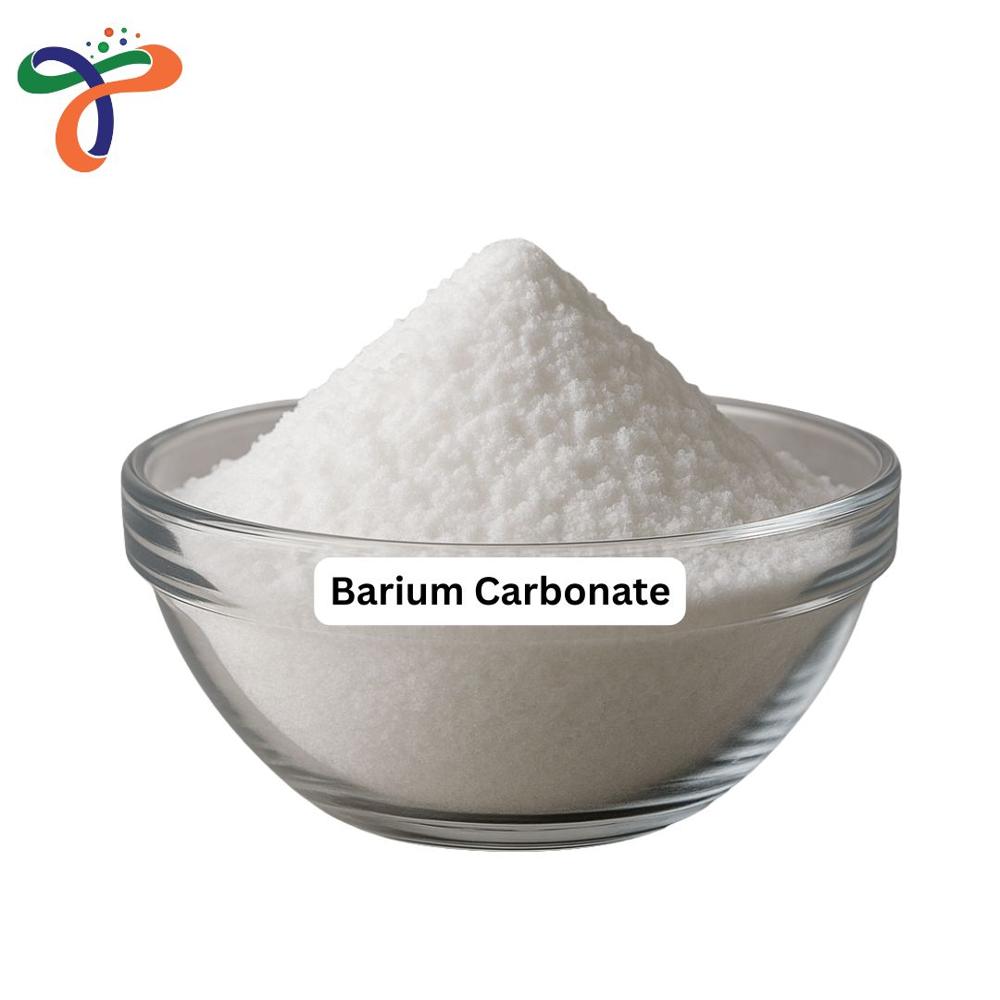
  • White crystalline powder
  • Usage
  • It is Used In Television And Computer Glass Screens To Improve Clarity And Durability. Acts As A Stabilizer In Explosive Formulations. Acts As A Deoxidizer And Helps Remove Unwanted Impurities During Steel Production. Plays A Role In Certain Semiconductor Processes.
  • Molecular Formula
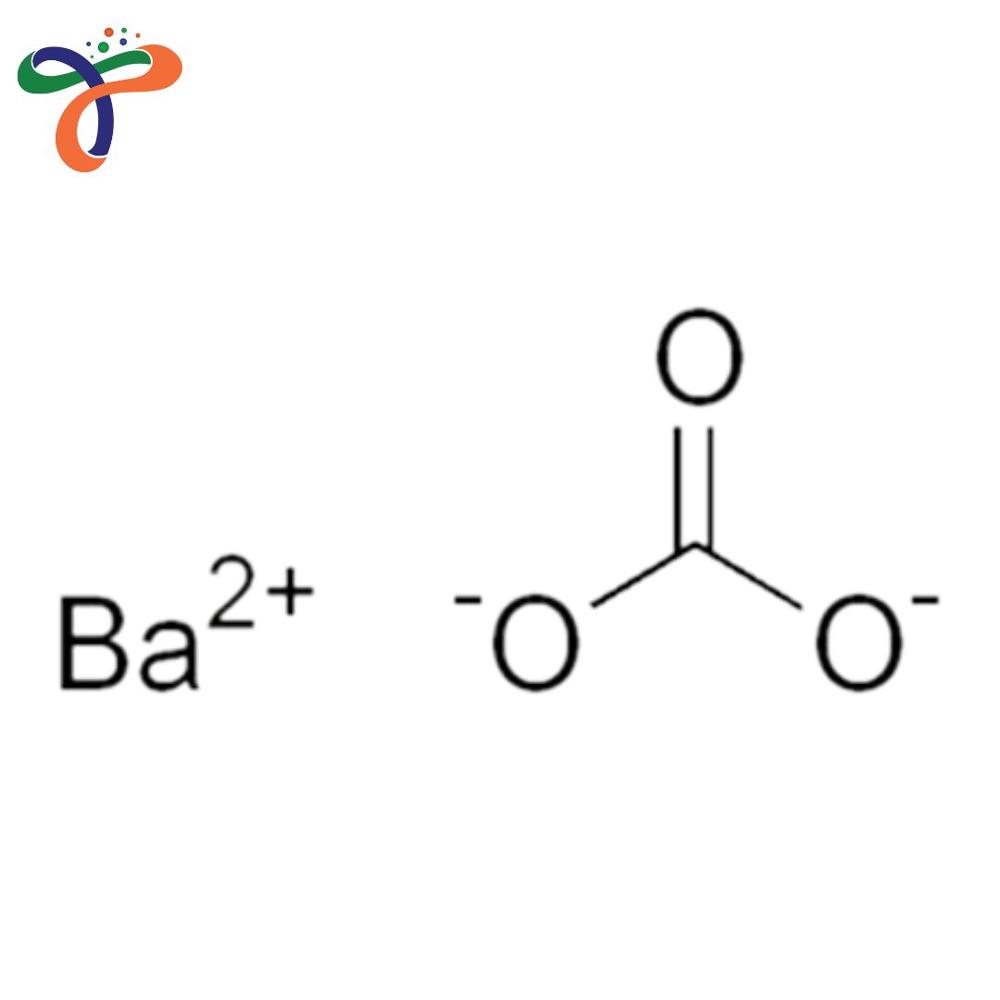
  • BaCO3
  • Melting Point
  • 811 C
  • Properties
  • Barium Carbonate (BaCO ) is a white crystalline inorganic compound that occurs naturally as the mineral witherite. It is insoluble in water but soluble in acids, making it useful in various industrial processes.
  • Structural Formula
  • BaCO3
  • Physical Form
  • Solid
  • Purity
  • 96-98%
  • Application
  • Industrial
  • Molecular Weight
  • 197.34 g/mol Grams (g)
  • Refractive Rate
  • 1.66
  • Solubility
  • Insoluble in water; soluble in acids
  • Grade
  • Industrial
  • CAS No
  • 513-77-9
  • USB Ports
  • 2
  • Viewing Angle
  • 178
  • Refresh Rate
  • 60 Hz
  • Smart TV Features
  • Built-in WiFi, Screen Mirroring
  • Remote Battery Type
  • AAA
  • Sleep Timer
  • Yes
  • Operating System
  • Android


About Barium Carbonate (513-77-9)

Barium Carbonate is Used In Television And Computer Glass Screens To Improve Clarity And Durability. Acts As A Stabilizer In Explosive Formulations. Acts As A Deoxidizer And Helps Remove Unwanted Impurities During Steel Production. Plays A Role In Certain Semiconductor Processes.

Exceptional Purity and Physical Characteristics

Barium Carbonate offered here boasts a purity range of 96-98%. It has a solid, white crystalline appearance, and is classified as an inorganic compound. With a notable melting point of 811C and insolubility in water (but soluble in acids), its physical and chemical properties ensure reliability in demanding industrial processes.


Versatile Industrial Applications

This compound serves multiple sectors-most prominently in glass manufacturing for television and computer screens, where it enhances clarity and durability. In steel production, it acts as a deoxidizer, removing impurities, while in explosives, it stabilizes formulations. Barium Carbonate's adaptability also extends to semiconductor processes, making it widely relevant.

FAQ's of Barium Carbonate:


Q: How is Barium Carbonate typically used in industrial processes?

A: Barium Carbonate is employed in various industries including glass manufacturing, steel production, explosives, and semiconductor fabrication. It serves as a deoxidizer, stabilizer, and quality enhancer for end products.

Q: What benefits does Barium Carbonate provide when added to glass for television and computer screens?

A: It improves the clarity, enhances durability, and augments the overall performance of glass screens, making them more resilient and visually clear for devices.

Q: When and where should Barium Carbonate be used in steel production?

A: It is incorporated during the purification phase in steel manufacturing. Barium Carbonate helps remove unwanted impurities as a deoxidizer, resulting in higher quality steel.

Q: What is the process for dissolving Barium Carbonate effectively?

A: Although insoluble in water, Barium Carbonate dissolves readily in acidic solutions. This property is leveraged in processes where it reacts with acids to facilitate further chemical uses.

Q: Where is this high-purity Barium Carbonate manufactured and supplied?

A: The product is manufactured and supplied in India, ensuring accessibility for domestic and international industrial applications.

Q: What is the CAS number and molecular formula for Barium Carbonate?

A: Barium Carbonate is registered under CAS number 513-77-9, with the molecular formula BaCO3.

Tell us about your requirement
product

Price:

Quantity
Select Unit

  • 50
  • 100
  • 200
  • 250
  • 500
  • 1000+
Additional detail
Mobile number

Email

More Products in Industrial Chemicals Category

Polysorbate 80

Polysorbate 80

Price 145.0 INR / Kilograms

Minimum Order Quantity : 1 Kilograms

Usage : Used to stabilize and improve the texture of emulsions in food and pharmaceutical preparations

Molecular Formula : C64H124O26

Properties : Nonionic surfactant, excellent emulsification, solubilizing agent, dispersing agent, stabilizer

Physical Form : Liquid

Ortho-Tolualdehyde (529-20-4)

Ortho-Tolualdehyde (529-20-4)

Price 3250.0 INR / Kilograms

Minimum Order Quantity : 1 Kilograms

Usage : Used in manufacturing of dyes, pharmaceuticals and specialty chemicals

Molecular Formula : C8H8O

Properties : Clear light yellow to yellowish liquid, aromatic odor, flammable

Physical Form : Liquid

Phthalimide (85-41-6) (C8H5NO2)

Phthalimide (85-41-6) (C8H5NO2)

Price 150.0 INR / Kilograms

Minimum Order Quantity : 1 Kilograms

Usage : Key intermediate in organic synthesis; precursor in Gabriel synthesis; used to prepare phthalimideprotected amines

Molecular Formula : C8H5NO2

Properties : Phthalimide is a white crystalline solid primarily used as a precursor in the synthesis of dyes, pigments, and agricultural chemicals, such as fungicides. It is a critical intermediate in the Gabriel synthesis for producing primary amines and serves as a building block for specialized polymers and pharmaceutical compounds.

Physical Form : Solid

Methanesulfonic Acid (75-75-2)

Methanesulfonic Acid (75-75-2)

Price 160.0 INR / Kilograms

Minimum Order Quantity : 1 Kilograms

Usage : Solvent and catalyst in organic synthesis; electrolyte in electrochemical cells; cleaning and descaling

Molecular Formula : CH4O3S

Properties : Methanesulfonic acid is a strong organic acid used as a versatile catalyst in esterification, alkylation, and polymerization reactions. It is favored in electroplating and pharmaceutical manufacturing due to its high solubility in water and organic solvents, nonoxidizing nature, and biodegradable properties compared to traditional mineral acids.

Physical Form : Powder