Back to top
Carvacrol (499-75-2) (C10H14O)

Carvacrol (499-75-2) (C10H14O)

Price 1800.0 INR/ Kilograms

MOQ : 25 Kilograms

Carvacrol (499-75-2) (C10H14O) Specification

  • Molecular Formula
  • C10h14o
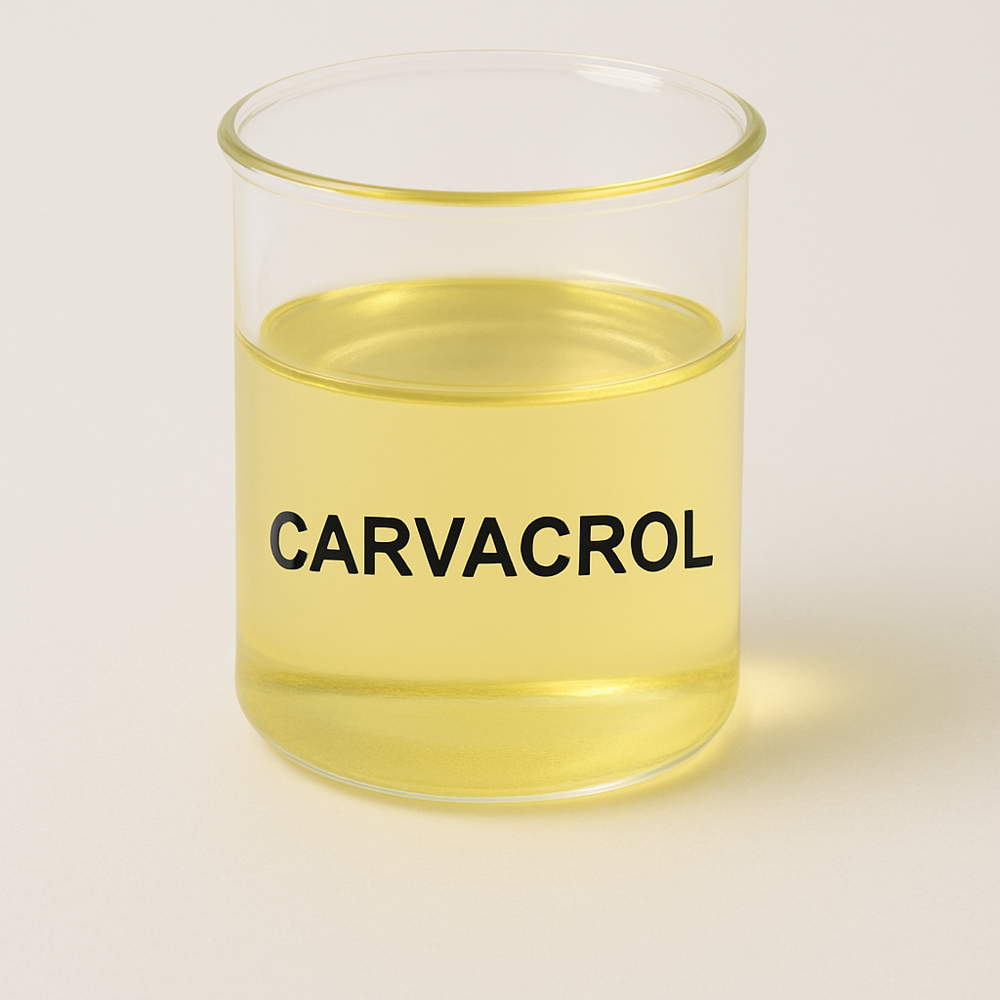
  • Appearance
  • Colorless to pale yellow liquid
  • CAS No
  • 499-75-2
  • Physical Form
  • Liquid
  • Purity
  • 98.00%
  • Molecular Weight
  • 150.22g/mol Grams (g)
  • Solubility
  • Chloroform,methanol
  • Melting Point
  • 3-4 c
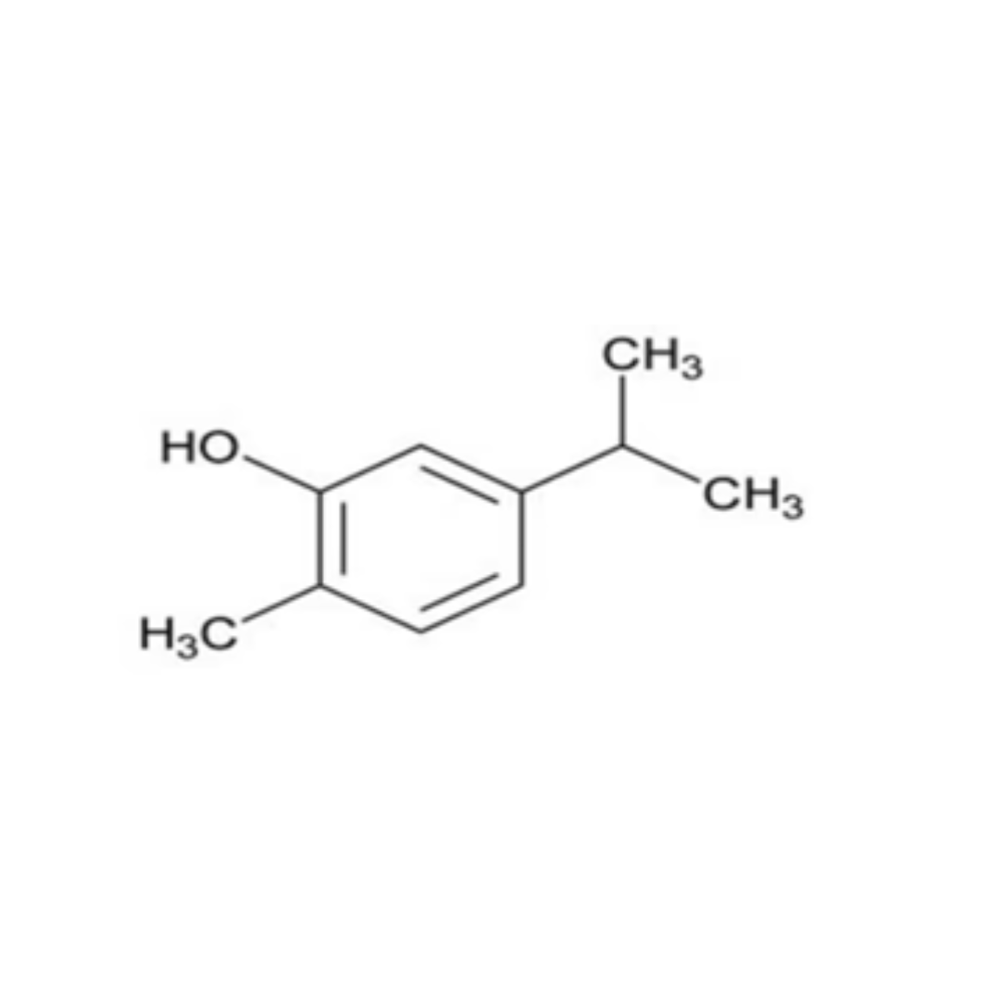
  • Structural Formula
  • C10h14o
  • Application
  • Other
  • Properties
  • Carvacrol is a natural monoterpenoid phenol found in oregano and thyme essential oils. It appears as a colorless to pale yellow liquid with a strong, warm, herbal odor.
  • Usage
  • Carvacrol is a natural monoterpenoid phenol found in oregano and thyme oils. It is widely used for its antimicrobial, antioxidant, and anti-inflammatory properties, making it valuable in food preservation, pharmaceuticals, personal care, and agriculture
 

Carvacrol (499-75-2) (C10H14O) Trade Information

  • Minimum Order Quantity
  • 25 Kilograms
  • Payment Terms
  • Cash in Advance (CID)
  • Supply Ability
  • 5000 Kilograms Per Month
  • Delivery Time
  • 10 Days
  • Main Domestic Market
  • All India
 

About Carvacrol (499-75-2) (C10H14O)

Carvacrol is a natural monoterpenoid phenol found in oregano and thyme oils. It is widely used for its antimicrobial, antioxidant, and anti-inflammatory properties, making it valuable in food preservation, pharmaceuticals, personal care, and agriculture

Natural Source and Composition

Carvacrol is most abundant in oregano and thyme oils, extracted as a monoterpenoid phenol. Its molecular formula, C10H14O, and liquid appearance help classify it as a valuable bioactive ingredient for multiple industries, thanks to its purity and potent properties.


Industrial and Commercial Applications

Carvacrol's antimicrobial, antioxidant, and anti-inflammatory actions support its use in preserving food, developing pharmaceuticals, and formulating personal care products. The compound is also gaining popularity in agriculture for its natural ability to manage various pests and pathogens safely.

FAQ's of Carvacrol (499-75-2):


Q: How is carvacrol typically obtained for industrial use?

A: Carvacrol is usually extracted from oregano and thyme essential oils through processes such as steam distillation, which concentrate its natural monoterpenoid phenol content for further industrial applications.

Q: What applications make use of carvacrol's properties?

A: Carvacrol is valued in food preservation for its antimicrobial effects, used in pharmaceuticals for its anti-inflammatory and antioxidant benefits, and features in personal care and agricultural products due to its natural bioactivity.

Q: When should carvacrol be incorporated into formulation processes?

A: Carvacrol should be introduced during the formulation stage where antimicrobial or antioxidant protection is needed, such as developing shelf-stable food items, preservative-enriched products, or health supplements.

Q: Where is carvacrol primarily sourced and manufactured?

A: Major sources of carvacrol include oregano and thyme plants, with manufacturing and supply concentrated in countries such as India, which produce high-purity carvacrol for local and global industries.

Q: What benefit does carvacrol offer in agricultural applications?

A: Carvacrol provides a natural alternative for crop protection by mitigating pests and pathogens, reducing reliance on synthetic agrochemicals, and offering environmentally friendly solutions for farmers and growers.

Q: Is carvacrol soluble in common solvents for laboratory processes?

A: Yes, carvacrol is soluble in chloroform and methanol, making it easy to handle and integrate into various laboratory or industrial processes that require these solvents.

Tell us about your requirement
product

Price:

Quantity
Select Unit

  • 50
  • 100
  • 200
  • 250
  • 500
  • 1000+
Additional detail
Mobile number

Email

More Products in Aroma Chemicals Category

Spilanthol (25394-57-4)

Spilanthol (25394-57-4)

Price 17400.0 INR / Kilograms

Minimum Order Quantity : 1 Kilograms

Structural Formula : (2E,6Z,8E)deca2,6,8trienoic acid isobutylamide

Usage : Applied topically or used as an active ingredient in oral and topical formulations

Properties : Alkylamide; local anesthetic and sialogogue

Physical Form : Liquid

Beta-Damascenone (23696-85-7) (C13H18O)

Beta-Damascenone (23696-85-7) (C13H18O)

Price 38400.0 INR / Kilograms

Minimum Order Quantity : 25 Kilograms

Structural Formula : C13H18O

Usage : Widely used in perfumery, cosmetics, and flavorings, it enhances fragrances and flavors, contributing to rose, apple, and fruity notes.

Properties : BetaDamascenone is a colorless to pale yellow liquid with a powerful, sweet, floral, and fruity aroma. It is highly soluble in alcohol and organic solvents but poorly soluble in water.

Physical Form : Liquid

Guaiacol (90-05-1) (C7H8O2)

Guaiacol (90-05-1) (C7H8O2)

Price 780.0 INR / Kilograms

Minimum Order Quantity : 25 Kilograms

Structural Formula : C7H8O2

Usage : Flavoring agent (smoky notes), fragrance ingredient, pharmaceutical intermediate (e.g., expectorants), antioxidant, precursor in vanillin synthesis

Properties : Guaiacol Is A Colorless To Pale Yellow Liquid With A Smoky, Phenolic Odor And The Chemical Formula C H O . It Is Sparingly Soluble In Water But Soluble In Organic Solvents. Chemically Stable And Moderately Volatile, Guaiacol Is Used As A Flavoring Agent, Fragrance Ingredient, And Chemical Intermediate In Food, Perfumes, And Pharmaceuticals.

Physical Form : Liquid

6-Methylcoumarin  (92-48-8) (C10H8O2)

6-Methylcoumarin (92-48-8) (C10H8O2)

Price 3300.0 INR / Kilograms

Minimum Order Quantity : 25 Kilograms

Structural Formula : C10H8O2

Usage : Fragrance ingredient (sweet, coumarinlike odor), flavoring agent, intermediate in dyes and pharmaceuticals

Properties : 6Methylcoumarin Is A White To Pale Yellow Crystalline Solid With A Sweet, HayLike, Coumarin Odor And The Chemical Formula C H O . It Is Sparingly Soluble In Water But Soluble In Organic Solvents. It Is Chemically Stable And Widely Used As A Fragrance Ingredient In Perfumes, Soaps, And Cosmetic Formulations.

Physical Form : Liquid