Chlorosulfonic Acid (7790-94-5) About
We are Supplier, Exporter and Contract Manufacturer.
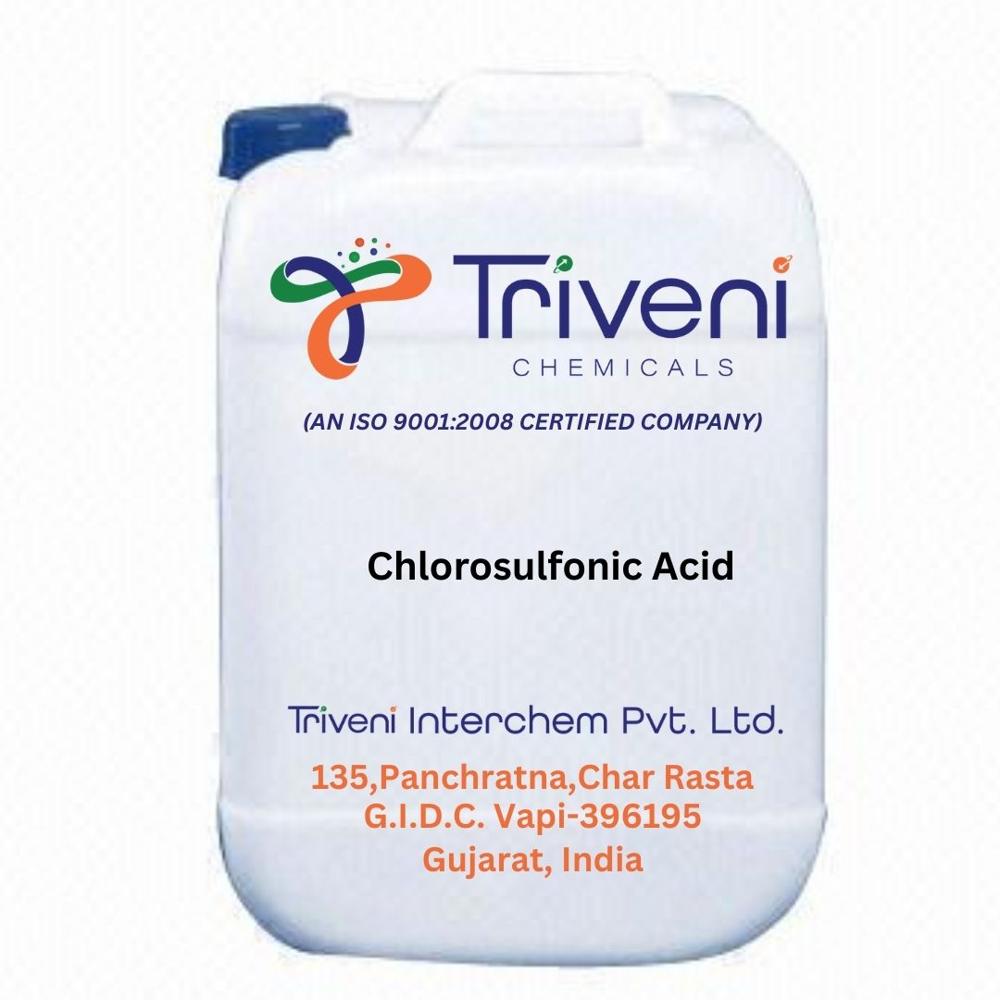
Technical profile of Chlorosulfonic Acid, a high-purity raw chemical material supplied by Triveni Chemicals for industrial manufacturing and laboratory synthesis.
Technical Specifications:
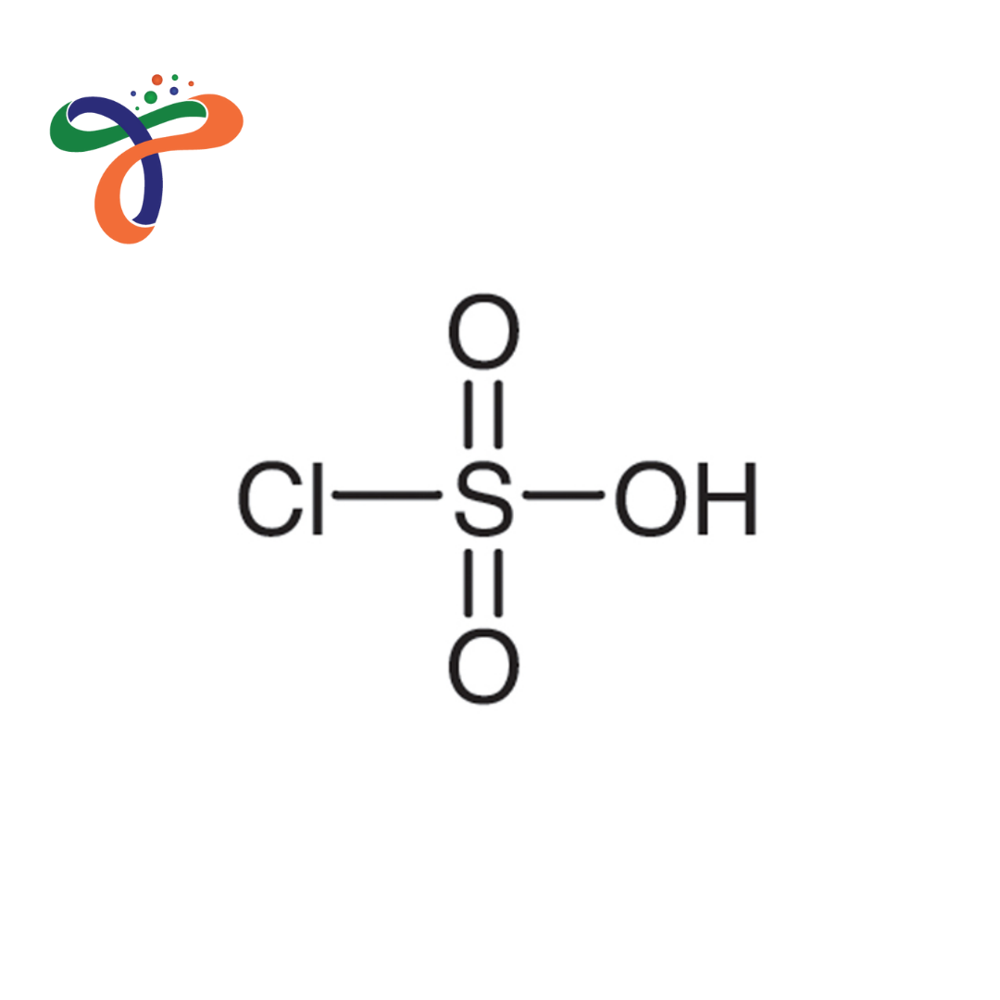
CAS Number: 7790-94-5
Synonyms: Sulfuric Chlorohydrin
Chemical Formula: ClHO3S
Industrial Uses & Applications:
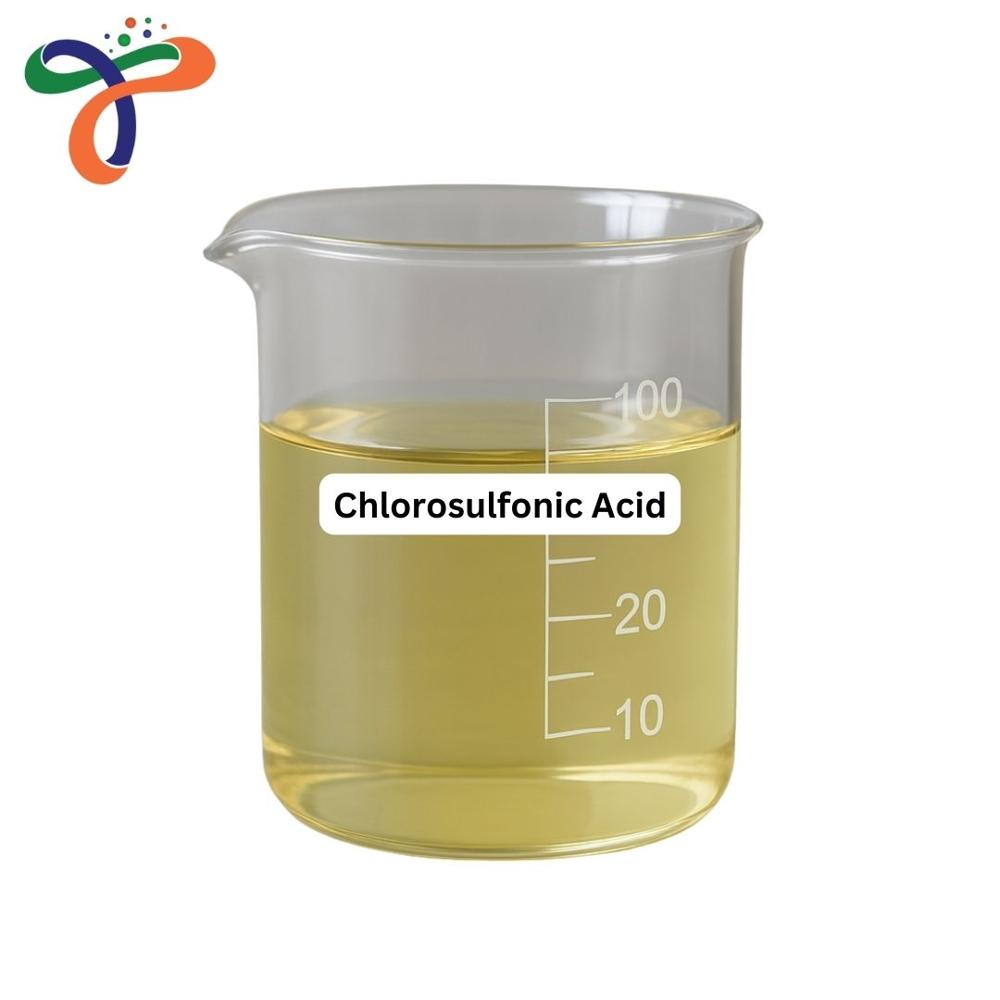
Chlorosulfonic Acid Is A Colorless To Pale Yellow, Fuming Liquid With A Very Sharp, Pungent Odor. It Is A Highly Reactive Sulfonating And Chlorinating Agent Widely Used In The Manufacture Of Dyes, Pharmaceuticals, Agrochemicals, Detergents, And Specialty Chemicals.
Highly Reactive Sulfonating AgentChlorosulfonic Acid stands out due to its exceptional sulfonating and chlorosulfonating power. Its high reactivity makes it indispensable in the synthesis of specialty chemicals and in the modification of polymers for industrial use. Its rapid, efficient action streamlines multiple manufacturing processes.
Diverse Industrial ApplicationsThis chemical plays a pivotal role across industries, notably in the formulation of detergents, synthesis of dyes and pharmaceuticals (including saccharin and sulfa drugs), and the creation of ion-exchange resins. Its ability to modify organic substrates makes it a staple for both large-scale manufacturing and innovative research.
Physical and Chemical PropertiesChlorosulfonic Acid presents as a colorless to pale yellow, fuming liquid with a refractive index of 1.46 and a melting point of -40C. Caution is essential-this substance reacts violently with water but mixes well with many organic solvents, ensuring it is handled under controlled conditions.
FAQ's of Chlorosulfonic Acid (7790-94-5):
Q: How should Chlorosulfonic Acid be handled during industrial processes?
A: Chlorosulfonic Acid must be handled with extreme caution in a well-ventilated area using protective equipment, as it reacts violently with water and releases toxic fumes. All transfers and reactions should be performed using dry equipment and appropriate containment to ensure safety.
Q: What are the main uses of Chlorosulfonic Acid in industrial settings?
A: This compound serves as a powerful sulfonating and chlorosulfonating agent, integral to the production of detergents, dyes, pharmaceuticals (such as saccharin and sulfa drugs), ion-exchange resins, and sulfonated polymers.
Q: When is Chlorosulfonic Acid typically used in organic synthesis?
A: It is employed when sulfonation or chlorosulfonation of organic compounds is required, often during the initial steps of manufacturing specialty chemicals, polymers, or pharmaceutical intermediates.
Q: Where should Chlorosulfonic Acid be stored to maintain stability?
A: Chlorosulfonic Acid must be kept in tightly sealed containers, stored in a cool, dry, and well-ventilated facility away from any sources of moisture or water to prevent hazardous reactions.
Q: What is the process for using Chlorosulfonic Acid in sulfonation reactions?
A: The acid is added slowly to the target compound under controlled, anhydrous conditions. The reaction vessel must be dry, and careful temperature management is essential to control the exothermic nature of the process.
Q: What benefits does Chlorosulfonic Acid provide to manufacturers?
A: Its strong sulfonating capability enables efficient synthesis of high-purity sulfonated products, reducing reaction times and improving yield in the manufacture of detergents, dyes, pharmaceuticals, and specialty polymers.






 Send Inquiry
 Send Inquiry
 Send Inquiry
 English
 Spanish
 French
 German
 Italian
 Chinese (Simplified)
 Japanese
 Korean
 Arabic
 Portuguese