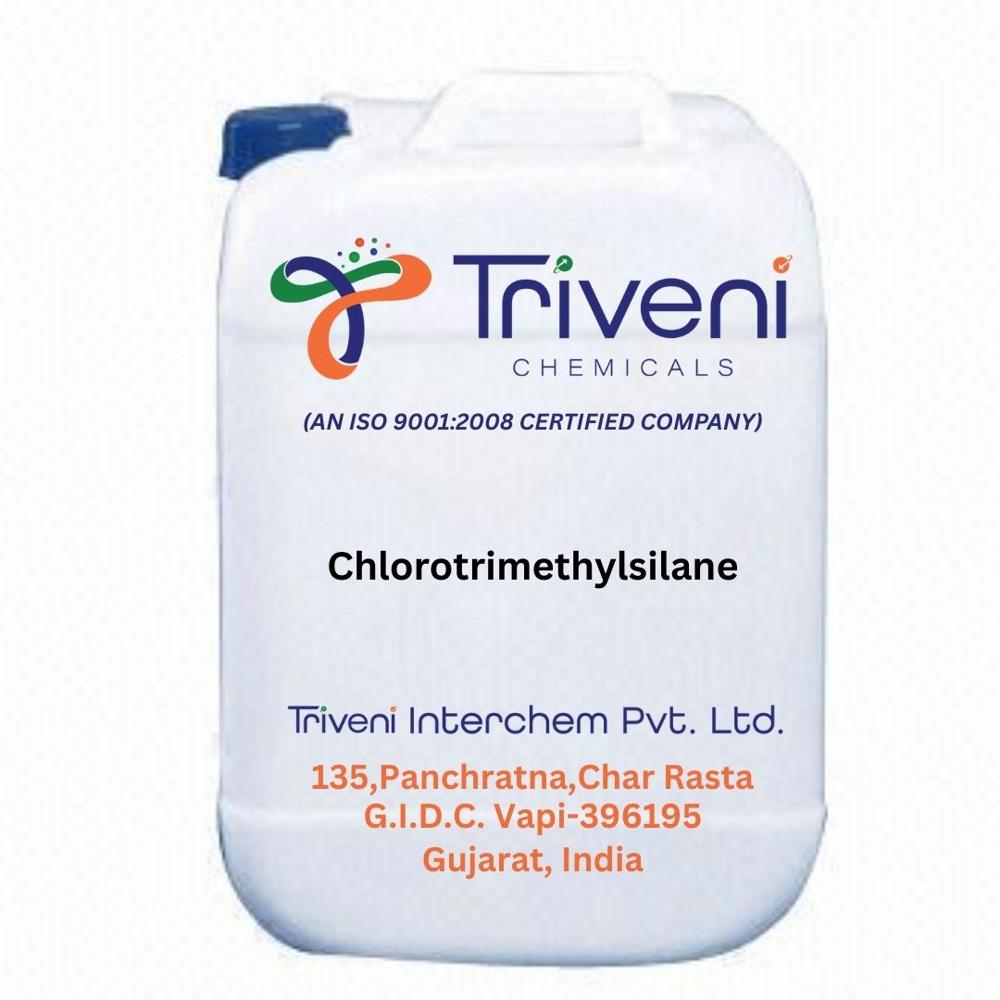
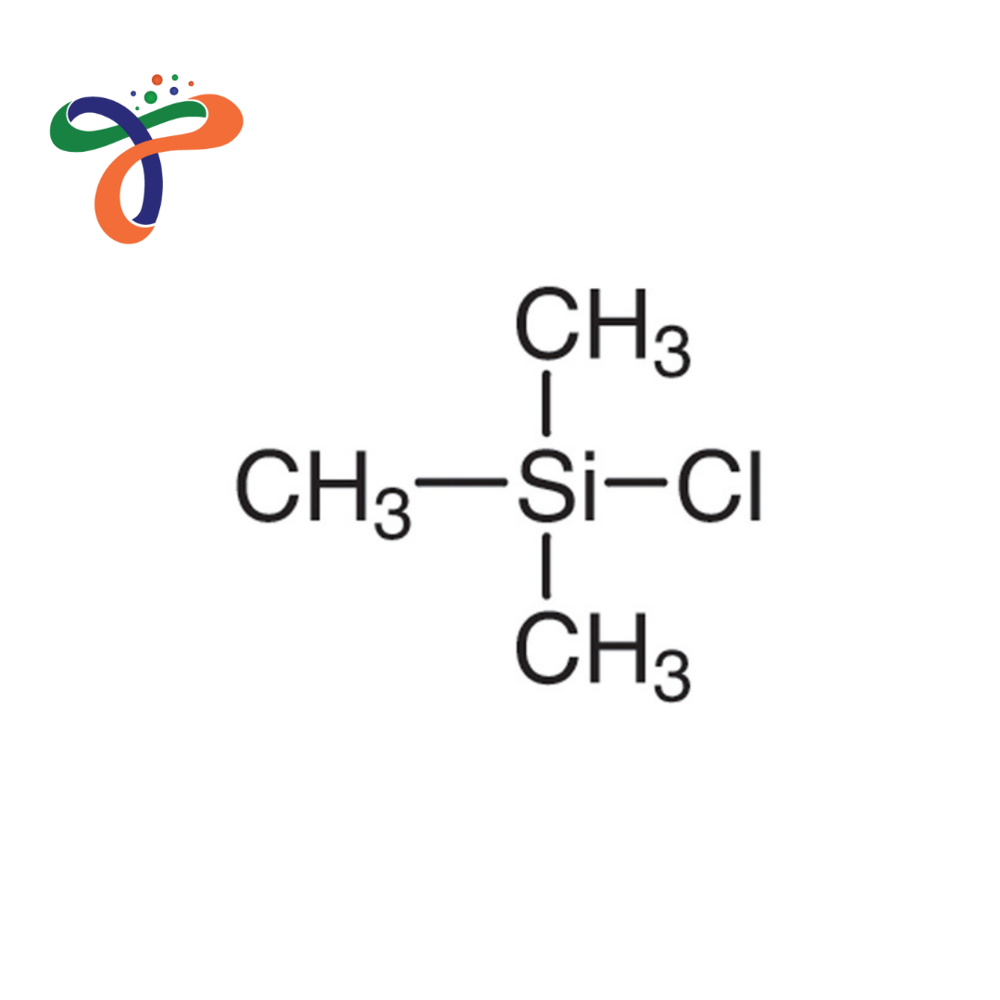
Chlorotrimethylsilane (75-77-4) (C3H9ClSi) About
We are Supplier, Exporter and Contract Manufacturer.
Technical profile of Chlorotrimethylsilane, a high-purity raw chemical material supplied by Triveni Chemicals for industrial manufacturing and laboratory synthesis.
Technical Specifications:
CAS Number: 75-77-4
Synonyms: Trimethylchlorosilane
Chemical Formula: C3H9ClSi
Industrial Uses & Applications:
It Is Widely Used As A Silylating Agent And Moisture Scavenger In Organic Synthesis, Pharmaceuticals, And Specialty Chemical Manufacturing. It Is A Reactive Organosilicon Compound That Readily Reacts With Water, Alcohols, And Amines, Releasing Hydrochloric Acid And Forming Trimethylsilyl Derivatives.
Essential Silylation ReagentChlorotrimethylsilane is valued in organic chemistry for its effectiveness in silylation reactions. Its ability to convert alcohols and amines into their corresponding trimethylsilyl ethers streamlines complex synthetic procedures, improving yield, selectivity, and ease of purification.
Versatility in Organic SynthesisAs an intermediate, Chlorotrimethylsilane enables the protection and functionalization of reactive groups, permitting multi-step synthesis without undesired side reactions. This versatility makes it indispensable in the manufacture of pharmaceuticals, agrochemicals, and advanced materials.
Physical and Chemical ProfileThis colorless liquid is characterized by a refractive index of 1.392 and a low melting point of -90C. It is insoluble in water due to its reactivity but dissolves readily in common organic solvents such as toluene and dichloromethane, enhancing its handling and application in laboratory and industrial settings.
FAQ's of Chlorotrimethylsilane (75-77-4) (C3H9ClSi):
Q: How is Chlorotrimethylsilane commonly used in organic synthesis?
A: Chlorotrimethylsilane is primarily used as a silylation reagent to protect functional groups like alcohols, amines, and terminal alkynes. By converting these groups into their stable trimethylsilyl derivatives, it makes complex synthetic operations more efficient and manageable.
Q: What is the process for using Chlorotrimethylsilane as a protecting agent?
A: In the presence of a suitable base, Chlorotrimethylsilane reacts with functional groups-such as alcohols or amines-to form trimethylsilyl ethers or derivatives. This process helps prevent unwanted reactions at those functional sites during subsequent synthetic steps.
Q: When should Chlorotrimethylsilane be applied in a multistep synthesis?
A: Chlorotrimethylsilane is typically introduced in the early stages of a multistep synthesis to temporarily mask reactive functional groups. This ensures selective reactivity and improved yields in later transformations.
Q: Where is Chlorotrimethylsilane sourced and supplied?
A: Chlorotrimethylsilane is manufactured and supplied by chemical suppliers, including those based in India, and is available in various grades suitable for industrial and research use.
Q: What are the key benefits of using Chlorotrimethylsilane?
A: The chief benefits are enhanced synthetic control, higher yields, and minimized side reactions in organic synthesis. Its efficiency in protecting groups accelerates complex chemical processes and simplifies purification steps.
Q: How should Chlorotrimethylsilane be stored and handled safely?
A: Chlorotrimethylsilane should be stored in tightly sealed containers, away from moisture and water, as it reacts violently with water. Use appropriate personal protective equipment and ensure good ventilation during handling to minimize exposure.







 Send Inquiry
 Send Inquiry
 Send Inquiry
 English
 Spanish
 French
 German
 Italian
 Chinese (Simplified)
 Japanese
 Korean
 Arabic
 Portuguese