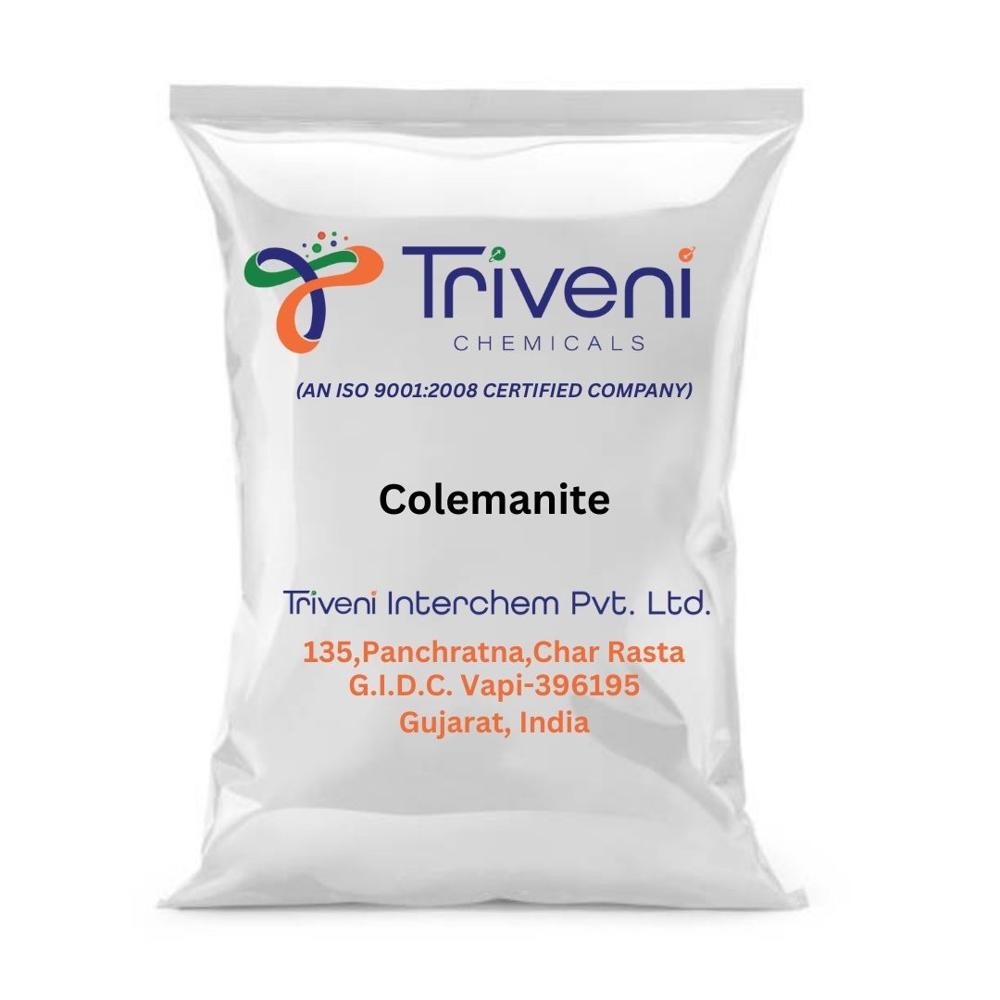
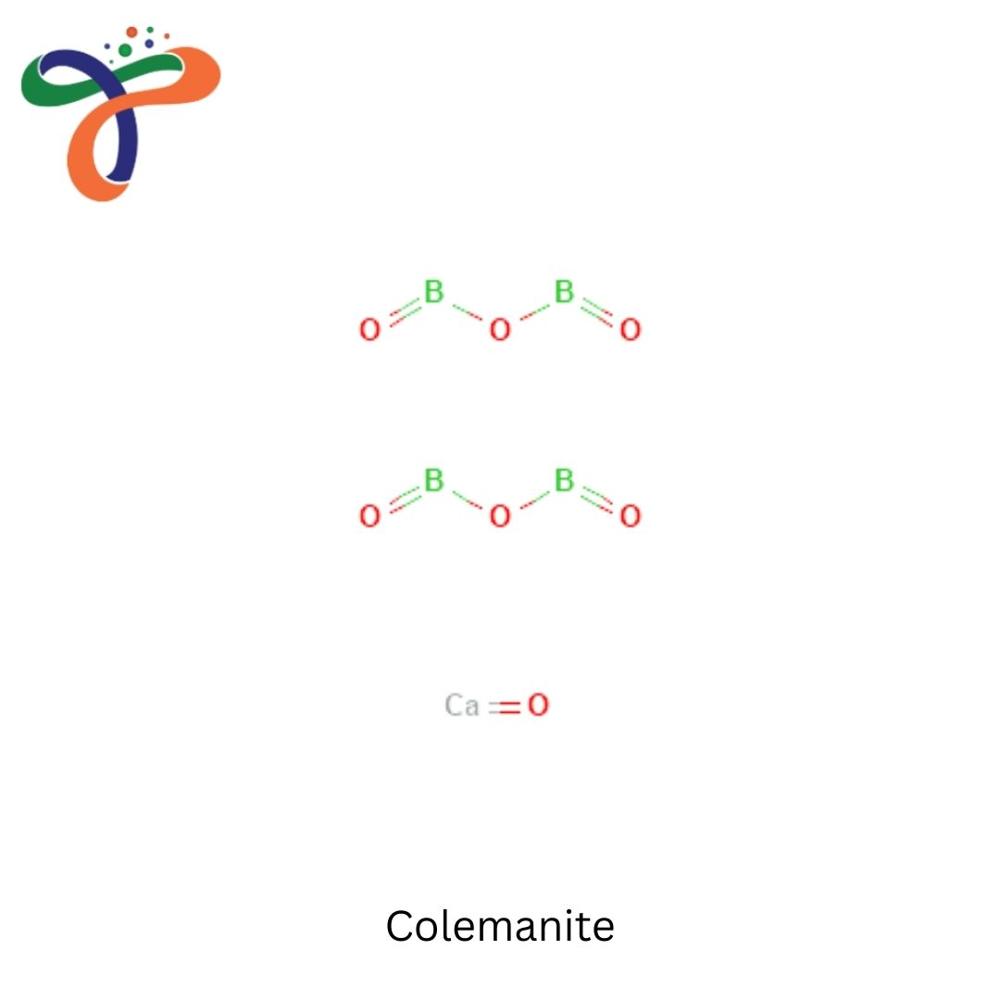
Colemanite (411.10 g/mol) (840 Degree C) About
We are Supplier, Exporter and Contract Manufacturer.
Technical profile of Colemanite, a high-purity raw chemical material supplied by Triveni Chemicals for industrial manufacturing and laboratory synthesis.
Industrial Uses & Applications:
Colemanite Is A Naturally Occurring Calcium Borate Mineral Widely Used In Industrial Applications Due To Its High Boron Content. It Is Valued For Its Thermal Stability, Low Solubility In Water, And Fluxing Properties. Colemanite Is Commonly Used In The Manufacture Of Glass, Ceramics, And Fiberglass, Where It Improves Strength, Durability, And Thermal Resistance. It Is Also Used In Fertilizers, Flame Retardants, And Metallurgical Processes.
Key Uses in Glass and CeramicsColemanite is extensively used as a primary boron source in the production of high-strength, heat-resistant glass and ceramics. Its low solubility and high purity ensure minimal interference from impurities, leading to superior product quality. The mineral's unique thermal stability makes it ideal for the manufacture of fiberglass and specialty ceramic glazes that demand resilience at elevated temperatures.
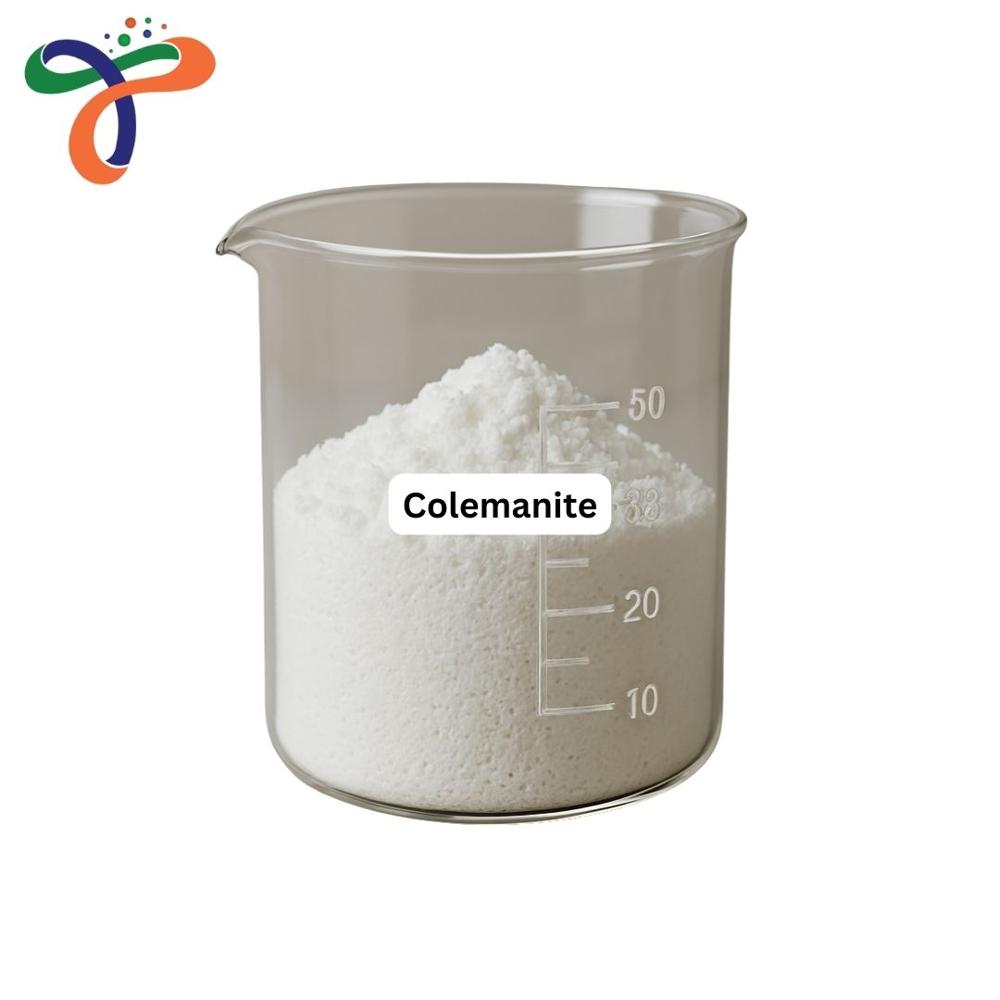
Physical and Chemical PropertiesColemanite appears as a white to colorless crystalline powder. It exhibits a melting point of around 860C and a refractive rate of 1.58. Despite being sparingly soluble in water, its composition makes it an important industrial mineral for applications where slow boron release and high heat resistance are crucial.
Applications in Industrial ProcessesIn the industrial sector, colemanite acts as a raw material for a range of borate derivatives. It is particularly valued as a flux in ceramic glazes, helping achieve desired physical properties in finished products. Manufacturers in India and globally prefer colemanite for its consistency and efficiency in high-temperature applications.
FAQ's of Colemanite (411.10 g/mol) (840 Degree C):
Q: How is colemanite typically used in industrial applications?
A: Colemanite is primarily used as a boron source for manufacturing glass and ceramics. Its role as a flux in glazes enhances the finished product's physical and chemical properties. It is also a key raw material in producing various borate derivatives for industrial applications.
Q: What are the main benefits of using colemanite in glass and ceramic production?
A: The main benefits include improved thermal stability, increased strength, and enhanced heat resistance of the final products. Its high purity and low solubility help ensure consistent quality and performance, especially in the production of fiberglass and specialized ceramic glazes.
Q: When should colemanite be chosen over other borate minerals?
A: Colemanite should be selected when high thermal stability, slow boron release, and low solubility are required. It is ideal for applications in the glass, ceramic, and fiberglass industries that demand robust performance under elevated temperatures.
Q: Where is colemanite generally sourced and supplied from?
A: Colemanite is mined in various regions globally, with several manufacturers and suppliers based in India offering high-purity colemanite for industrial use. These suppliers provide the mineral in powder form to meet precise industrial and manufacturing requirements.
Q: What is the process for incorporating colemanite into ceramics manufacturing?
A: Colemanite is typically mixed with other raw materials during the preparation of ceramic body or glaze formulations. It acts as a flux, lowering the melting temperature and facilitating the formation of glassy phases, thus enhancing the product's durability.
Q: How does colemanite's low solubility impact its usage in industrial products?
A: The mineral's sparing solubility in water ensures gradual release of boron, which is crucial for controlled chemical reactions in glass and ceramics production. This property prevents rapid leaching and maintains long-term stability in finished goods.







 Send Inquiry
 Send Inquiry
 Send Inquiry
 English
 Spanish
 French
 German
 Italian
 Chinese (Simplified)
 Japanese
 Korean
 Arabic
 Portuguese