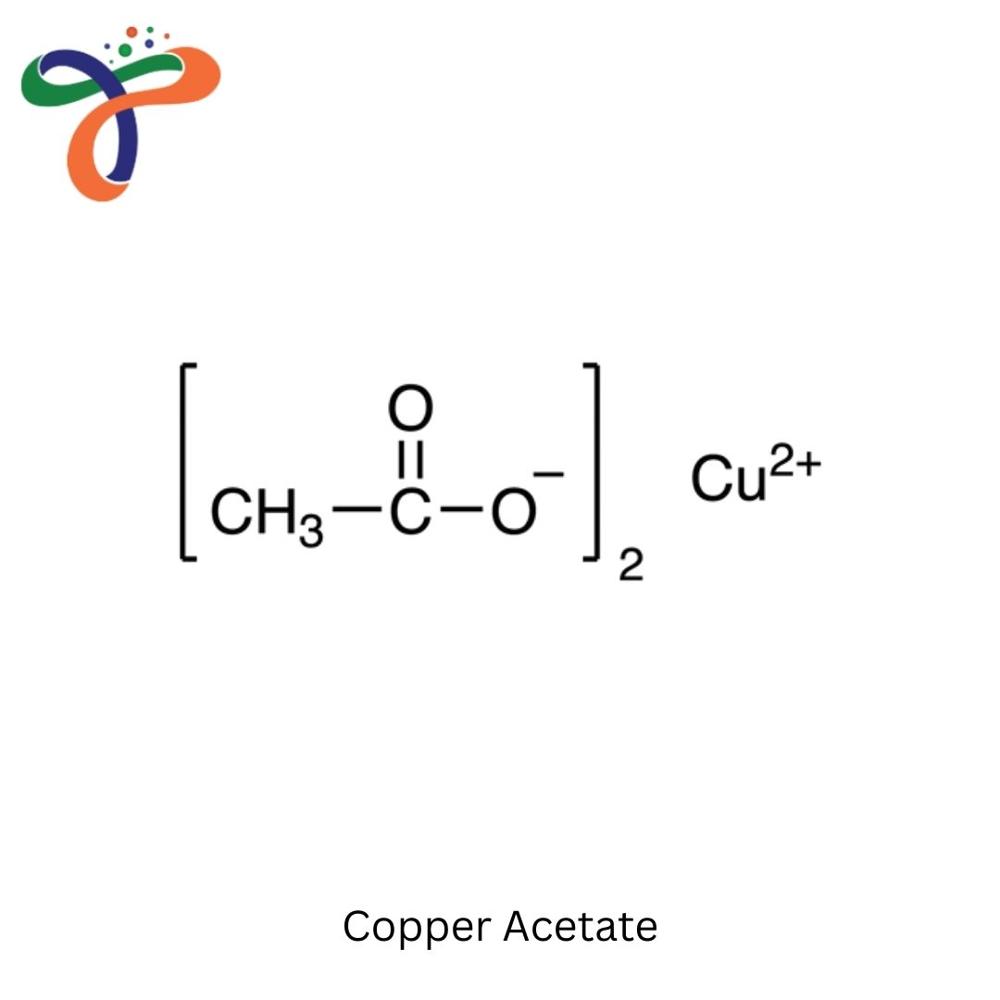
Copper Acetate (142-71-2) About
We are Supplier, Exporter and Contract Manufacturer.
Technical profile of Copper Acetate, a high-purity raw chemical material supplied by Triveni Chemicals for industrial manufacturing and laboratory synthesis.
Technical Specifications:
CAS Number: 142-71-2
Industrial Uses & Applications:
Copper Acetate Is An Inorganic Copper Salt Widely Used In Chemical, Industrial, And Laboratory Applications. It Is Commonly Applied As A Catalyst, Mordant, And Pigment In Textile Dyeing, Printing, And Ceramic Glazing. Copper Acetate Is Also Used In Organic Synthesis, Fungicides, And As A Precursor For Other Copper Compounds. It Exhibits Good Solubility And Characteristic Blue-Green Coloration.
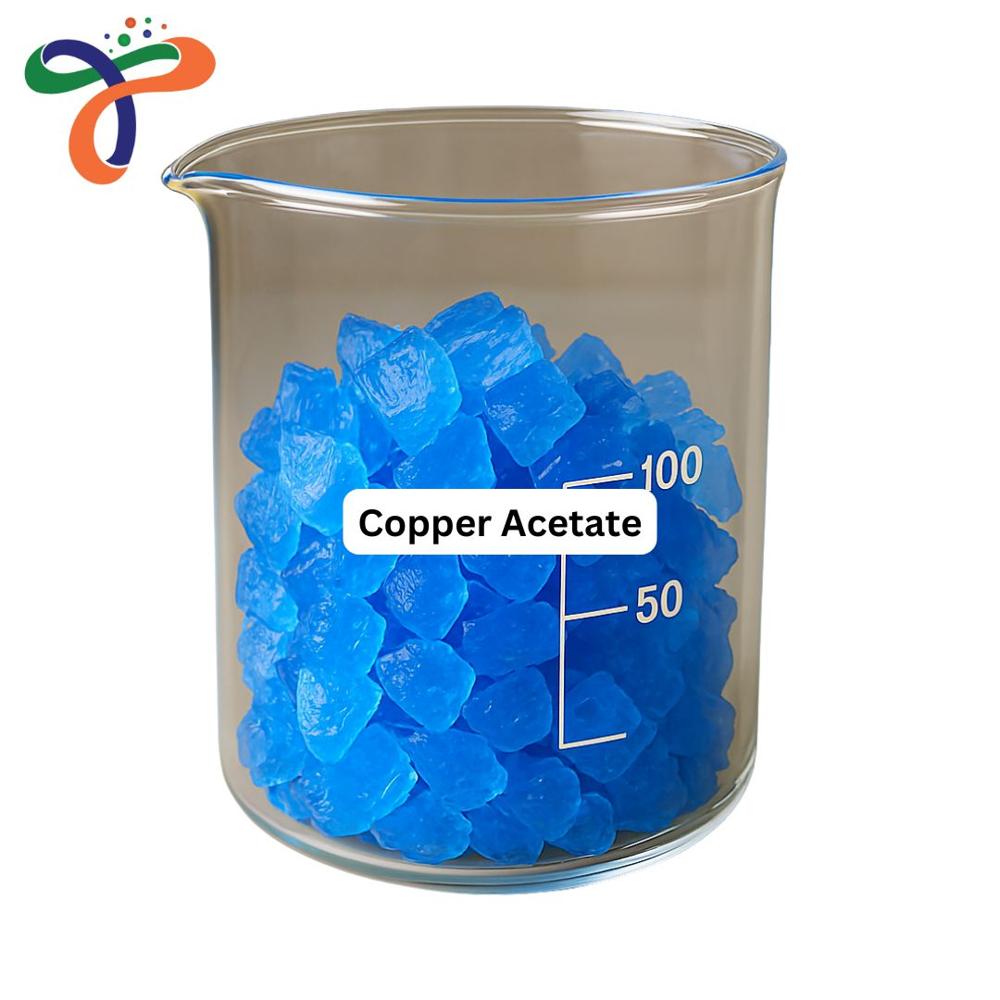
Key Features and AppearanceCopper Acetate appears as distinct blue-green crystals with a high degree of purity ranging from 99 to 99.5%. Its crystalline form and robust chemical properties make it suitable for a variety of industrial and laboratory applications. The compound's striking color and stability enhance its value in both chemical synthesis and specialty product manufacturing.
Major Applications and UsagePrimarily used as a catalyst in organic synthesis, copper acetate is also crucial as a fungicide in agriculture, ensuring crop protection and improved yields. It finds further applications in the textile industry as a mordant for dyeing processes, for creating patina effects on metals, and as a precursor in the production of other copper salts-underscoring its versatility across sectors.
Solubility and HandlingCopper Acetate readily dissolves in water and ethanol, which enhances its usability across chemical and industrial processes. However, it remains insoluble in nonpolar solvents. Proper handling protocols must be followed, especially when used in synthesis or industrial applications, to ensure safety and maintain its chemical integrity.
FAQ's of Copper Acetate (142-71-2):
Q: How is copper acetate typically used in organic synthesis?
A: Copper acetate serves as a highly effective catalyst and reagent in a range of organic synthesis reactions, facilitating oxidation and coupling reactions crucial for producing various organic compounds.
Q: What are the main benefits of using copper acetate in agriculture?
A: Copper acetate is valued as a powerful fungicide, protecting crops from fungal diseases and promoting healthier yields. Its effectiveness ensures that it is widely adopted in sustainable agricultural practices.
Q: When should copper acetate be applied as a mordant in textile dyeing?
A: It is best used during the dyeing process to fix dyes onto textile fibers, enhancing color fastness and vibrancy. Its role as a mordant helps bind colorants to fabrics more effectively.
Q: Where can copper acetate be sourced for industrial use in India?
A: Copper acetate with high purity can be obtained through specialized chemical manufacturers and suppliers based in India, who provide reliable products tailored for industrial or large-scale applications.
Q: What is the process for using copper acetate to create a patina on metals?
A: Typically, copper acetate is dissolved in water or ethanol, then applied to metal surfaces. Over time, it reacts with the metal, producing a blue-green patina, valued for its aesthetic and protective properties.
Q: How should copper acetate be stored to maintain its quality?
A: Store copper acetate in tightly sealed containers, away from moisture and incompatible substances, in a cool, dry environment. Proper storage is essential to preserve its purity and effectiveness.







 Send Inquiry
 Send Inquiry
 Send Inquiry
 English
 Spanish
 French
 German
 Italian
 Chinese (Simplified)
 Japanese
 Korean
 Arabic
 Portuguese