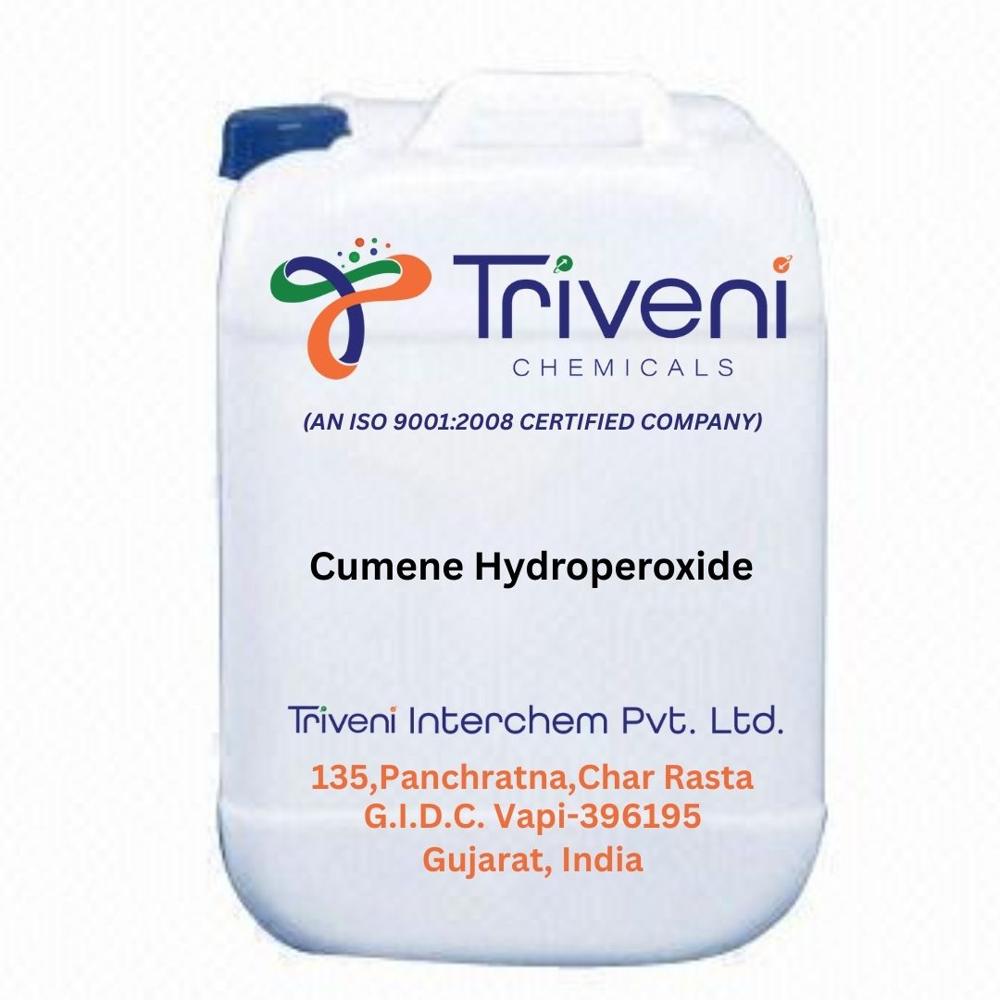
Cumene Hydroperoxide (80-15-9) About
We are Supplier, Exporter and Contract Manufacturer.
Technical profile of Cumene Hydroperoxide, a high-purity raw chemical material supplied by Triveni Chemicals for industrial manufacturing and laboratory synthesis.
Technical Specifications:
CAS Number: 80-15-9
Synonyms: Chloroacetyl Chloride
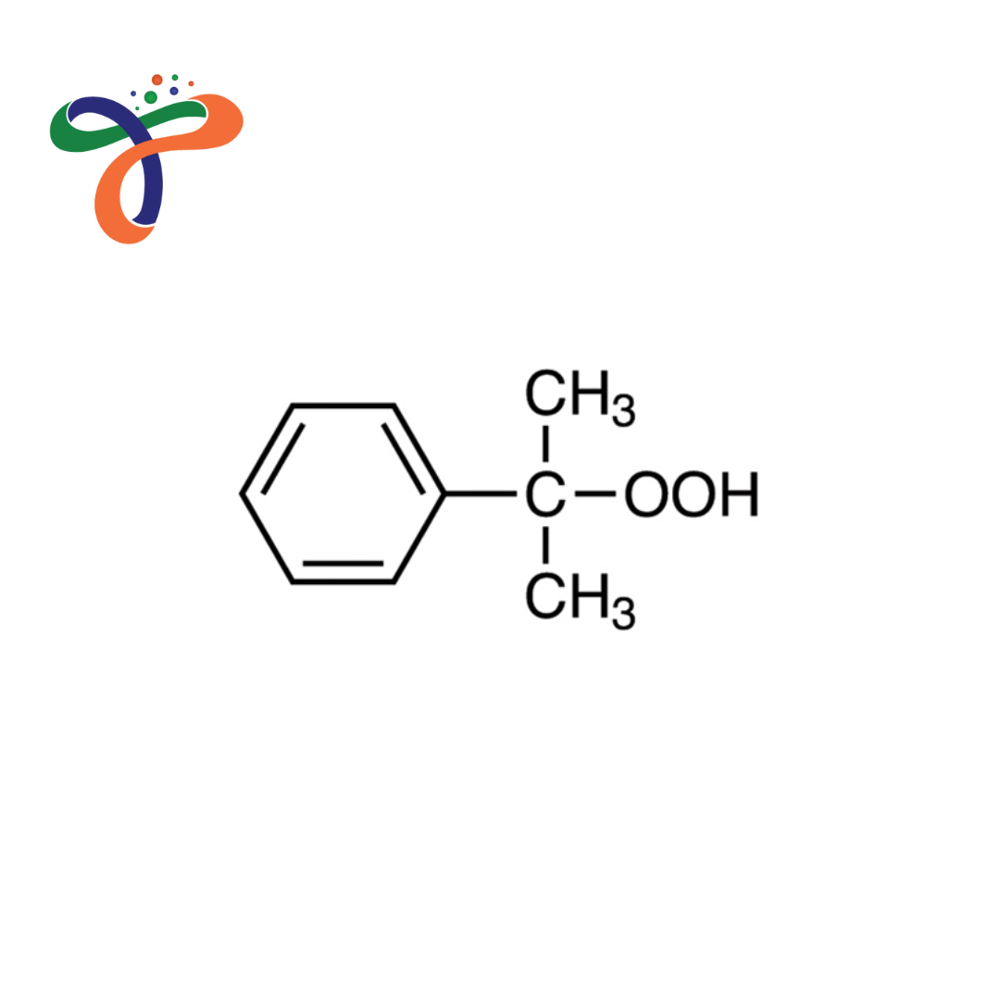
Chemical Formula: C9H12O2
Industrial Uses & Applications:
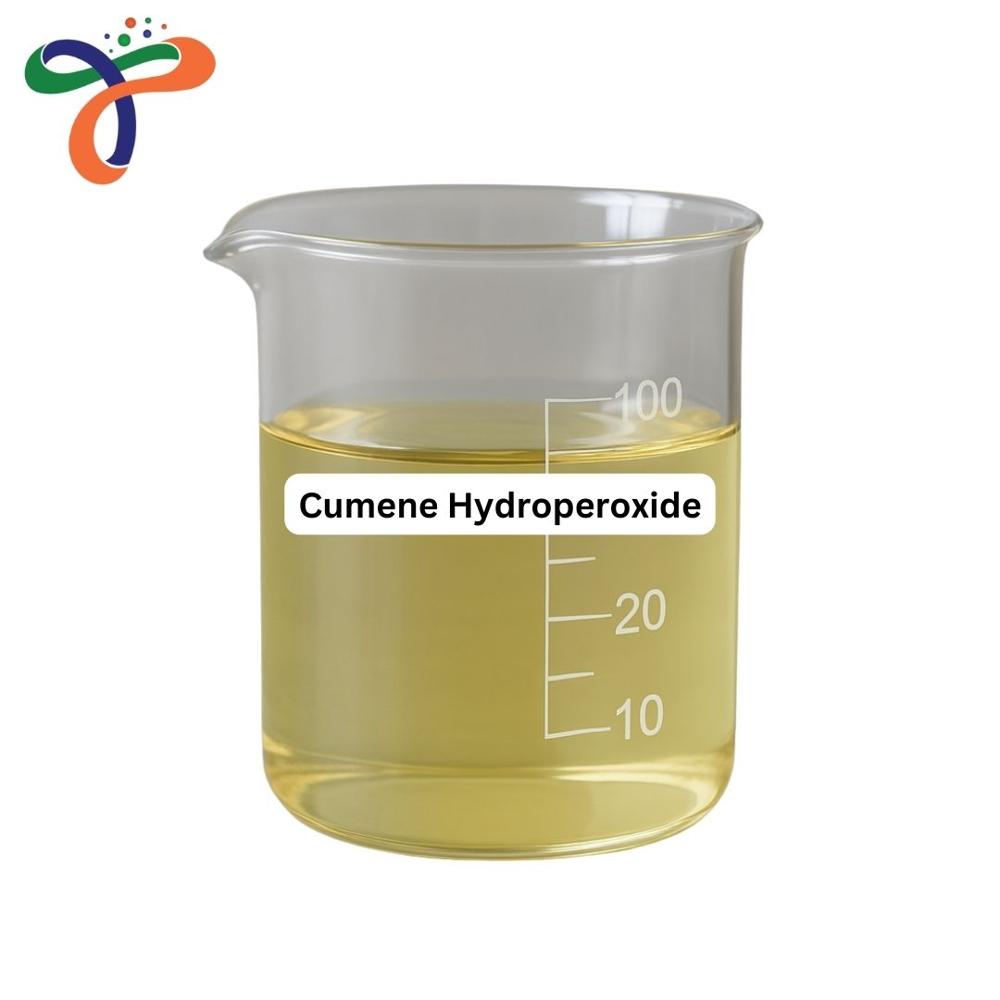
Cumene Hydroperoxide Is A Colorless To Pale Yellow Liquid Used Primarily As An Organic Peroxide And Oxidizing Agent In Industrial Processes. It Is A Key Intermediate In The Production Of Phenol And Acetone Via The Cumene Process And Is Also Used As A Polymerization Initiator And Curing Agent For Resins And Elastomers.
Versatile Polymerization InitiatorCumene hydroperoxide is extensively utilized as an initiator for radical polymerization in the manufacture of synthetic rubber and resins. Its effectiveness in initiating polymer formation ensures consistent quality in industrial applications, especially within the plastics and elastomer industries.
Key Intermediate in the Hock ProcessThis compound is indispensable in the Hock process, where it acts as a crucial intermediate for synthesizing phenol and acetone from benzene and propylene. Its robust oxidizing nature and reactivity streamline the chemical conversion, enhancing yield and efficiency within large-scale production facilities.
Solubility and Physical CharacteristicsCumene hydroperoxide is a clear to pale yellow liquid with a melting point of -40C and a refractive index of 1.493. While insoluble in water, it exhibits high solubility in organic solvents, suiting processes that require precise control over reaction conditions in various chemical syntheses.
FAQ's of Cumene Hydroperoxide (80-15-9):
Q: How is Cumene Hydroperoxide commonly used in industrial processes?
A: Cumene hydroperoxide serves mainly as a polymerization initiator and plays a pivotal role in the production of synthetic rubber and resins. It is also used as an oxidizing agent in various chemical syntheses, particularly as the key intermediate in the Hock process for producing phenol and acetone.
Q: What are the benefits of using Cumene Hydroperoxide as an initiator in polymerization?
A: Using Cumene Hydroperoxide as a polymerization initiator provides excellent control over radical reactions, resulting in consistent product quality and efficient polymer formation. Its high purity and reliable performance make it ideal for industrial-scale applications.
Q: When should Cumene Hydroperoxide be selected over other oxidizing agents?
A: It is best chosen when a strong, selective oxidizing agent is required, especially in processes involving the synthesis of phenol, acetone, and in the radical polymerization of synthetic resins or rubbers. Its solubility in organic solvents further enhances its suitability in such applications.
Q: Where is Cumene Hydroperoxide typically used in the chemical industry?
A: This compound finds widespread use in industrial settings such as polymer production units, resin manufacturing plants, and facilities carrying out oxidation processes, including India's chemical manufacturing hubs.
Q: What is the process for utilizing Cumene Hydroperoxide in the Hock process?
A: In the Hock process, Cumene Hydroperoxide is synthesized from cumene, then decomposed to yield phenol and acetone. This method increases the overall efficiency of chemical conversion, making it the industry standard for large-scale production.
Q: How should Cumene Hydroperoxide be handled to maintain its purity and effectiveness?
A: Store it in tightly sealed containers away from heat and direct sunlight. Proper handling in well-ventilated areas, following safety guidelines, helps preserve its 98-99% purity and ensures safe and efficient use.







 Send Inquiry
 Send Inquiry
 Send Inquiry
 Call Me Free
 English
 Spanish
 French
 German
 Italian
 Chinese (Simplified)
 Japanese
 Korean
 Arabic
 Portuguese