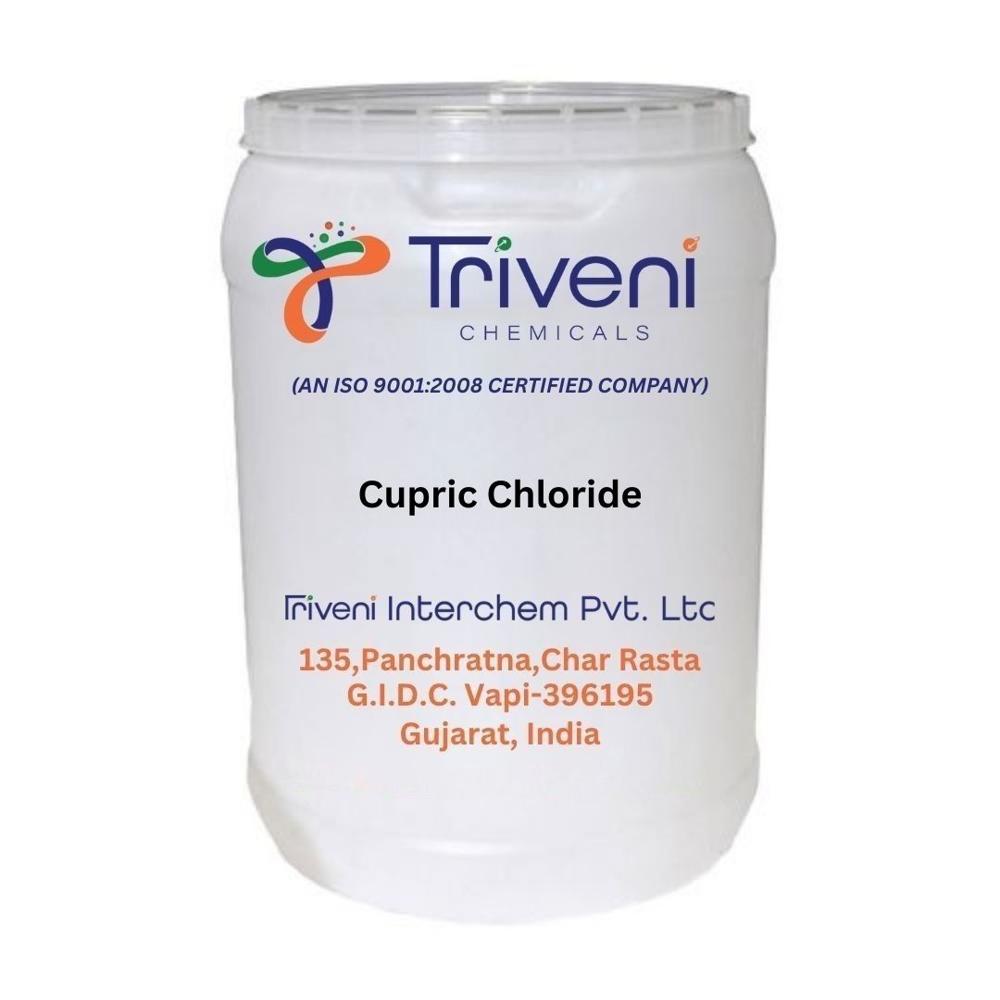
Cupric Chloride (7447-39-4) About
We are Supplier, Exporter and Contract Manufacturer.
Technical profile of Cupric Chloride, a high-purity raw chemical material supplied by Triveni Chemicals for industrial manufacturing and laboratory synthesis.
Technical Specifications:
CAS Number: 7447-39-4
Synonyms: Copper Dichloride, Cupric Chloride Anhydrous
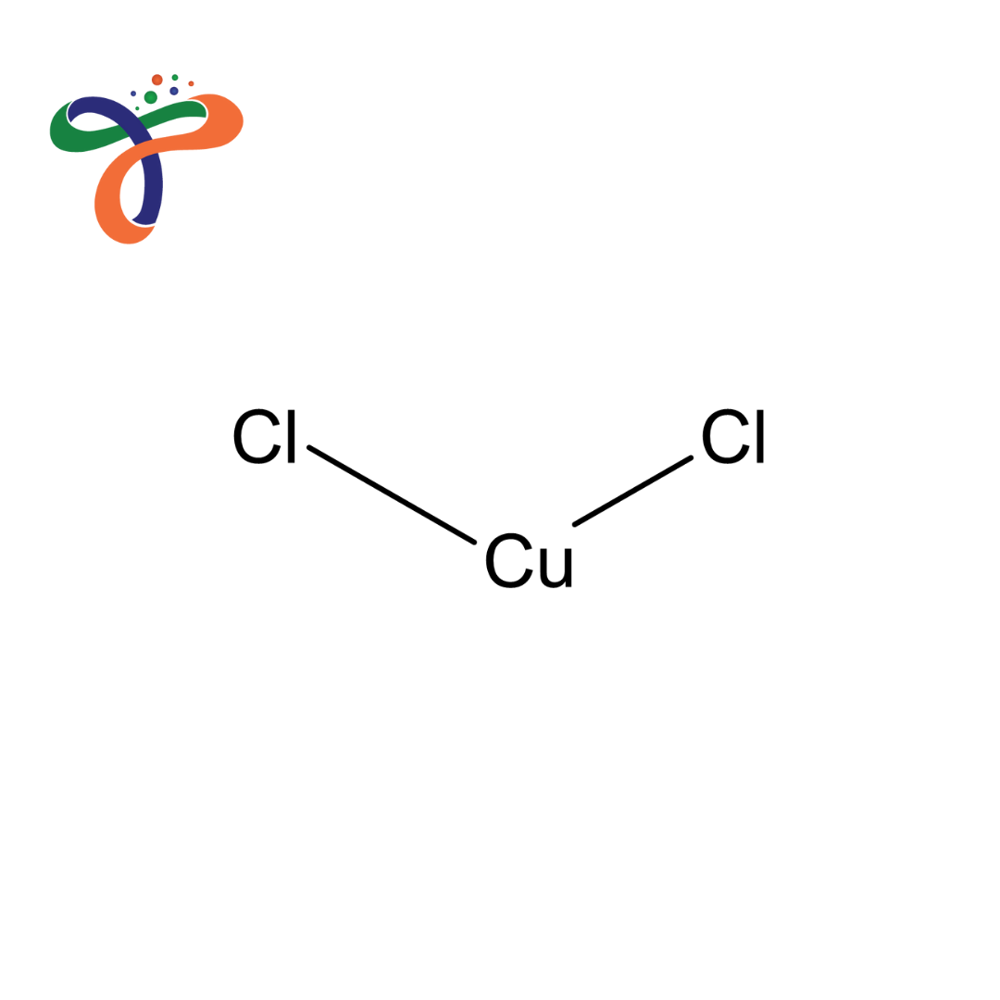
Chemical Formula: CuCl2
Industrial Uses & Applications:
Cupric Chloride, Also Known As Copper(Ii) Chloride, Is An Inorganic Copper Salt Widely Used In Industrial And Chemical Applications. It Is Commonly Applied As A Catalyst In Organic Synthesis, Chlorination Reactions, And Oxidation Processes.
Versatile Industrial ApplicationsCupric chloride stands out for its broad industrial uses. As a catalyst, it accelerates key organic reactions-especially in the production of acetaldehyde via the Wacker process. Its ability to etch printed circuit boards is vital to electronics manufacturing, while in textiles, it acts as an effective mordant. Additionally, cupric chloride supports agriculture as a fungicide and imparts a striking green color to fireworks.
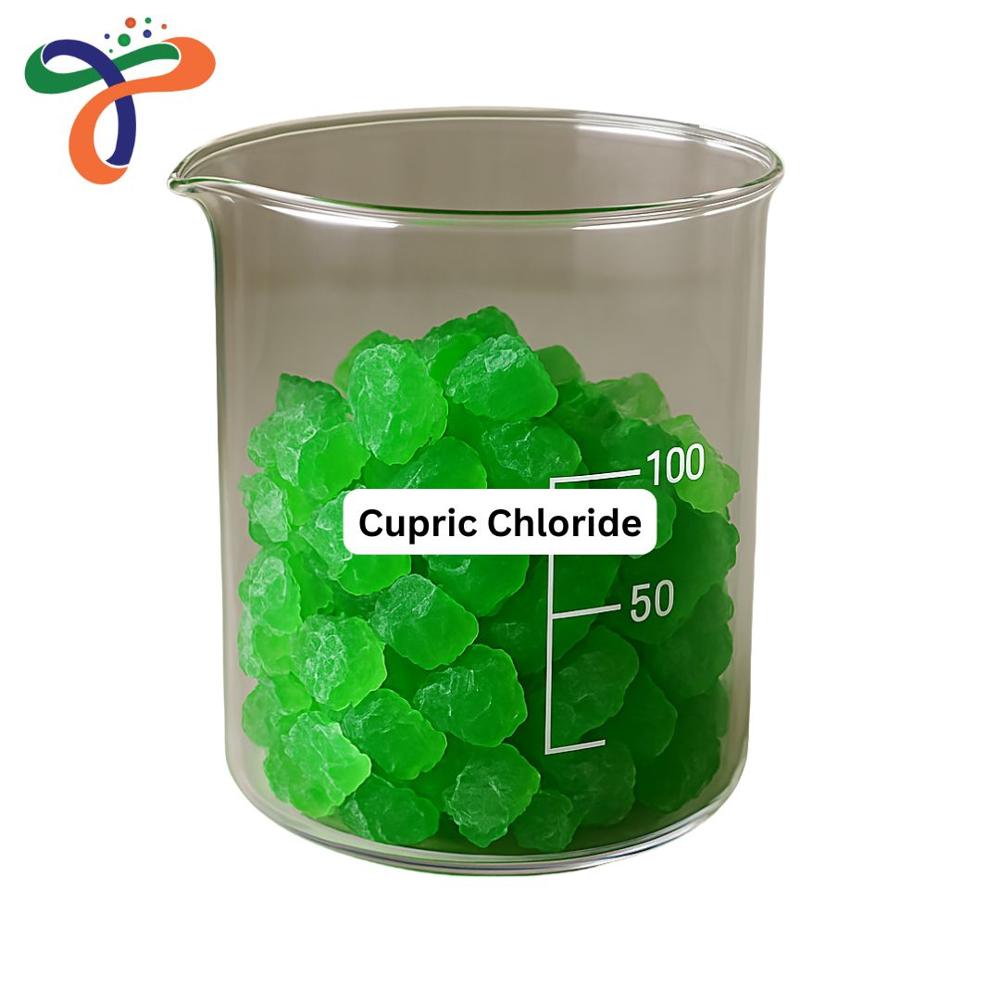
Physical and Chemical PropertiesAppearing as green crystals, cupric chloride has a molecular weight of 134.45 g/mol and a melting point of 498C. Its high solubility in water and ethanol makes it user-friendly for industrial applications. The compound's impressive purity (98-99%) ensures reliable results in all its applications, backed by robust manufacturing from reputable suppliers in India.
FAQ's of Cupric Chloride (7447-39-4):
Q: How is cupric chloride typically used in industry?
A: Cupric chloride is extensively used as a catalyst in organic synthesis, most notably in the Wacker process for producing acetaldehyde. It also functions as an etching agent for printed circuit boards and as a mordant in textile dyeing processes.
Q: What benefits does cupric chloride offer in electroplating applications?
A: In electroplating, cupric chloride enhances the deposition of copper onto metal surfaces, ensuring a more uniform and adherent coating, which improves product durability and surface properties.
Q: Where is cupric chloride applied in the dyeing and textile industry?
A: Within the textile industry, cupric chloride is used as a mordant to fix dyes onto fabrics, ensuring vibrant and long-lasting coloration, especially with natural fiber materials.
Q: What is the process for using cupric chloride as an etchant?
A: To use cupric chloride as an etchant, it is dissolved in water to form an etching solution, which is then applied to printed circuit boards to selectively remove unwanted copper, creating the desired circuit patterns.
Q: When is cupric chloride beneficial in agriculture?
A: Cupric chloride is beneficial in agriculture when it is employed as a fungicide to protect crops from fungal diseases, supporting healthy plant growth and better yields.
Q: How does cupric chloride produce green flames in pyrotechnics?
A: Cupric chloride imparts a vivid green color to flames due to copper ions emitting characteristic wavelengths when the substance is heated during fireworks displays.







 Send Inquiry
 Send Inquiry
 Send Inquiry
 English
 Spanish
 French
 German
 Italian
 Chinese (Simplified)
 Japanese
 Korean
 Arabic
 Portuguese