About Dicyclohexylamine (101-83-7) ((C6H11)2NH)
We are Supplier, Exporter and Contract Manufacturer.
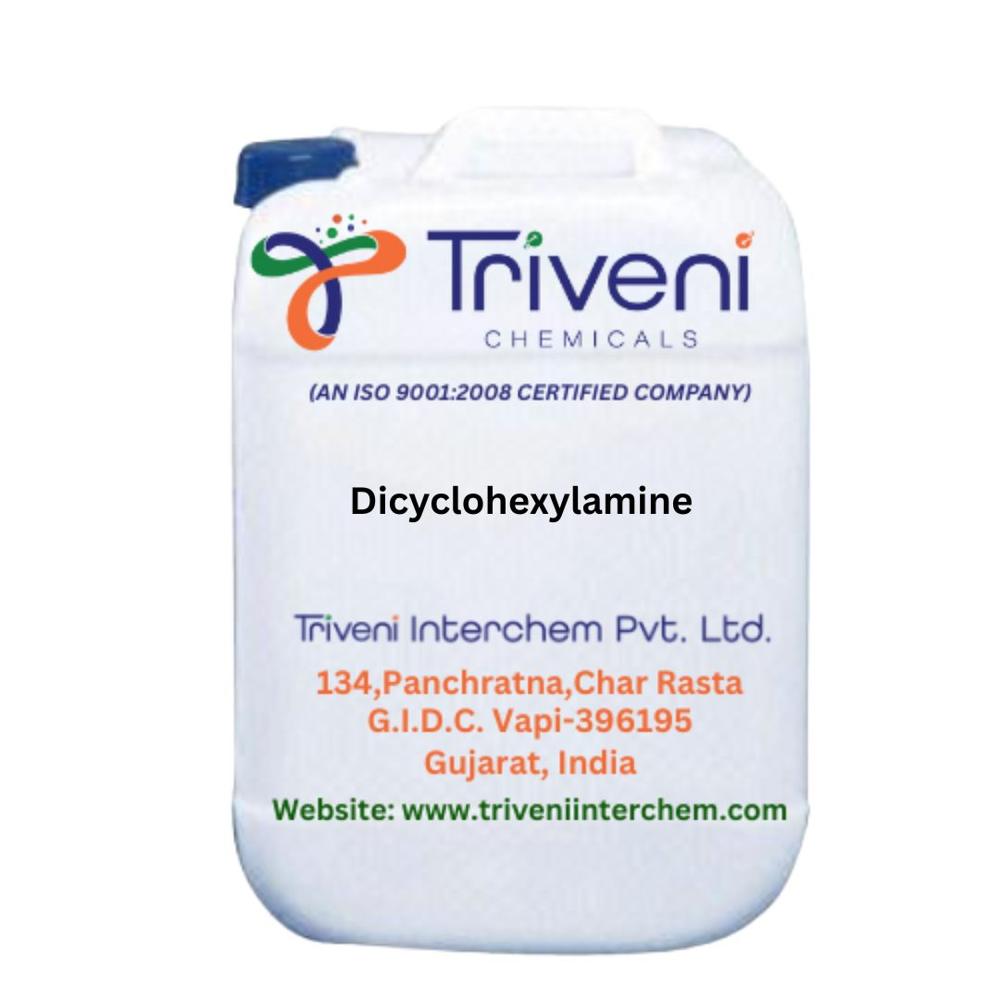
Technical profile of Dicyclohexylamine, a high-purity raw chemical material supplied by Triveni Chemicals for industrial manufacturing and laboratory synthesis.
Dicyclohexylamine is a secondary amine with the chemical formula (C6H11)2NH and molecular weight 181.32 g/mol. It appears as a clear, colorless to pale yellow liquid or low-melting solid with a strong amine odor. It is slightly soluble in water and soluble in most organic solvents. It is alkaline, combustible, and stable under normal storage conditions.
In terms of uses and applications, Dicyclohexylamine is widely used in the chemical industry as an intermediate for manufacturing rubber chemicals, corrosion inhibitors, dyes, and pesticides. It is commonly used to produce dicyclohexylammonium salts of herbicides and pharmaceuticals. In the rubber and lubricant industries, it serves as a stabilizer and additive component. It is also used in water treatment chemicals, metalworking fluids, and organic synthesis. Additionally, it finds application in specialty coatings and industrial formulations requiring hydrophobic amine functionality.
Versatile Industrial IntermediateDicyclohexylamine's structure makes it a highly valued intermediate in chemical manufacturing. It is widely employed in the synthesis of agrochemicals, which are vital for modern agriculture, as well as in producing key additives for the rubber and plastics industries. Its utility extends to corrosion inhibitors and surfactants, broadening its scope of application.
Supporting Essential Manufacturing ProcessesIn corrosion inhibition and surfactants, dicyclohexylamine contributes to product stability and performance. Its use in rubber vulcanization accelerators enhances the durability and elasticity of rubber products. Manufacturers depend on its consistent quality and versatility to support a diverse range of chemical processes.
FAQ's of dicyclohexylamine (101-83-7) ((C6H11)2NH):
Q: How is dicyclohexylamine commonly used in industrial applications?
A: Dicyclohexylamine is primarily used as an intermediate in the synthesis of agrochemicals, rubber vulcanization accelerators, corrosion inhibitors, and surfactants. Its ability to participate in various chemical reactions makes it valuable for production and formulation processes.
Q: What are the key benefits of using dicyclohexylamine in manufacturing?
A: The main benefits include its effectiveness as a chemical building block, versatility in creating specialized compounds, and its role in improving product performance, especially in rubber and corrosion inhibition sectors.
Q: Where is dicyclohexylamine typically applied?
A: It is employed in industries such as agriculture (for agrochemical production), rubber and plastics (for vulcanization accelerators), and in the manufacture of corrosion inhibitors and surfactants.
Q: What is the process for utilizing dicyclohexylamine in rubber production?
A: In rubber manufacturing, dicyclohexylamine is used as an additive that acts as a vulcanization accelerator, helping enhance the rubber's elasticity, durability, and resistance to degradation.
Q: When should dicyclohexylamine be considered for use in a chemical formulation?
A: It should be considered when developing products that require a stable and reactive intermediate for synthesis, particularly in areas related to agrochemicals, specialty rubbers, and corrosion prevention agents.
Q: What advantage does dicyclohexylamine provide in corrosion inhibitor applications?
A: Dicyclohexylamine contributes to the formulation of effective corrosion inhibitors, protecting metal surfaces from rust and extending the lifespan of equipment and structural components.







 Send Inquiry
 Send Inquiry
 Send Inquiry
 Call Me Free
 English
 Spanish
 French
 German
 Italian
 Chinese (Simplified)
 Japanese
 Korean
 Arabic
 Portuguese