Dimethyl Oxalate (553-90-2) About
We are Supplier, Exporter and Contract Manufacturer.
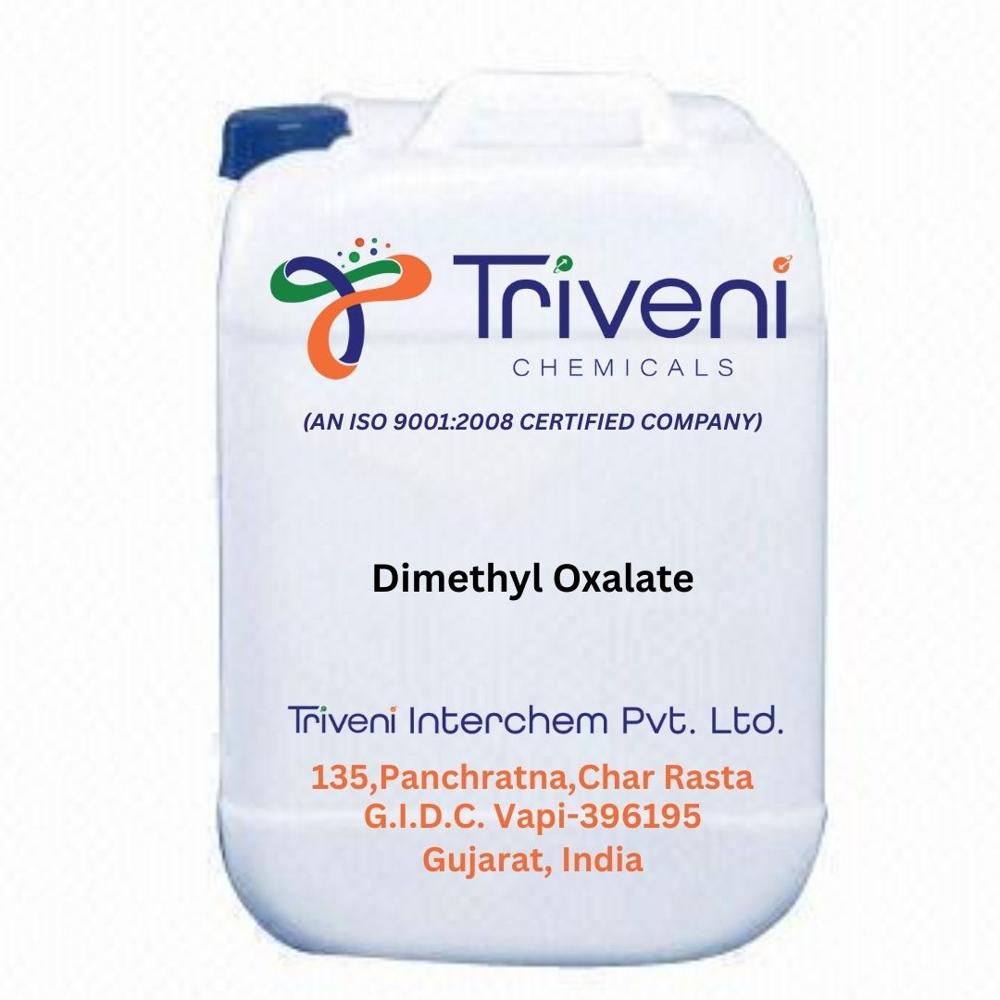
Technical profile of Dimethyl Oxalate, a high-purity raw chemical material supplied by Triveni Chemicals for industrial manufacturing and laboratory synthesis.
Technical Specifications:
CAS Number: 553-90-2
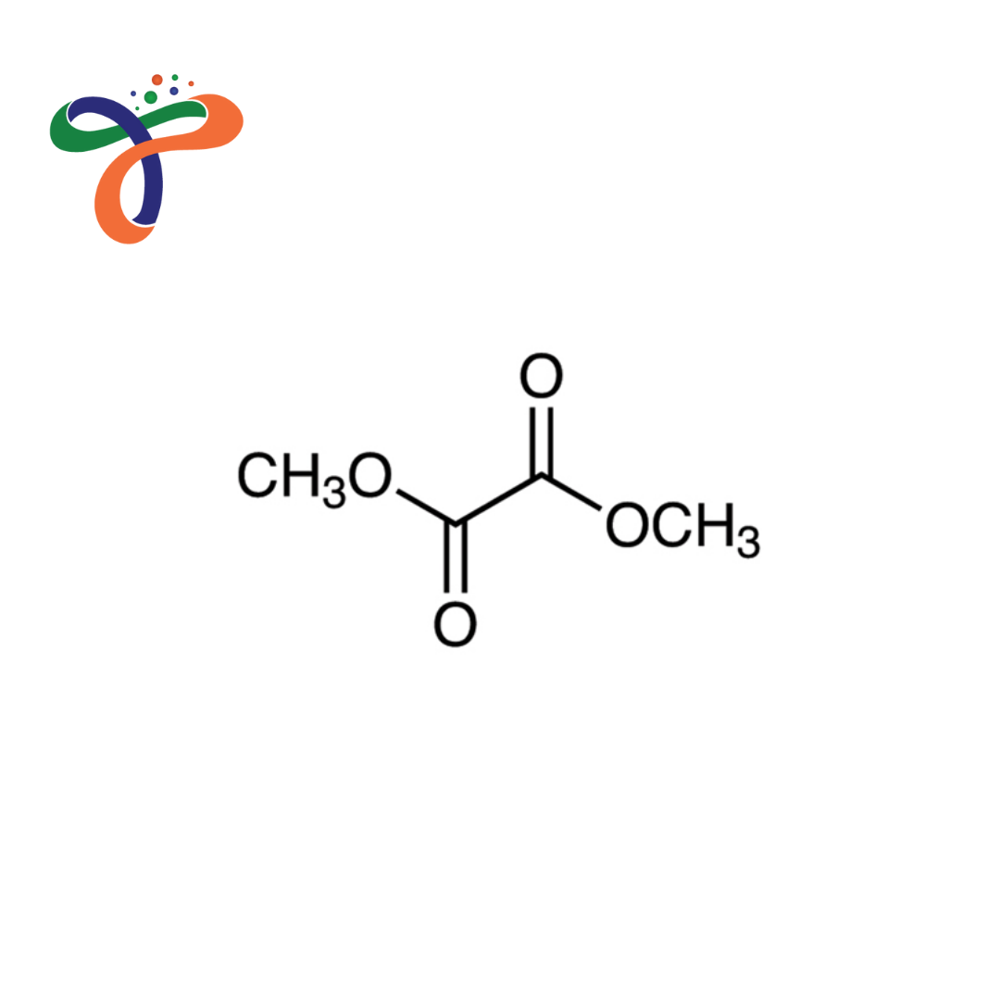
Synonyms: Oxalic Acid Dimethyl Ester
Chemical Formula: C4H6O4
Industrial Uses & Applications:
It Is Used As An Intermediate In The Manufacture Of Pharmaceuticals, Dyes, Agrochemicals, And Specialty Chemicals, As Well As In The Production Of Oxalic Acid And Battery Materials. It Is A Diester Of Oxalic Acid That Readily Participates In Condensation And Transesterification Reactions.
Versatile Intermediate for IndustryDimethyl oxalate stands out as a versatile chemical intermediate, essential in the synthesis of polymers, pharmaceuticals, resins, and herbicides. Its unique chemical profile enables efficient esterification processes and the formulation of specialty solvents. By serving as a precursor for high-purity applications, it helps manufacturers streamline production and achieve consistent quality in various industrial processes.
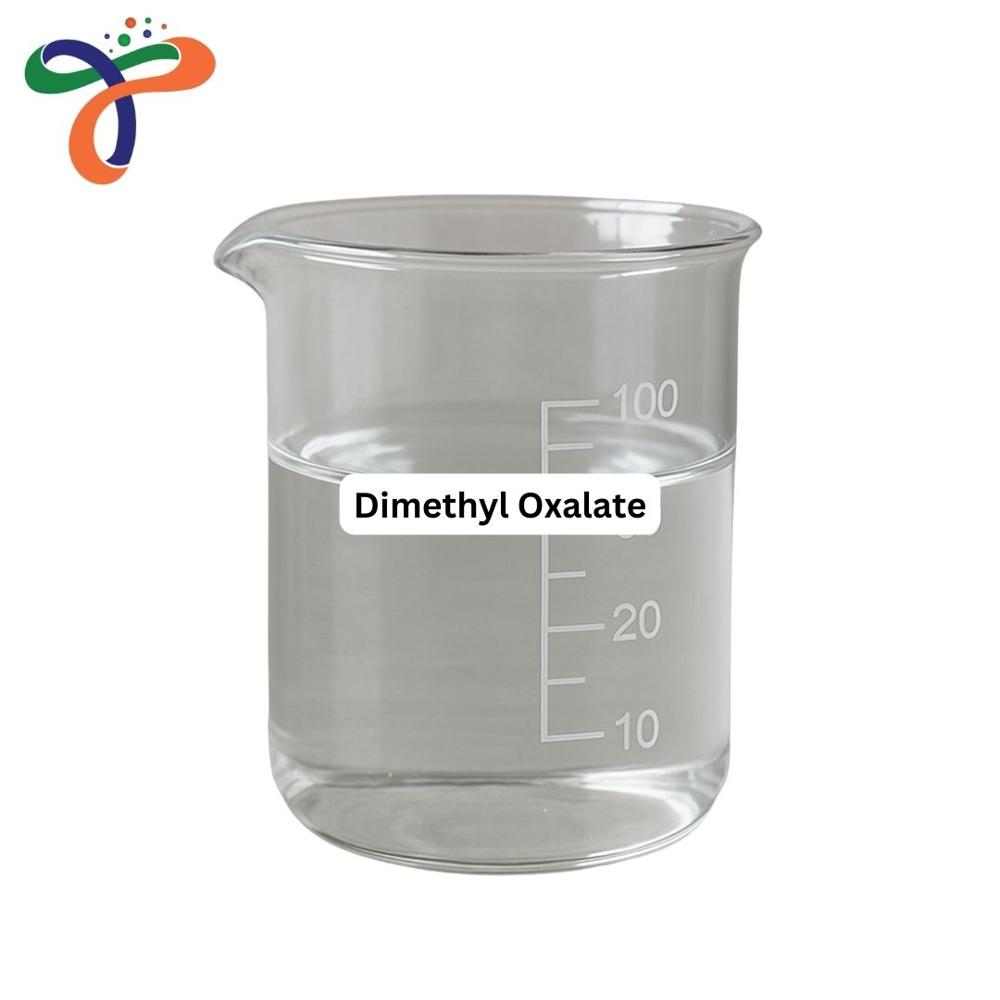
Physical and Chemical AttributesThis compound appears as a clear, colorless liquid with a melting point of -7C and a refractive index of 1.42. Its molecular formula is C4H6O4. Dimethyl oxalate displays slight water solubility while dissolving readily in organic solvents, making it highly adaptable for different synthesis conditions. Its robust stability and reliable properties contribute to its widespread use in organic and polymer chemistry.
FAQ's of Dimethyl Oxalate (553-90-2):
Q: How is dimethyl oxalate typically used in industrial processes?
A: Dimethyl oxalate is predominantly utilized as a chemical intermediate in the synthesis of ethylene glycol, pharmaceuticals, resins, and plasticizers. Its reactivity also makes it valuable for esterification and fine chemical applications.
Q: What benefits does dimethyl oxalate offer in the fine chemical industry?
A: Its high purity (98-99%), strong solubility in organic solvents, and excellent reactivity enable precise synthesis, making it indispensable for producing specialty solvents, polymer intermediates, and pharmaceutical compounds.
Q: Where is dimethyl oxalate commonly manufactured and supplied in India?
A: Many chemical manufacturers and suppliers throughout India produce and distribute high-purity dimethyl oxalate, catering to the needs of pharmaceutical, polymer, and specialty chemical industries.
Q: What is the standard process for producing dimethyl oxalate?
A: Dimethyl oxalate is commonly synthesized by reacting methanol with oxalic acid or its derivatives, followed by purification to achieve the required purity for industrial applications.
Q: When should dimethyl oxalate be used instead of other esters?
A: It is particularly suitable when high-purity intermediates are crucial for sensitive syntheses, or when specific solubility and reactivity profiles are needed in the manufacturing process.
Q: What physical properties make dimethyl oxalate advantageous for industrial use?
A: Dimethyl oxalate remains liquid at low temperatures (-7C melting point), has a refractive rate of 1.42, and dissolves well in organic solvents, ensuring it adapts efficiently to various chemical environments.







 Send Inquiry
 Send Inquiry
 Send Inquiry
 Call Me Free
 English
 Spanish
 French
 German
 Italian
 Chinese (Simplified)
 Japanese
 Korean
 Arabic
 Portuguese