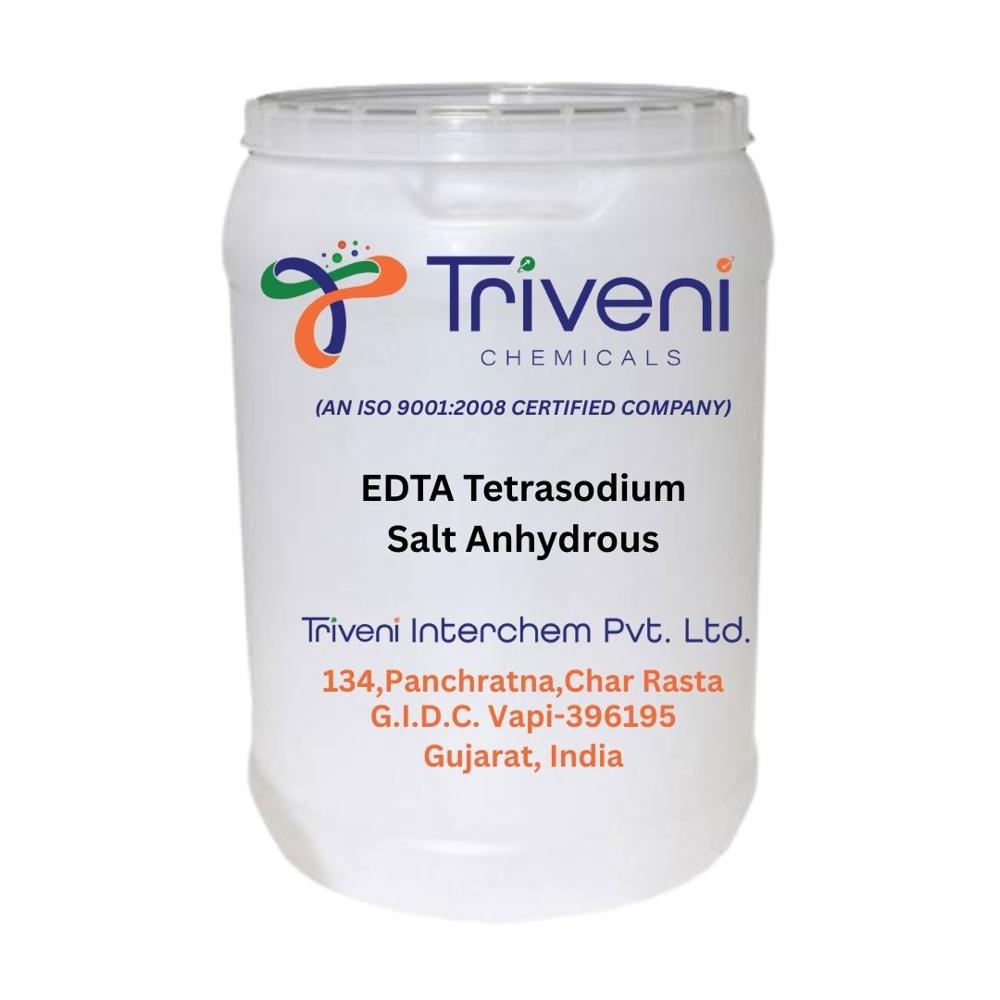
EDTA Tetrasodium Salt Anhydrous About
Product Overview:
Technical profile of EDTA Tetrasodium Salt Anhydrous, a high-purity raw chemical material supplied by Triveni Chemicals for industrial manufacturing and laboratory synthesis.
Technical Specifications:
CAS Number: 64-02-8
Synonyms: EDTA Tetrasodium Salt
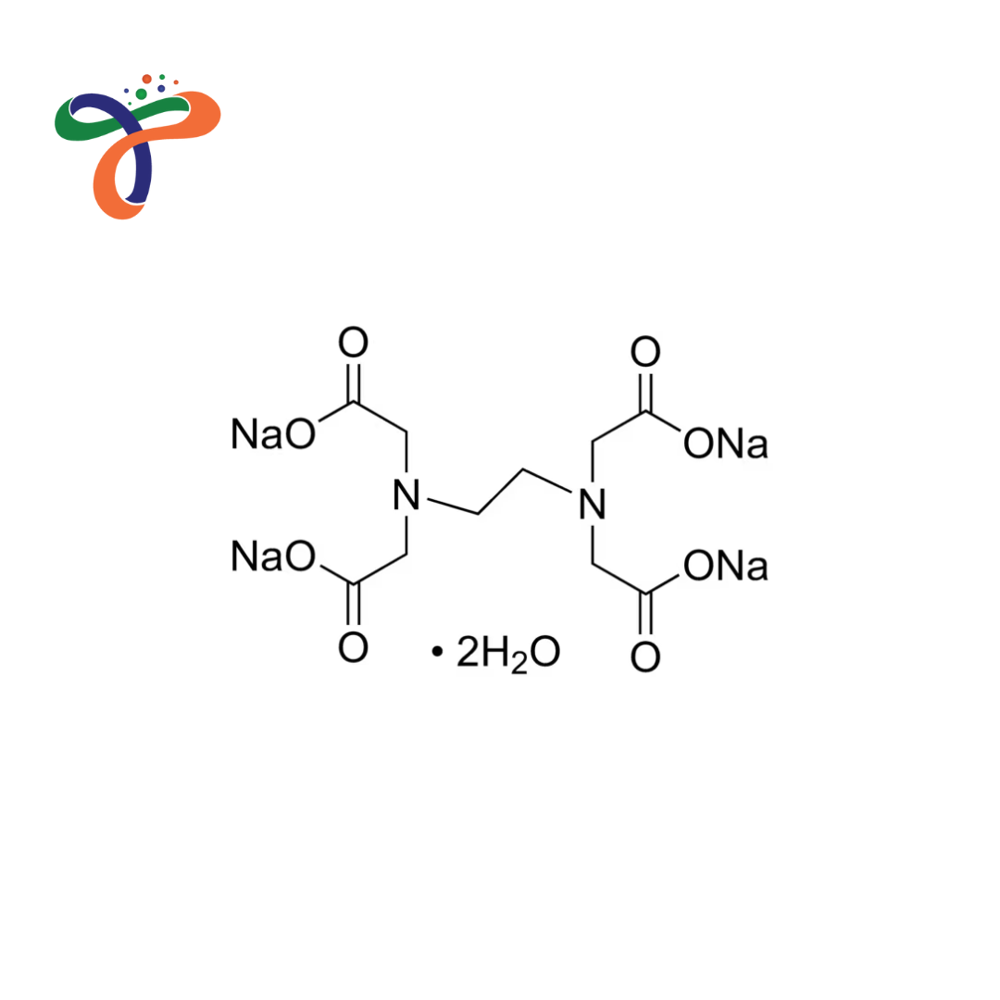
Chemical Formula: C10H12N2O8Na4
Industrial Uses & Applications:
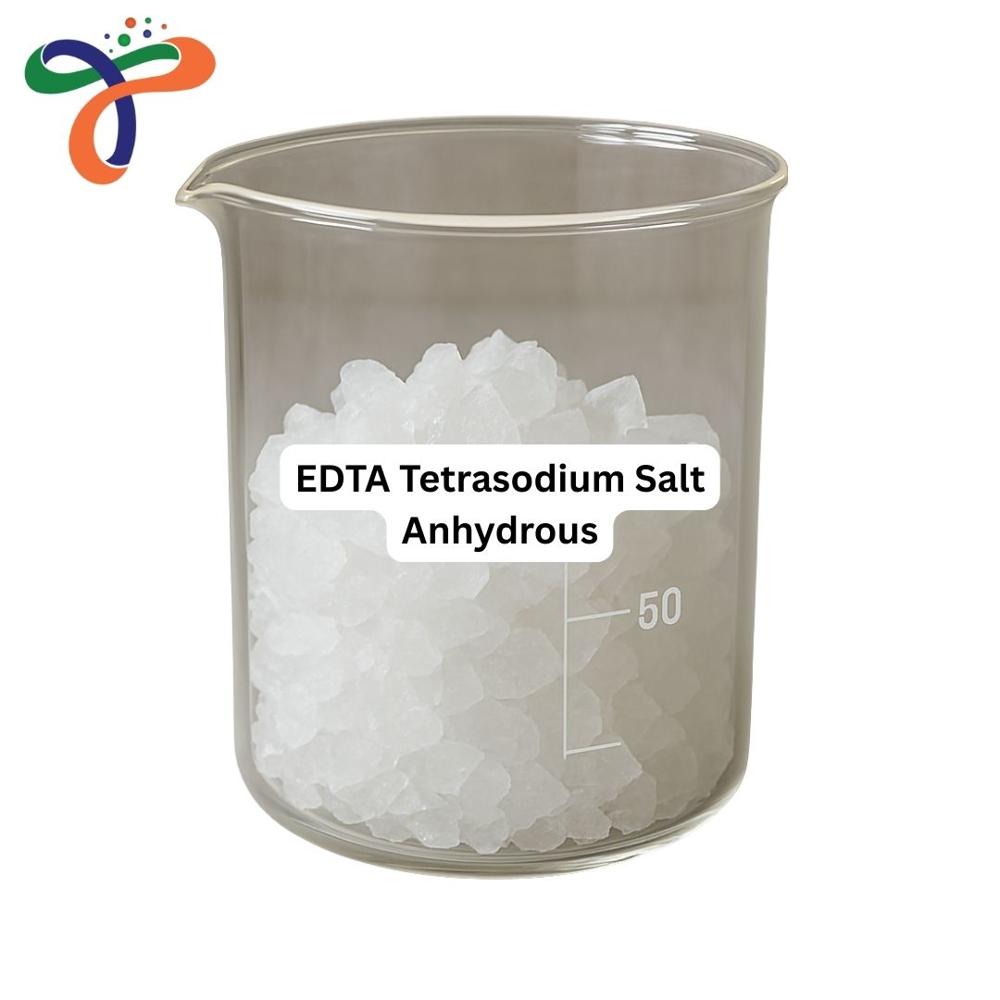
It Appears As A White To Off White Crystalline Powder And Is Readily Soluble In Water, Forming Alkaline Solutions. The Anhydrous Form Is Preferred Where Precise Concentration And Low Moisture Content Are Required. Edta Tetrasodium Salt Is Widely Used In Water Treatment, Detergents, And Cleaning Formulations To Bind Metal Ions And Improve Performance.
Superior Chelating Power for Industrial ApplicationsEDTA Tetrasodium Salt Anhydrous is widely recognized for its high efficacy in binding metal ions. It effectively sequesters minerals, minimizing unwanted interactions in chemical formulations. This property is indispensable for industries aiming to counteract adverse effects of metal ion contamination, especially in detergents, pharmaceuticals, and cosmetic products. Its robust chelation ensures product stability and improved efficacy of end products.
Outstanding Solubility and StabilityThis compound is highly soluble in water, facilitating rapid and uniform dispersion in aqueous solutions. Its performance remains consistent in alkaline conditions, broadening its usability across various industrial and environmental processes. Its sparing solubility in ethanol and insolubility in nonpolar solvents make it a predictable and reliable ingredient for targeted applications.
FAQ's of EDTA Tetrasodium Salt Anhydrous:
Q: How does EDTA Tetrasodium Salt Anhydrous function as a chelating agent?
A: EDTA Tetrasodium Salt Anhydrous binds to metal ions such as calcium, magnesium, and iron, effectively removing or neutralizing them. This prevents unwanted metal-catalyzed reactions and stabilizes formulations in detergents, pharmaceuticals, and other products.
Q: What are the main benefits of using EDTA Tetrasodium Salt Anhydrous in formulations?
A: The primary benefit is its ability to capture and hold metal ions, which helps stabilize products by preventing discoloration, rancidity, or loss of efficacy caused by trace metals. Its high solubility in water and stability in alkaline conditions enhance its usefulness in varied environments.
Q: When should EDTA Tetrasodium Salt Anhydrous be used in industrial processes?
A: It should be used when precise control over metal ion concentrations is required, such as during product formulation in detergents, cosmetics, pharmaceuticals, water treatment, or agriculture, to ensure stability and avoid metal-induced degradation.
Q: Where is EDTA Tetrasodium Salt Anhydrous typically applied?
A: This compound is commonly applied in industries such as cleaning agents manufacturing, cosmetic product development, pharmaceutical preparation, water purification, and crop production as a metal ion control solution.
Q: What is the process for incorporating EDTA Tetrasodium Salt Anhydrous into a formulation?
A: Usually, the white crystalline powder is dissolved into the process water due to its high water solubility. It can be added during the mixing or blending stage to ensure even distribution and optimal chelating action throughout the product.
Q: Can EDTA Tetrasodium Salt Anhydrous be used in non-aqueous solutions?
A: Due to its high solubility in water and poor solubility in ethanol and nonpolar solvents, it is most effective in water-based or alkaline formulations rather than non-aqueous solutions.







 Send Inquiry
 Send Inquiry
 Send Inquiry
 English
 Spanish
 French
 German
 Italian
 Chinese (Simplified)
 Japanese
 Korean
 Arabic
 Portuguese