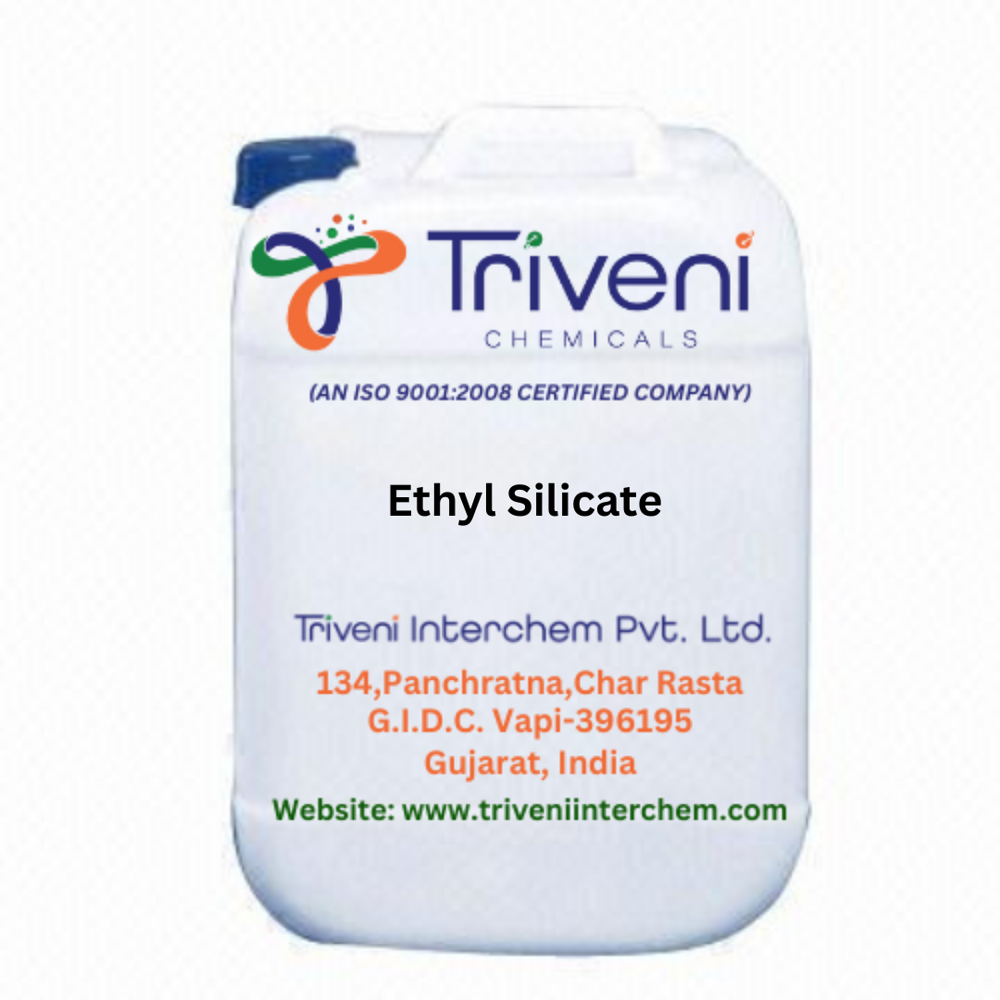
Ethyl Silicate (78-10-4) About
Product Overview:
Technical profile of Methyl Silicate, a high-purity raw chemical material supplied by Triveni Chemicals for industrial manufacturing and laboratory synthesis.
Technical Specifications:
CAS Number: 681-84-5
Synonyms: Tetramethoxysilane, Tetramethyl orthosilicate
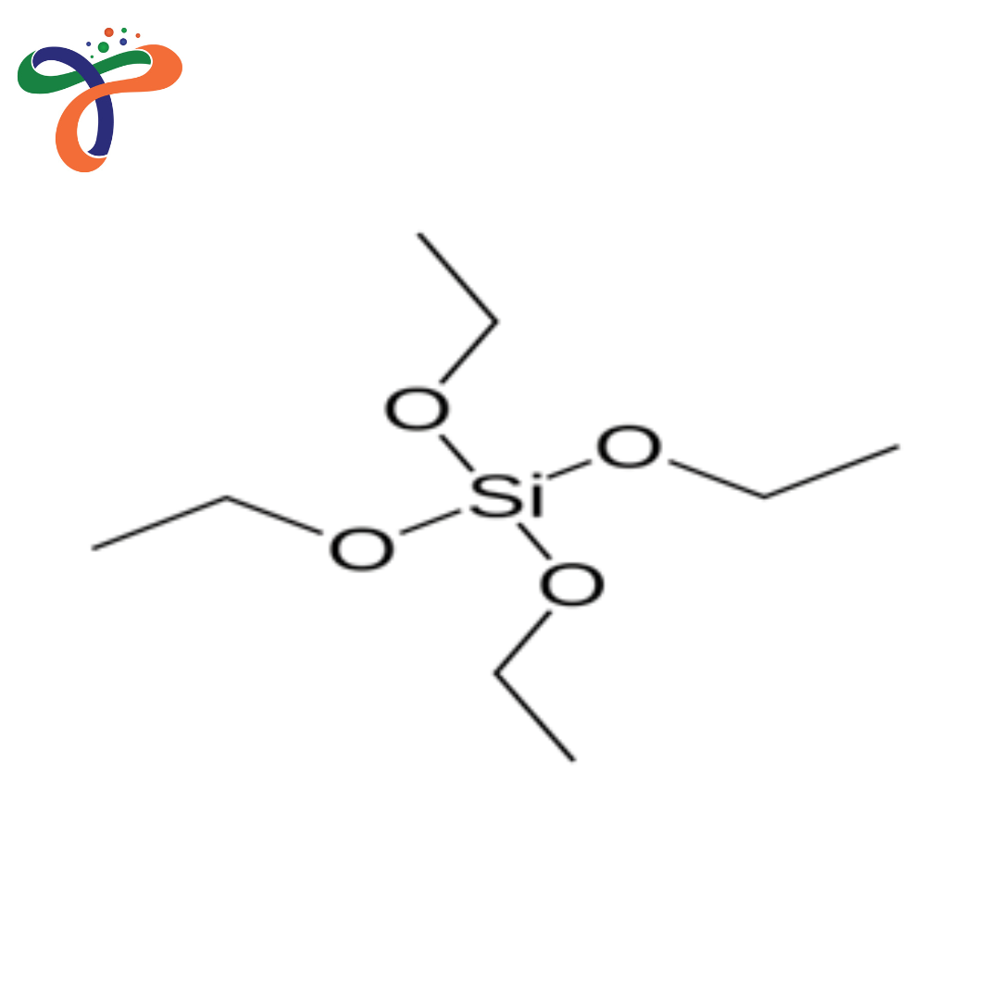
Chemical Formula: C4H12O4Si
Industrial Uses & Applications:
Methyl Silicate Is A Clear, Colorless Liquid With A Mild Alcoholic Odor, Commonly Supplied As A Mixture Of Methyl Orthosilicate Oligomers.
It Is Widely Used As A Binder, Crosslinking Agent, And Precursor In Foundry Molds, Refractory Coatings, Ceramics, And Sol Gel Processes.
Versatile Applications Across IndustriesEthyl Silicate is prized in industries such as coatings, adhesives, ceramics, foundries, and silicone production. Its unique ability to react with moisture and serve as a crosslinker enables the formation of durable, protective films and intricate microstructures. As a silica source, it enhances the quality of silica gel and silicones, contributing to advanced material science and engineering projects worldwide.
Superior Film-Forming PropertiesDue to its moisture-reactive nature, Ethyl Silicate excels as a binder. When applied in coatings or adhesives, it forms strong, seamless films that boost product lifespan and performance. Manufacturers in India and globally rely on its consistent physical and chemical characteristics, including a refractive rate of 1.385 and a melting point of -95C, to ensure high standards in their output.
FAQ's of Ethyl Silicate (78-10-4):
Q: How is Ethyl Silicate typically used in industrial applications?
A: Ethyl Silicate is most frequently used as a binder and crosslinking agent in coatings, adhesives, and sealants. Thanks to its moisture-reactive properties, it also serves as a precursor in sol-gel processes, a key ingredient in ceramic and foundry applications, and as a silica source in the manufacture of silica gel and silicone-based materials.
Q: What are the primary benefits of using Ethyl Silicate as a binder?
A: The main advantages include its ability to form robust and durable films when it comes into contact with moisture, enhancing the longevity and mechanical strength of coatings and adhesives. This leads to greater resistance against environmental factors and wear, making it ideal for protective industrial finishes.
Q: Where can Ethyl Silicate be sourced, and who manufactures it?
A: Ethyl Silicate is produced and supplied by various manufacturers, particularly in India, where it's available in industrial-grade purity of 98-99%. It can be sourced through chemical suppliers and specialty chemical companies catering to coating, ceramic, and foundry industries.
Q: What is the solubility profile of Ethyl Silicate, and how does it affect its use?
A: Ethyl Silicate is insoluble in water but readily dissolves in organic solvents such as ethanol, acetone, and toluene. However, it hydrolyzes in the presence of moisture, making it essential to control exposure during storage and application to maintain product quality.
Q: When should Ethyl Silicate be chosen over other binders or silica sources?
A: Ethyl Silicate is preferable when strong, elastic, and highly durable films or coatings are required, especially in demanding environments. Its use is also advantageous in processes that need precise control over silica content or require sol-gel synthesis for specialized materials.
Q: What is the typical process for applying Ethyl Silicate in coatings or surface treatments?
A: Ethyl Silicate is typically dissolved or dispersed in a suitable organic solvent and then applied by spraying, brushing, or dipping onto the target surface. Upon exposure to moisture in the air, it hydrolyzes, forming solid silica films that provide protective and structural benefits.






 Send Inquiry
 Send Inquiry
 Send Inquiry
 Call Me Free
 English
 Spanish
 French
 German
 Italian
 Chinese (Simplified)
 Japanese
 Korean
 Arabic
 Portuguese