Back to top
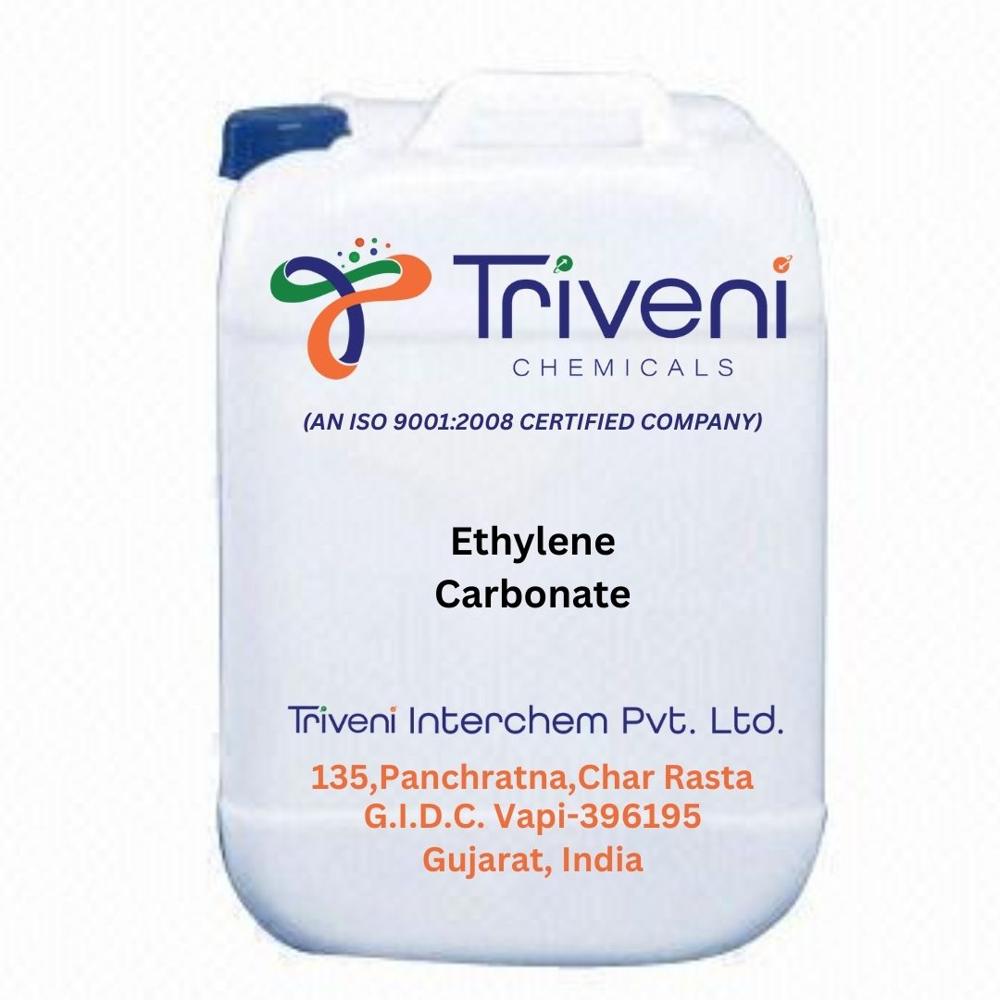
Ethylene Carbonate (96-49-1)

Ethylene Carbonate (96-49-1)

Price 210.0 INR/ Kilograms

MOQ : 25 Kilograms

Ethylene Carbonate (96-49-1) Specification

  • Melting Point
  • -36 C
  • Solubility
  • Fully miscible with water
  • Application
  • Industrial
  • Molecular Formula
  • C3H4O3
  • Purity
  • 98 99%
  • Refractive Rate
  • 1.43
  • CAS No
  • 96-49-1
  • Appearance
  • Colorless liquid
  • Properties
  • Ethylene carbonate is a highly polar cyclic carbonate ester with a high dielectric constant, making it a premier solvent for lithium-ion battery electrolytes. At room temperature, it is a colorless crystalline solid that serves as a versatile intermediate for synthesizing engineering plastics, lubricants, and various organic chemicals.
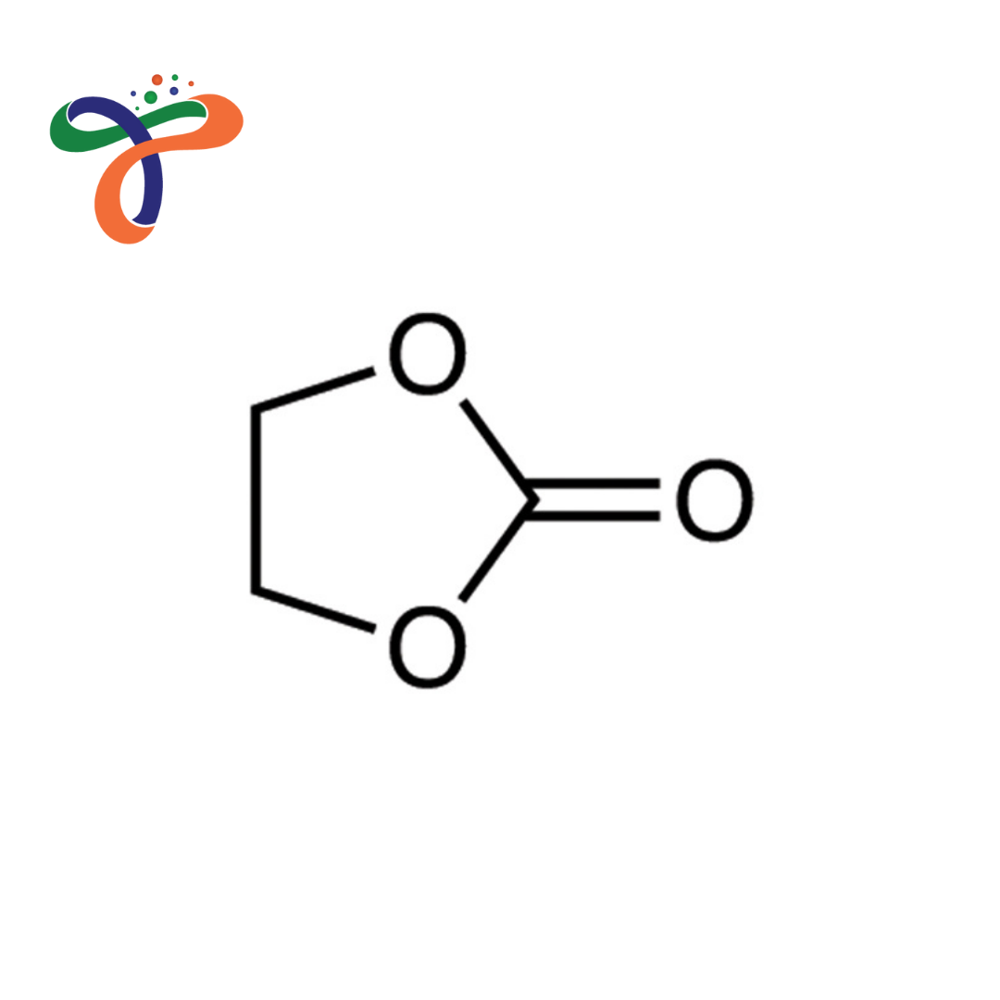
  • Structural Formula
  • C3H4O3
  • Molecular Weight
  • 88.08 g/mol Grams (g)
  • Physical Form
  • Liquid
  • Usage
  • Solvent and electrolyte solvent for lithium-ion battery electrolytes; intermediate in synthesis
 

Ethylene Carbonate (96-49-1) Trade Information

  • Minimum Order Quantity
  • 25 Kilograms
  • Payment Terms
  • Cash in Advance (CID)
  • Supply Ability
  • 5000 Kilograms Per Month
  • Delivery Time
  • 10 Days
  • Main Domestic Market
  • All India
 

About Ethylene Carbonate (96-49-1)

We are Supplier, Exporter and Contract Manufacturer.
Technical profile of Ethylene Carbonate, a high-purity raw chemical material supplied by Triveni Chemicals for industrial manufacturing and laboratory synthesis.

Technical Specifications:
CAS Number: 96-49-1
Synonyms: 2-Oxo-1,3-Dioxolane
Chemical Formula: C3H4O3

Industrial Uses & Applications:
It Is Widely Used As A Polar Aprotic Solvent And As A Key Component Of Electrolytes In Lithium Ion Batteries. Ethylene Carbonate Is Also Applied In Pharmaceuticals, Lubricants, Plasticizers, And Polymer Synthesis. It Is A Cyclic Organic Carbonate With High Dielectric Constant And Excellent Solvency For Salts.


Superior Solvent for Lithium-Ion Batteries

Owing to its high polarity and dielectric constant, Ethylene Carbonate enhances the performance and stability of lithium-ion batteries. It dissolves electrolytes efficiently, ensuring optimal ionic conductivity and battery longevity-making it a vital component for advanced energy storage technologies.


Versatile Chemical Intermediate

Ethylene Carbonate acts as a strategic chemical intermediate in industrial synthesis. It is used in the production of engineering plastics, lubricants, and specialty organic compounds. Its miscibility with water and most solvents widens its scope for various chemical manufacturing processes.

FAQ's of Ethylene Carbonate (96-49-1):


Q: How is Ethylene Carbonate used in lithium-ion batteries?

A: Ethylene Carbonate is primarily used as a solvent in lithium-ion battery electrolytes. Its high dielectric constant enables efficient dissolution of electrolyte salts, thereby enhancing ionic transport and battery performance.

Q: What are the main industrial applications of Ethylene Carbonate?

A: This compound serves as both a solvent and an intermediate in chemical synthesis. It is widely utilized in the manufacturing of lithium-ion batteries, engineering plastics, specialty lubricants, and organic chemicals.

Q: When is Ethylene Carbonate preferred over other solvents?

A: Ethylene Carbonate is chosen when a highly polar, water-miscible solvent with excellent dielectric properties is required, particularly in advanced energy storage or complex organic synthesis applications.

Q: Where can Ethylene Carbonate be sourced in India?

A: Ethylene Carbonate is available through various chemical manufacturers and suppliers across India, catering to both large-scale industrial needs and specialized research requirements.

Q: What benefits does Ethylene Carbonate offer in chemical synthesis?

A: Due to its high purity and versatility, Ethylene Carbonate facilitates efficient reactions, serves as a reliable intermediate, and helps synthesize durable plastics, lubricants, and other value-added organic products.

Q: What is the process for using Ethylene Carbonate as an intermediate?

A: In industrial synthesis, Ethylene Carbonate is introduced as a reactant or solvent to produce polycarbonates, lubricants, and other organic compounds, often under controlled temperature and pressure conditions.

Tell us about your requirement
product

Price:

Quantity
Select Unit

  • 50
  • 100
  • 200
  • 250
  • 500
  • 1000+
Additional detail
Mobile number

Email

More Products in Industrial Chemicals Category

Sodium Carbonate (497-19-8)

Sodium Carbonate (497-19-8)

Price 26.0 INR / Kilograms

Minimum Order Quantity : 25 Kilograms

Molecular Weight : 105.99 g/mol Grams (g)

Physical Form : Powder

Melting Point : 851 C

Molecular Formula : Na2CO3

Hydrazine Hydrate (10217-52-4)

Hydrazine Hydrate (10217-52-4)

Price 130.0 INR / Kilograms

Minimum Order Quantity : 25 Kilograms

Molecular Weight : 50.07 g/mol Grams (g)

Physical Form : Liquid

Melting Point : 60 C

Molecular Formula : H4N2.H2O

Potassium Borohydride (13762-51-1)

Potassium Borohydride (13762-51-1)

Price 840.0 INR / Kilograms

Minimum Order Quantity : 25 Kilograms

Molecular Weight : 53.94 g/mol Grams (g)

Physical Form : Powder

Melting Point : 520 C

Molecular Formula : BH4K

Acetoacetanilide (0102-01-02) (C10H11NO2)

Acetoacetanilide (0102-01-02) (C10H11NO2)

Price 190.0 INR / Kilograms

Minimum Order Quantity : 1 Kilograms

Molecular Weight : 220.15 g/mol Grams (g)

Physical Form : Solid

Melting Point : 115 C

Molecular Formula : C10H11NO2