About Ethylenediaminetetraacetic Acid (60-00-4)
We are Supplier, Exporter and Contract Manufacturer.
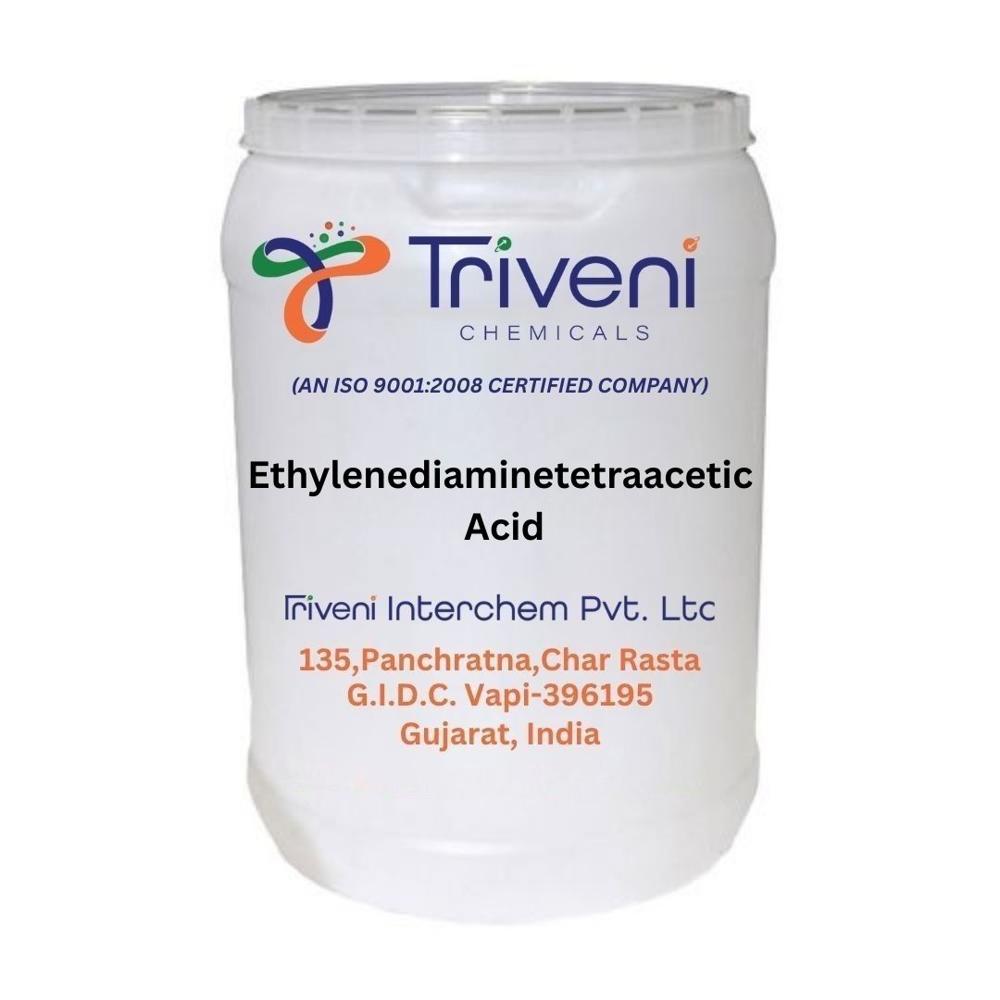
Technical profile of Ethylenediaminetetraacetic Acid, a high-purity raw chemical material supplied by Triveni Chemicals for industrial manufacturing and laboratory synthesis.
Technical Specifications:
CAS Number: 60-00-4
Synonyms: EDTA, Ethylenedinitrilotetraacetic Acid
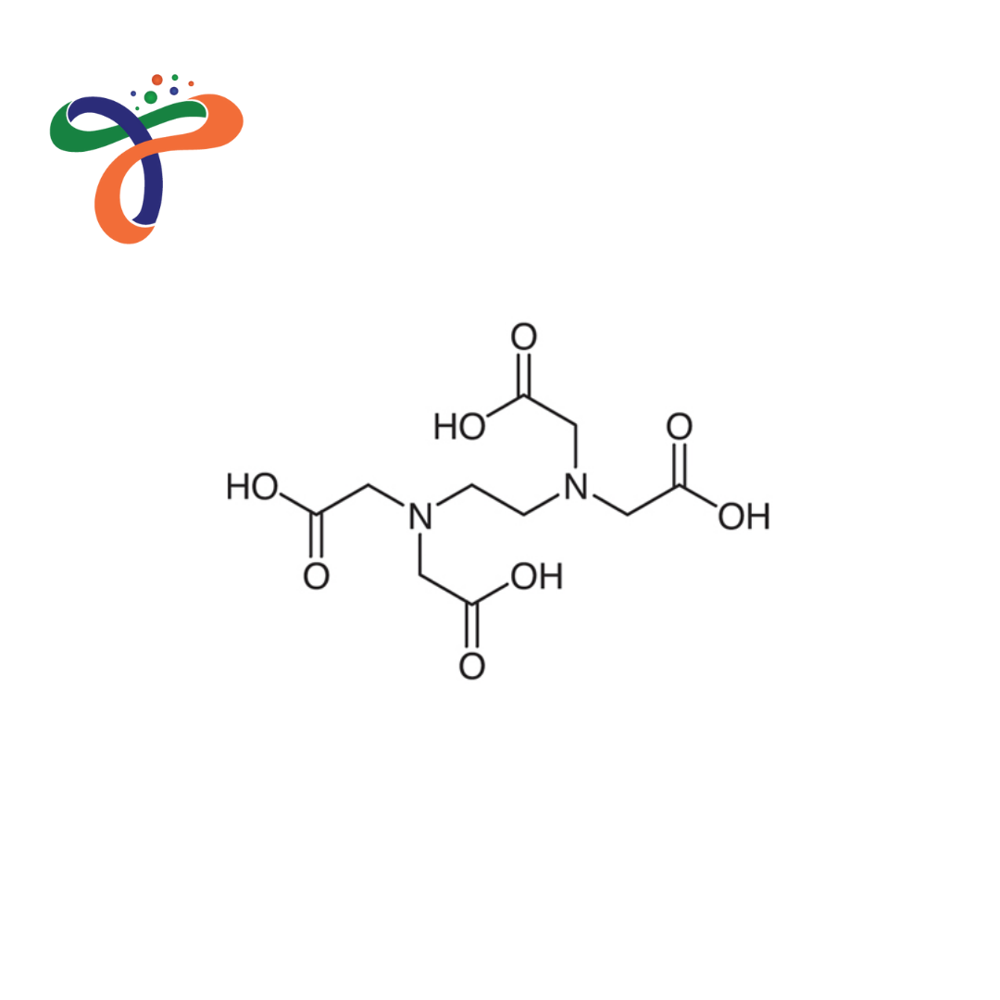
Chemical Formula: C10H16N2O8
Industrial Uses & Applications:
Ethylenediaminetetraacetic Acid Is A Widely Used Chelating Agent That Binds Metal Ions Such As Calcium, Magnesium, Iron, And Heavy Metals. It Is Commonly Applied In Detergents, Water Treatment, Textile Processing, Pulp And Paper, Cosmetics, And Pharmaceuticals To Improve Stability And Cleaning Efficiency.
Robust Chelating Agent for Metal Ion SequestrationEDTA acts as a hexadentate ligand, forming stable complexes with a wide range of metal ions. This property makes it essential for removing unwanted metal contaminants in water treatment, food, pharmaceuticals, and industrial processes. Its high purity and effective sequestration extend product shelf life and prevent metal-induced degradation.
Wide Spectrum of Applications Across IndustriesEthylenediaminetetraacetic Acid finds usage in diverse sectors. In pharmaceuticals, it is a key agent in treating heavy metal poisoning. In detergents and industrial cleaners, it stabilizes formulations by binding hard water ions. The chemical is also used in cosmetics, analytical chemistry, and as a preservative in food processing.
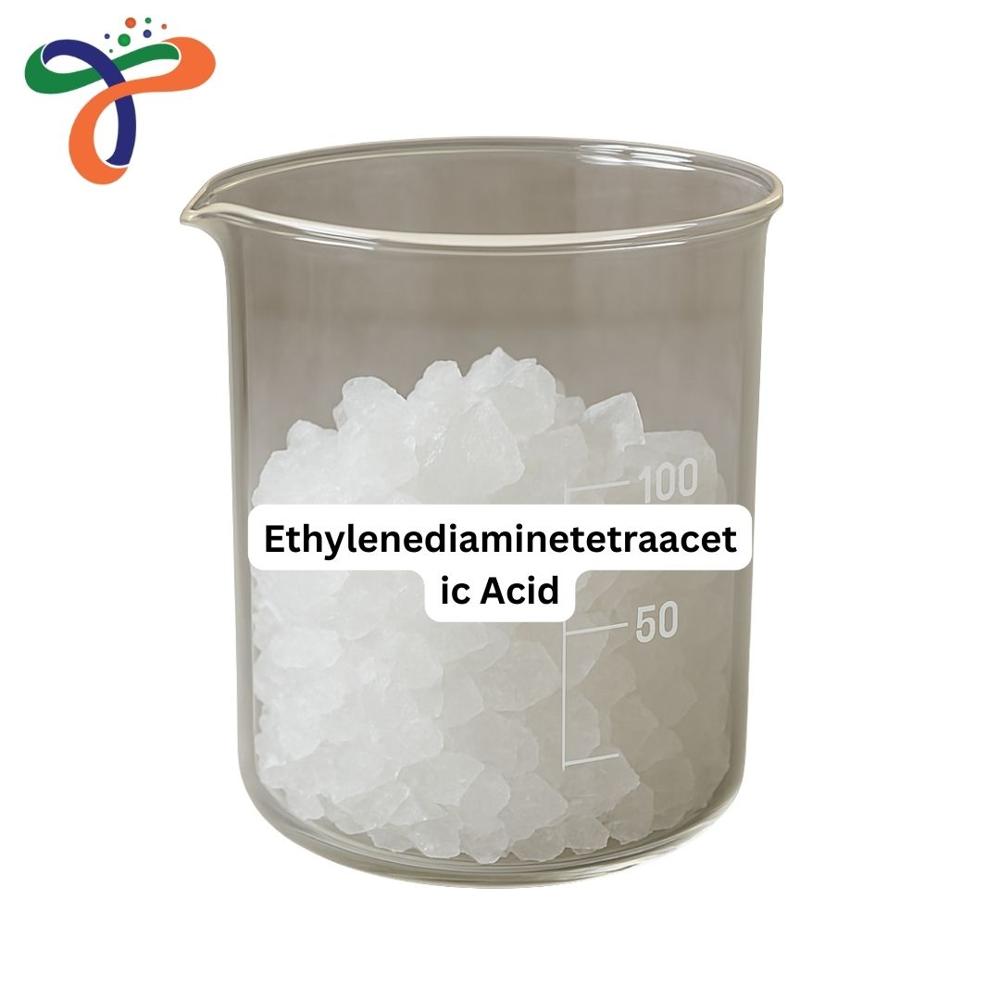
Ideal Physical and Chemical PropertiesThis white crystalline solid exhibits a melting point of 240C, refractive index of 1.542, and is readily soluble in water and polar solvents. Its robust nature ensures safe storage, easy handling, and high effectiveness in a variety of operational environments.
FAQ's of Ethylenediaminetetraacetic Acid (60-00-4):
Q: How does Ethylenediaminetetraacetic Acid function as a chelating agent?
A: EDTA operates by binding tightly to metal ions such as calcium and magnesium using its multiple donor atoms, effectively sequestering and neutralizing them. This prevents metals from participating in unwanted chemical reactions, making EDTA an essential stabilizer in numerous industrial and pharmaceutical processes.
Q: What are the main industrial applications of EDTA?
A: EDTA is widely used in water treatment to control hardness, in detergents to improve cleaning efficiency, and in pharmaceutical formulations to treat heavy metal poisoning. It also finds use in food processing as a preservative, and in analytical chemistry for precise metal ion quantification.
Q: When should EDTA be utilized in manufacturing processes?
A: EDTA should be used whenever control of trace metal ions is required to enhance product quality and stability, such as during the formulation of detergents, medicines, and food products or in water purification systems.
Q: Where can EDTA be sourced from?
A: EDTA is supplied by industrial chemical manufacturers and suppliers, especially in regions such as India, where quality and high-purity grades are readily available for industrial-scale applications.
Q: What is the process for using EDTA in water treatment?
A: In water treatment, EDTA is added to sequester metal ions like calcium and magnesium, which cause hardness. By forming stable complexes, it prevents scale formation, improves the longevity of equipment, and ensures water quality.
Q: How is the benefit of EDTA realized in pharmaceuticals and cosmetics?
A: In pharmaceuticals, EDTA is utilized to chelate heavy metals, facilitating their removal and minimizing toxicity. In cosmetics, it stabilizes formulations by preventing metal-induced oxidation, thereby extending product shelf life.






 Send Inquiry
 Send Inquiry
 Send Inquiry
 Call Me Free
 English
 Spanish
 French
 German
 Italian
 Chinese (Simplified)
 Japanese
 Korean
 Arabic
 Portuguese