French Chalk (379.26 g/mol) About
We are Supplier, Exporter and Contract Manufacturer.
Technical profile of French Chalk, a high-purity raw chemical material supplied by Triveni Chemicals for industrial manufacturing and laboratory synthesis.
Industrial Uses & Applications:
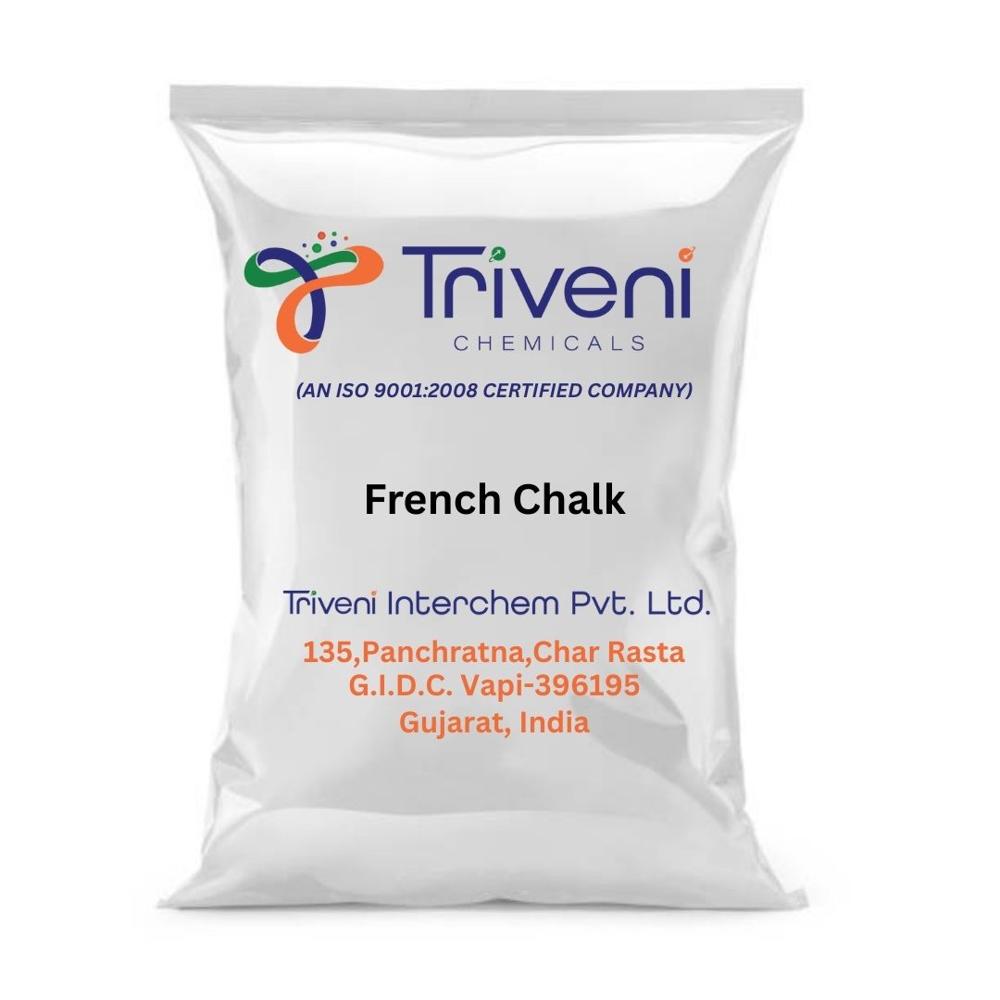
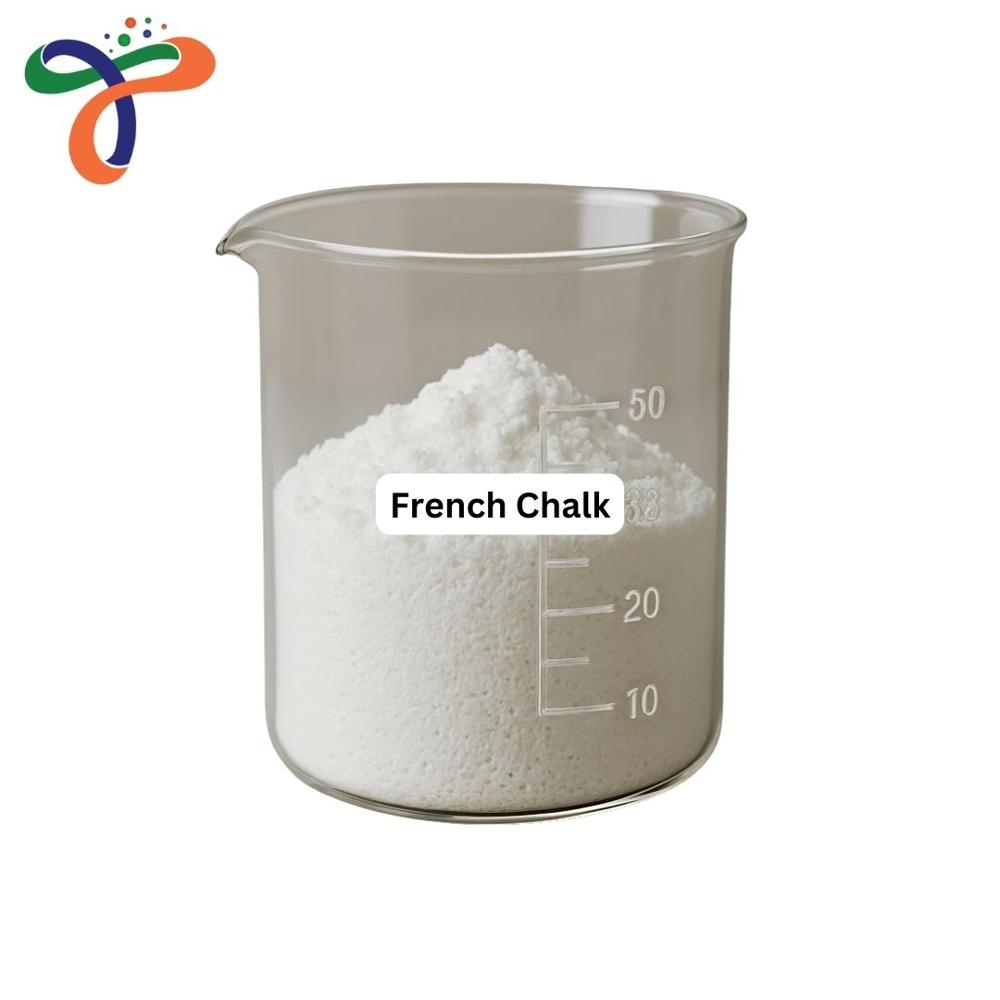
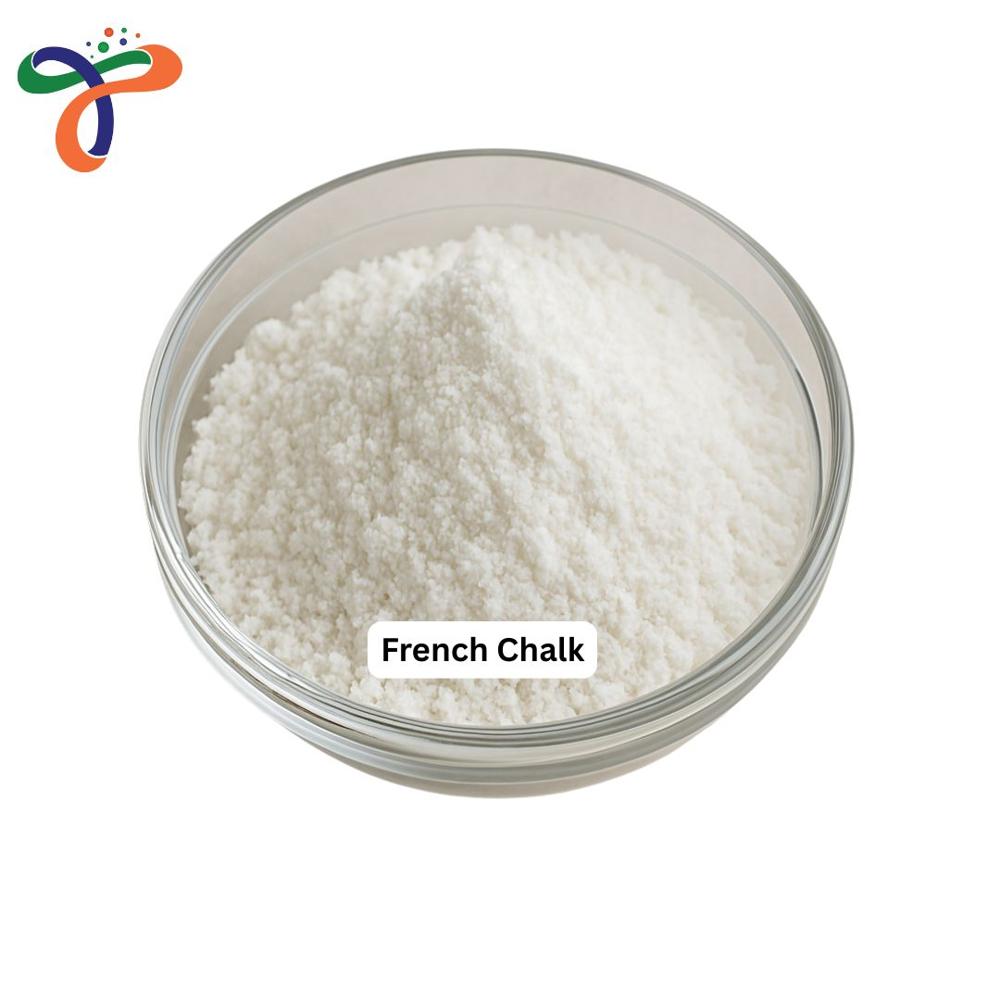
French Chalk Is A Naturally Occurring Hydrated Magnesium Silicate Widely Used As A Functional Filler In Industrial Applications. It Is Valued For Its Softness, Fine Particle Size, Chemical Inertness, And Excellent Lubricating Properties. French Chalk Is Commonly Used In Rubber, Plastics, Paints, Ceramics, Paper, And Cosmetics To Improve Surface Finish, Processing Efficiency, And Product Consistency. It Also Acts As An Anti Sticking And Anti Caking Agent In Manufacturing Processes.
Versatile Industrial ApplicationsFrench Chalk's unique properties make it ideal as a dry lubricant and anti-sticking agent in rubber and plastic processing. Its superior softness and water-repellent nature are also valued in the production of paints, paper, and cosmetics. With its impressive melting point and purity, this mineral finds extensive industrial use.
Enhancing Consumer and Pharmaceutical ProductsBesides industrial use, French Chalk is a crucial ingredient in cosmetics as a dusting powder and in pharmaceuticals as an anti-caking and filler agent. Its mild nature and silky texture contribute to the quality and safety of consumer products such as toothpaste and powders.
FAQ's of French Chalk (379.26 g/mol):
Q: How is French Chalk typically used in industrial applications?
A: French Chalk is primarily used in industries as a dry lubricant and anti-sticking agent for rubber and plastic processing. It is also incorporated as a filler in paints and plastics due to its softness, water-repellent nature, and high purity.
Q: What are the main benefits of using French Chalk in cosmetics and pharmaceuticals?
A: French Chalk's high purity and soft, silky texture make it ideal as a cosmetic dusting powder and a filler or anti-caking agent in pharmaceuticals like toothpaste. It helps improve product texture, appearance, and functional stability.
Q: When should you use French Chalk as a filler material?
A: French Chalk is best employed as a filler when you need to enhance product texture, improve water repellency, or add bulk without compromising color or purity, especially in paints, plastics, rubber, and paper manufacturing.
Q: Where does French Chalk derive its water repellency and softness?
A: French Chalk's water repellency and softness stem from its structure as a hydrated magnesium silicate. This natural composition ensures a silky powder with excellent moisture resistance.
Q: What is the process for incorporating French Chalk into products?
A: French Chalk is generally added during the production phase by blending the powder with base materials-such as polymers, rubber, or paint resins-to create uniform dispersion and impart the desired properties.
Q: How does the purity of French Chalk affect its performance in applications?
A: With a purity of 98-99%, French Chalk ensures consistent physical properties, such as color and softness, as well as chemical inertness. This high purity enhances its function as a safe, effective additive in sensitive products like pharmaceuticals and cosmetics.






 Send Inquiry
 Send Inquiry
 Send Inquiry
 English
 Spanish
 French
 German
 Italian
 Chinese (Simplified)
 Japanese
 Korean
 Arabic
 Portuguese