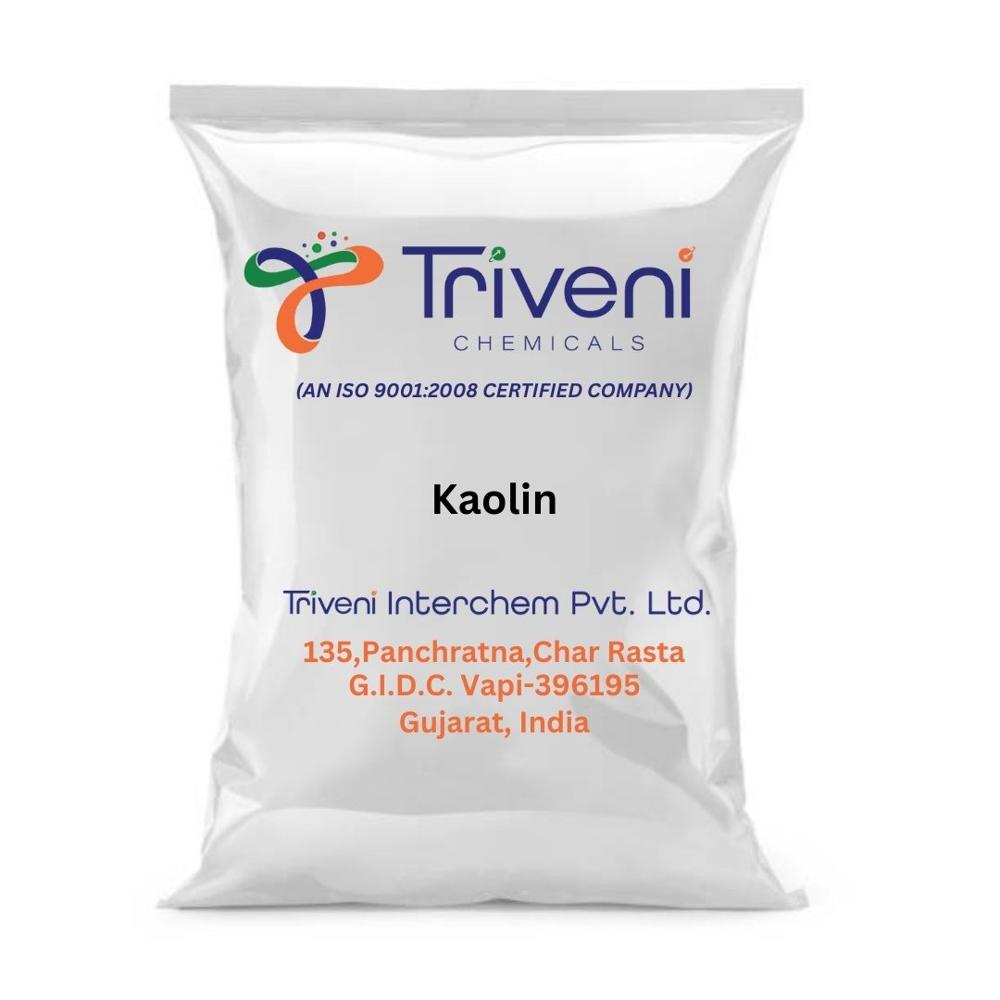
Kaolin (1332-58-7) (Al2H4O9Si2) About
We are Supplier, Exporter and Contract Manufacturer.
Technical profile of Kaolin, a high-purity raw chemical material supplied by Triveni Chemicals for industrial manufacturing and laboratory synthesis.
Technical Specifications:
CAS Number: 1332-58-7
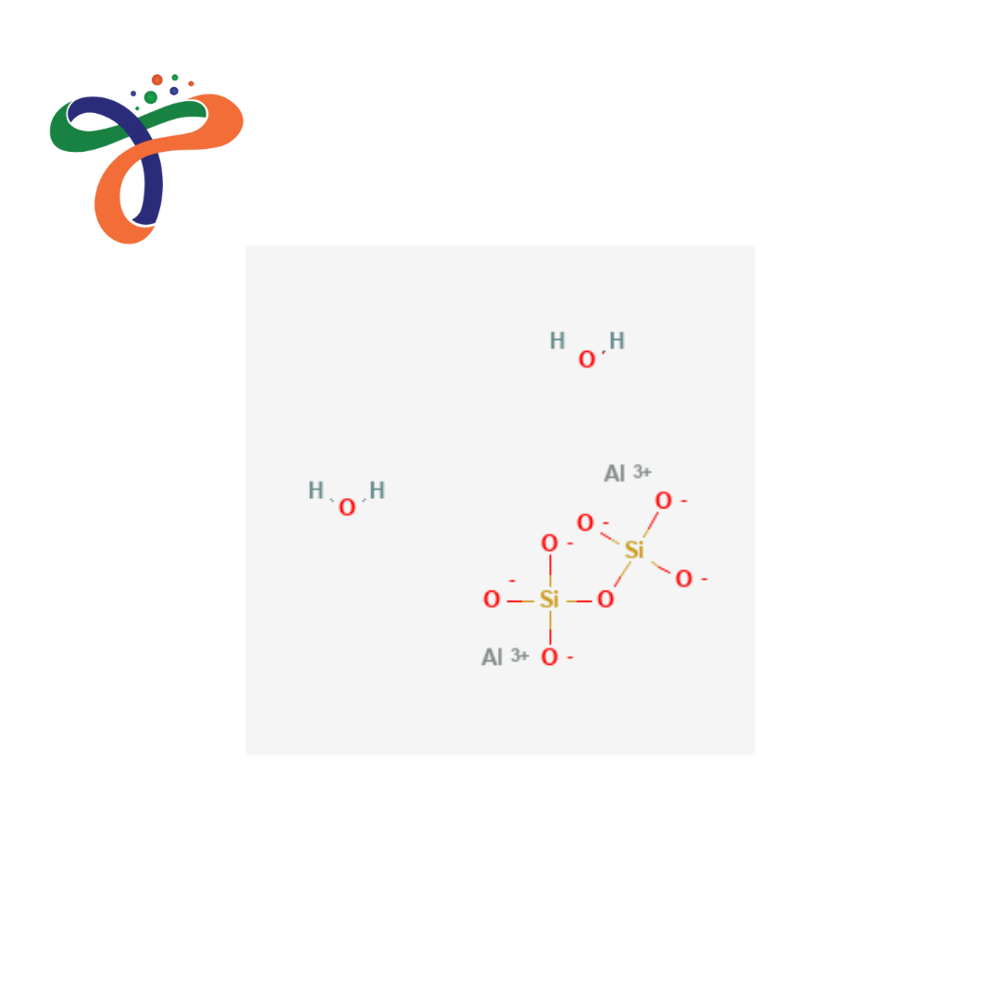
Chemical Formula: Al2H4O9Si2
Industrial Uses & Applications:
Kaolin Is A Naturally Occurring White Clay Mineral Primarily Composed Of Hydrated Aluminum Silicate. It Is Valued For Its Fine Particle Size, High Brightness, Chemical Inertness, And Good Insulating Properties. Kaolin Is Widely Used In Paper Coating And Filling To Improve Whiteness And Smoothness, As Well As In Ceramics, Paints, Rubber, Plastics, And Cosmetics. It Is Also Used In Pharmaceuticals And Agriculture.
Versatile Industrial Roles of KaolinKaolin's fine, white powder and high purity make it indispensable across many industries. Its plate-like particles are essential for ceramic manufacturing, imparting both smoothness and strength. In paper production, kaolin is prized as a filler and coating agent to improve brightness and print quality. The material's inertness and exceptional dispersion qualities make it useful in paints, coatings, rubber, cosmetics, and pharmaceutical formulations.
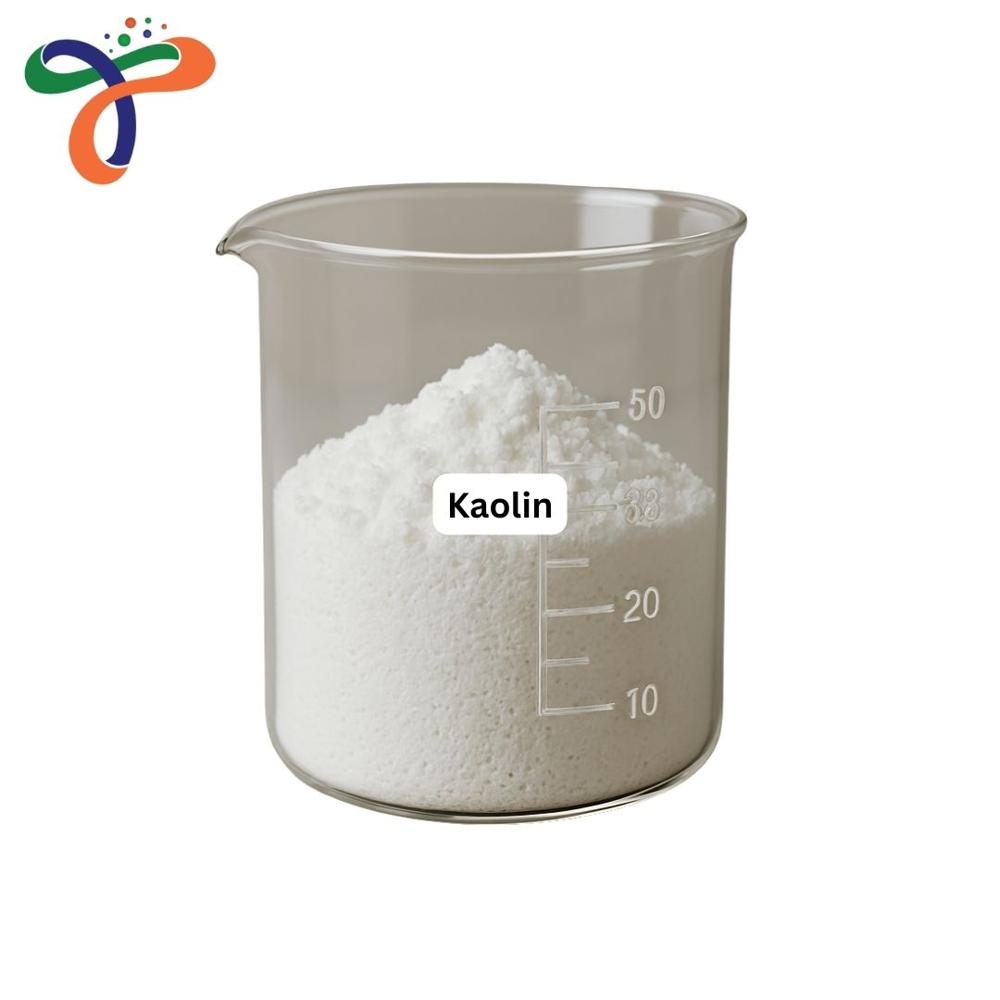
Physical and Chemical PropertiesKaolin (Al2H4O9Si2) possesses a molecular weight of 258.16 g/mol and a melting point of 1870C. It is a non-soluble mineral, stable in water and most solvents, with a refractive index of 1.55. With a purity level between 98-99%, the product appears as a white, fine powder, suitable for precision applications in demanding industrial environments.
FAQ's of Kaolin (1332-58-7) (Al2H4O9Si2):
Q: How is kaolin typically used in the ceramics and paper industries?
A: Kaolin serves as a fundamental ingredient in ceramics for enhancing strength, texture, and whiteness of porcelain and other products. In the paper industry, it acts as a filler and coating material, boosting brightness, smoothness, and printability of paper.
Q: What benefits does kaolin offer in cosmetic and pharmaceutical formulations?
A: Kaolin's mildness, adsorptive properties, and fine texture make it ideal for skin care products, masks, and powders. In pharmaceuticals, it is used as an inert filler and an ingredient in formulations requiring gentle, non-reactive additives.
Q: When should I choose kaolin over other minerals for paints and coatings?
A: Kaolin is preferred when you require enhanced opacity, dispersibility, and surface smoothness without affecting the formulation's reactivity. Its unique plate-like structure promotes better pigment suspension and uniform film formation in paints and coatings.
Q: Where is kaolin commonly sourced and supplied in India?
A: Kaolin is widely available through several industrial mineral manufacturers and suppliers across India, particularly in states like Rajasthan, Gujarat, and West Bengal. These regions are known for their high-quality kaolin reserves.
Q: What is the typical process for using kaolin in rubber production?
A: In rubber manufacturing, kaolin is blended as a reinforcing and extending filler. It improves processing properties, increases tensile strength, and enhances the durability and longevity of the final rubber products.
Q: How does kaolin's insolubility influence its industrial applications?
A: Kaolin's insolubility in water and most solvents ensures it remains stable and non-reactive in formulations, making it suitable for use in products that require long-term stability and integrity, such as paints, ceramics, and pharmaceuticals.






 Send Inquiry
 Send Inquiry
 Send Inquiry
 English
 Spanish
 French
 German
 Italian
 Chinese (Simplified)
 Japanese
 Korean
 Arabic
 Portuguese