Back to top
Mercury Sulfide (1344-48-5)

Mercury Sulfide (1344-48-5)

Price 13700.0 INR/ Kilograms

MOQ : 25 Kilograms

Mercury Sulfide (1344-48-5) Specification

  • Molecular Formula
  • NA
  • Structural Formula
  • NA
  • CAS No
  • 1344-48-5
  • Refractive Rate
  • 2.4
  • Purity
  • 98 99%
  • Molecular Weight
  • 232.66 g/mol Grams (g)
  • Appearance
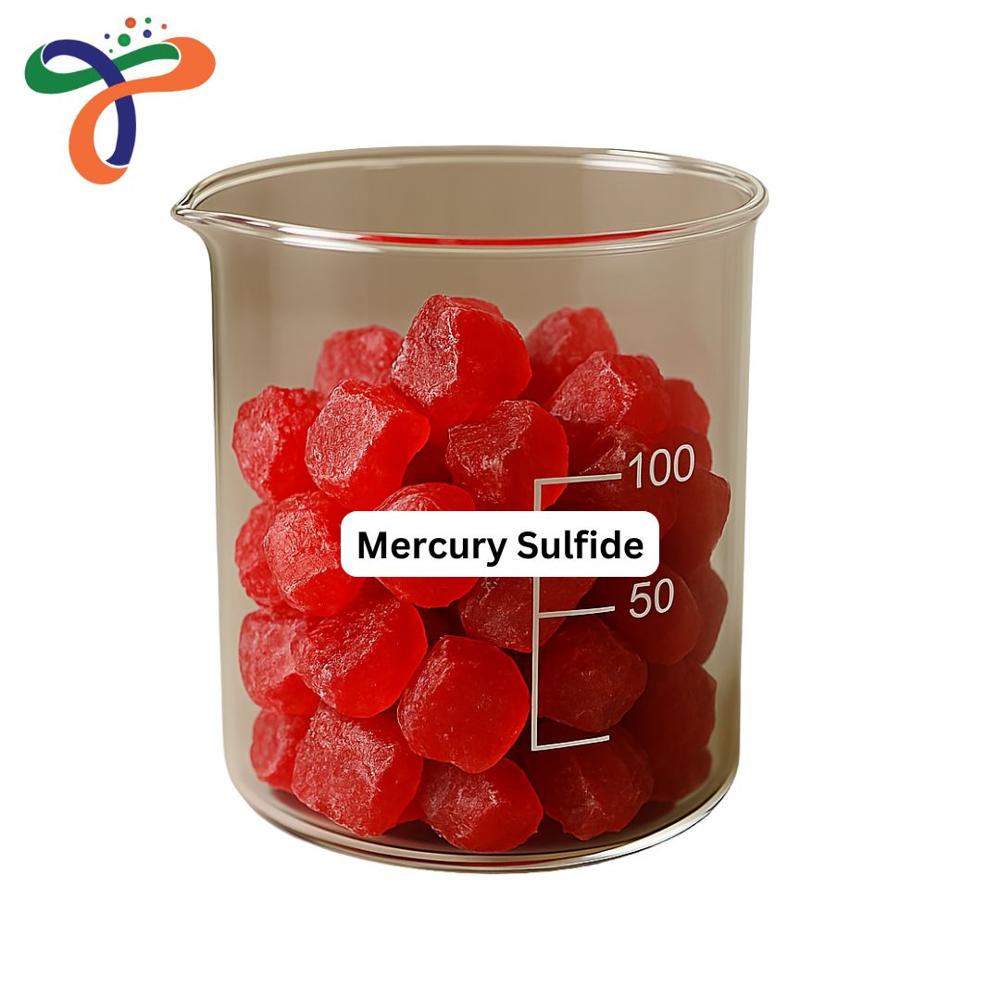
  • Bright red crystalline solid
  • Solubility
  • Insoluble in water; practically insoluble in most solvents
  • Melting Point
  • 527 C
  • Application
  • Industrial
  • Physical Form
  • Solid
  • Properties
  • Mercury sulfide is a dense, inorganic compound occurring naturally as the mineral cinnabar or synthetically as vermilion. Historically valued as a vibrant red pigment, it is now primarily studied for its unique semiconductor properties and wide bandgap, with emerging applications in photocatalysis and high-temperature radiation detectors.
  • Usage
  • Pigment for red pigments in paints and ceramics; ore of mercury
 

Mercury Sulfide (1344-48-5) Trade Information

  • Minimum Order Quantity
  • 25 Kilograms
  • Payment Terms
  • Cash in Advance (CID)
  • Supply Ability
  • 5000 Kilograms Per Month
  • Delivery Time
  • 10 Days
  • Main Domestic Market
  • All India
 

About Mercury Sulfide (1344-48-5)

We are Supplier, Exporter and Contract Manufacturer.
Technical profile of Mercury Sulfide, a high-purity raw chemical material supplied by Triveni Chemicals for industrial manufacturing and laboratory synthesis.

Technical Specifications:
CAS Number: 1344-48-5
Synonyms: Mercuric Sulfide Red

Industrial Uses & Applications:
It Appears As A Red To Black Solid, Insoluble In Water And Most Acids.
Mercury Sulfide Is Primarily Used As A Raw Material For Mercury Extraction And In The Manufacture Of Pigments, Ceramics, And Traditional Medicines In Limited, Regulated Contexts. Despite Its Low Solubility, Mercury Sulfide Contains Mercury And Is Toxic.


Vivid Red Pigment Applications

Mercury sulfide stands out for its intense red color, making it an ideal pigment in paints and ceramics. Historically known as vermilion, it provides lasting vibrancy in artworks and crafted objects, remaining stable under a variety of conditions. Its use in pigmentation endures due to its brightness, opacity, and resistance to light and chemicals.


Source of Elemental Mercury

This compound is a vital ore for extracting elemental mercury. Cinnabar, its natural mineral form, is processed in specialized industrial facilities to obtain mercury for use in instruments, electronics, and other industries. Its high mercury content makes it a key resource for mercury production in India and worldwide.


Emerging Semiconductor Properties

Beyond its historical uses, mercury sulfide is gaining attention for its semiconductor characteristics. The wide bandgap and high refractive rate make it valuable in photocatalysis and in the development of high-temperature radiation detectors, potentially advancing various technologies in the industrial sector.

FAQ's of Mercury Sulfide (1344-48-5):


Q: How is mercury sulfide used in the production of red pigments?

A: Mercury sulfide, commonly referred to as vermilion, provides the striking red coloration in paints and ceramic glazes due to its vivid, stable hue. Its crystalline form makes it an excellent and durable choice for artistic and industrial pigment applications.

Q: What is the process for extracting mercury from mercury sulfide ore?

A: Elemental mercury is extracted by heating mercury sulfide (cinnabar) in a current of air. This process releases mercury vapor, which is then condensed and collected for use in various industrial and scientific instruments.

Q: Where is mercury sulfide primarily manufactured and supplied?

A: Mercury sulfide is manufactured and supplied by chemical producers, including those based in India, serving both domestic and international markets as a pigment and ore of mercury.

Q: When is mercury sulfide most commonly used within industry?

A: Mercury sulfide finds industrial use in pigment production throughout the year, while extraction of mercury from cinnabar ore is typically aligned with market demand and processing schedules in dedicated facilities.

Q: What are the benefits of using mercury sulfide as a pigment?

A: Mercury sulfide offers exceptional color strength, opacity, and resistance to chemical reactions and fading, making it valuable for producing long-lasting red paints and ceramic finishes.

Q: How is mercury sulfide's solubility relevant to its industrial applications?

A: Being virtually insoluble in water and most solvents, mercury sulfide maintains its stability as a pigment in paints and ceramics, ensuring that the color remains unaffected by moisture and common chemical exposures.

Tell us about your requirement
product

Price:

Quantity
Select Unit

  • 50
  • 100
  • 200
  • 250
  • 500
  • 1000+
Additional detail
Mobile number

Email

More Products in Industrial Chemicals Category

Polyvinyl Alcohol (9002-89-5)

Polyvinyl Alcohol (9002-89-5)

Price 48.0 INR / Kilograms

Minimum Order Quantity : 25 Kilograms

Molecular Formula : NA

CAS No : 9002895

Purity : 98 99%

Refractive Rate : 1.48

2-Nitrobenzaldehyde (552-89-6) (C7H5NO3)

2-Nitrobenzaldehyde (552-89-6) (C7H5NO3)

Price 2790.0 INR / Kilograms

Minimum Order Quantity : 25 Kilograms

Molecular Formula : C7H5NO3

CAS No : 552896

Purity : 98 99%

Refractive Rate : 1.58

Boron Trifluoride Etherate

Boron Trifluoride Etherate

Price 485.0 INR / Kilograms

Minimum Order Quantity : 1 Kilograms

Molecular Formula : NA

CAS No : NA

Purity : 98 99%

Refractive Rate : 1.36

Sodium Bisulphate Anhydrous

Sodium Bisulphate Anhydrous

Price 23.0 INR / Kilograms

Minimum Order Quantity : 25 Kilograms

Molecular Formula : NaHSO4

CAS No : 7681381

Purity : 98 99%

Refractive Rate : 1.5