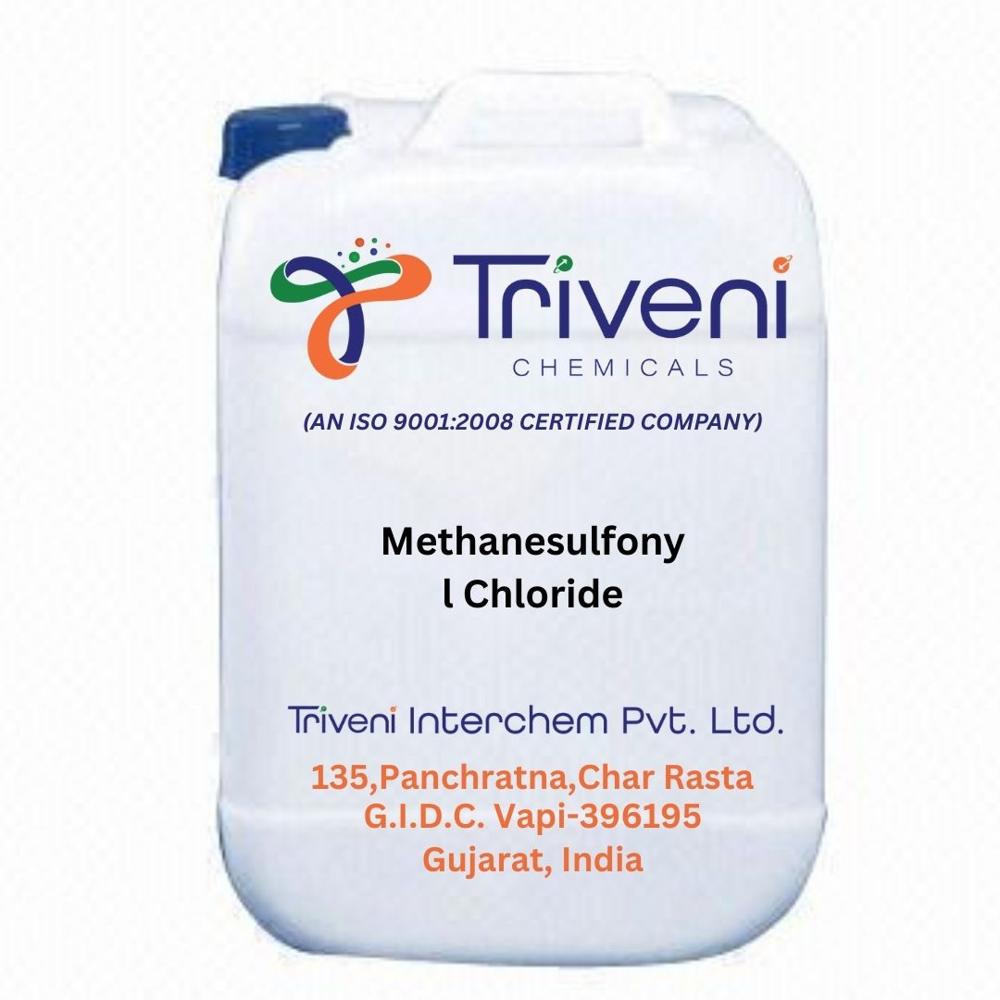
About Methanesulfonyl Chloride (124-63-0)
We are Supplier, Exporter and Contract Manufacturer.
Technical profile of Methanesulfonyl Chloride, a high-purity raw chemical material supplied by Triveni Chemicals for industrial manufacturing and laboratory synthesis.
Technical Specifications:
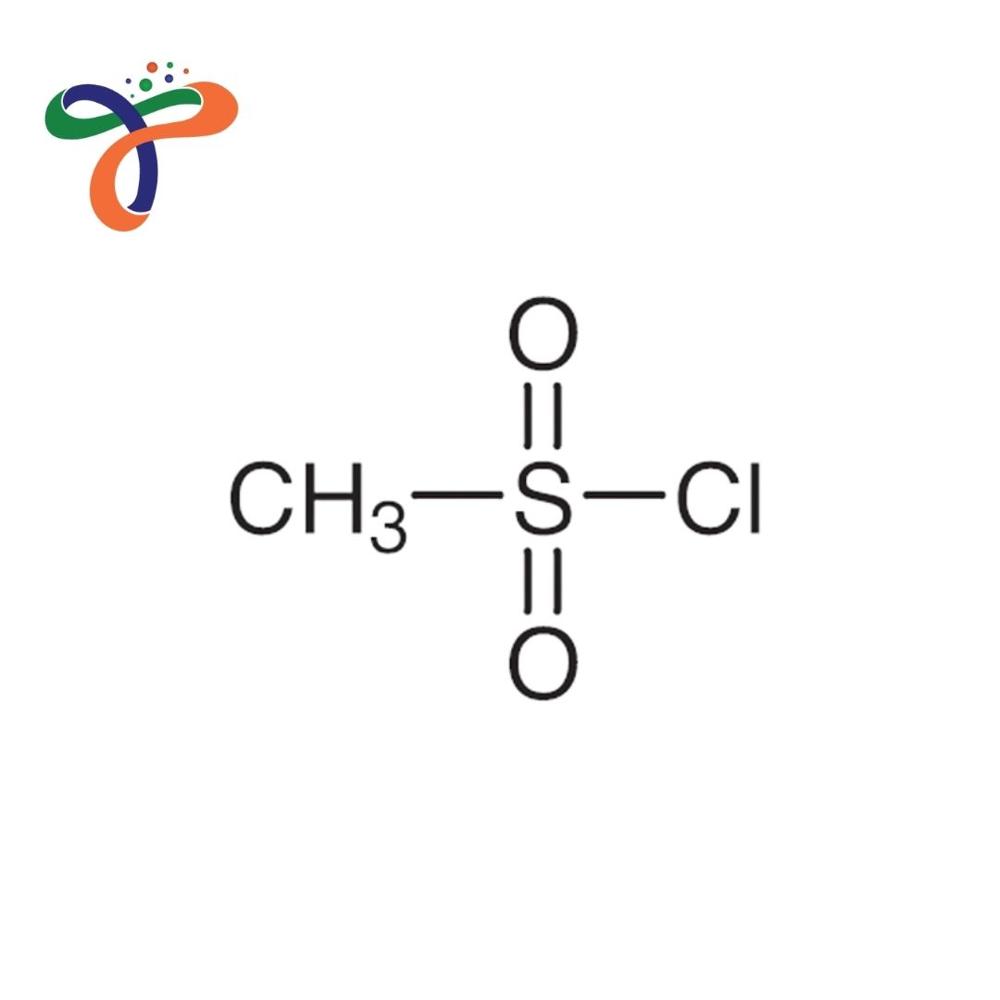
CAS Number: 124-63-0
Synonyms: Methyl Sulfochloride, Chloro Methyl Sulfone, Methanesulfonic Acid Chloride
Chemical Formula: CH3ClO2S
Industrial Uses & Applications:
It Is Widely Used As A Sulfonylating Agent In Organic Synthesis, Particularly In The Manufacture Of Pharmaceuticals, Agrochemicals, And Specialty Chemical Intermediates. It Readily Reacts With Alcohols And Amines To Form Mesylates And Sulfonamides, Making It Valuable For Activation Of Hydroxyl Groups.
Key Industrial ApplicationsMethanesulfonyl Chloride is essential in pharmaceutical, agrochemical, and chemical research industries. Its role as a sulfonylating agent enables the production of mesylates from alcohols and amines, which are vital intermediates in synthesizing complex molecules used in drug and pesticide manufacturing.
Reactivity and HandlingDue to its high reactivity, Methanesulfonyl Chloride demands careful handling in controlled environments. It reacts vigorously with water, releasing hydrochloric acid fumes. Proper storage and adherence to safety protocols ensure efficient use in organic synthesis without compromising safety or yield.
Benefits in Organic SynthesisThis compound greatly enhances synthetic efficiency by introducing the mesyl group, resulting in mesylates that serve as excellent leaving groups in nucleophilic substitution reactions. This property streamlines the creation of complex molecules and is especially beneficial for accelerating the synthesis of pharmaceuticals and fine chemicals.
FAQ's of Methanesulfonyl Chloride (124-63-0):
Q: How is Methanesulfonyl Chloride used in organic synthesis?
A: Methanesulfonyl Chloride functions as a sulfonylating agent, primarily used to convert alcohols and amines into mesylates. Mesylates formed in this process act as effective leaving groups, facilitating nucleophilic substitution reactions essential for pharmaceutical and agrochemical synthesis.
Q: What safety precautions should be observed when handling Methanesulfonyl Chloride?
A: Since Methanesulfonyl Chloride reacts violently with water and releases corrosive fumes, always handle it in a fume hood, use appropriate personal protective equipment (PPE), and store it in tightly sealed containers away from moisture.
Q: When should Methanesulfonyl Chloride be used instead of other sulfonyl chlorides?
A: Choose Methanesulfonyl Chloride when introducing the mesyl group to organic molecules is desired, as its reactivity offers superior efficiency and selectivity compared to some other sulfonyl chlorides, particularly for making mesylates in pharmaceutical intermediates.
Q: Where can Methanesulfonyl Chloride be sourced in India?
A: Methanesulfonyl Chloride is manufactured and supplied by various chemical suppliers throughout India, catering to industrial, research, and pharmaceutical sectors. Ensure you purchase from reputable suppliers for high purity (98-99%).
Q: What is the benefit of converting alcohols to mesylates using Methanesulfonyl Chloride?
A: Converting alcohols to mesylates enhances their reactivity, making them more amenable to nucleophilic substitution. This transformation is pivotal for efficient and high-yielding syntheses, especially in the development of pharmaceuticals and agrochemicals.
Q: How does Methanesulfonyl Chloride's solubility affect its application?
A: Its solubility in organic solvents (e.g., diethyl ether) allows easy integration into various reaction systems. However, its reaction with water necessitates strictly anhydrous conditions during usage in organic synthesis.







 Send Inquiry
 Send Inquiry
 Send Inquiry
 Call Me Free
 English
 Spanish
 French
 German
 Italian
 Chinese (Simplified)
 Japanese
 Korean
 Arabic
 Portuguese