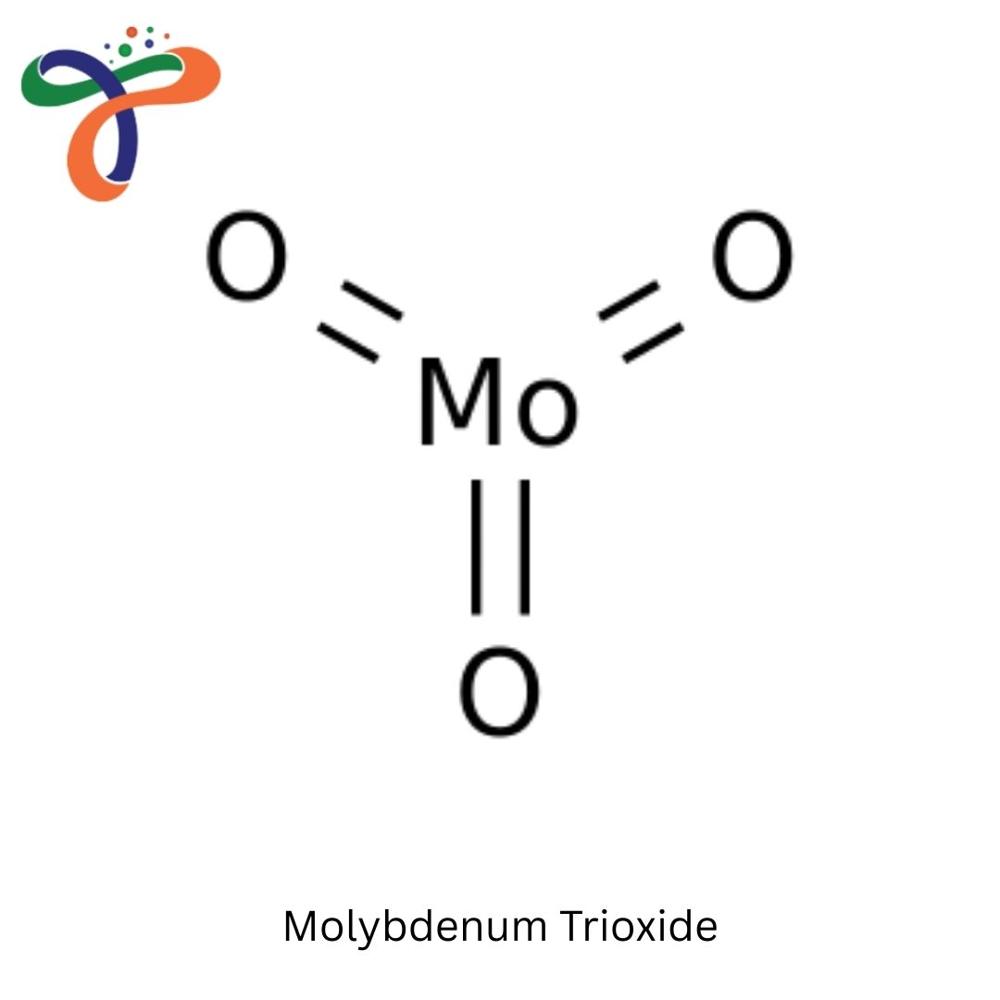
Molybdenum Trioxide (1313-27-5) About
We are Supplier, Exporter and Contract Manufacturer.
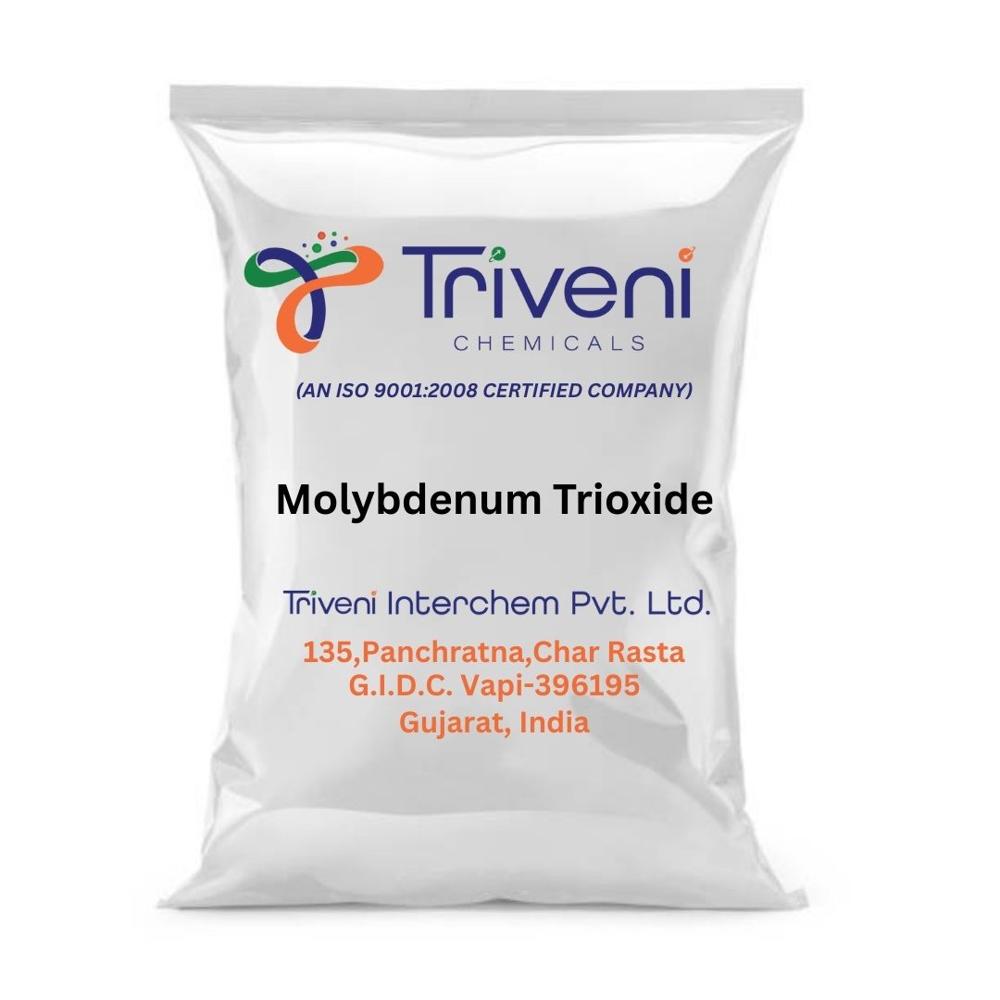
Technical profile of Molybdenum Trioxide, a high-purity raw chemical material supplied by Triveni Chemicals for industrial manufacturing and laboratory synthesis.
Technical Specifications:
CAS Number: 1313-27-5
Industrial Uses & Applications:
Molybdenum Trioxide Is An Inorganic Compound Widely Used In Industrial And Chemical Applications. It Is Valued For Its High Purity, Thermal Stability, And Role As A Key Molybdenum Source. Molybdenum Trioxide Is Commonly Used In The Production Of Molybdenum Metal And Ferro Molybdenum Alloys, As Well As In Catalysts For Petroleum Refining And Chemical Processes.
Key Industrial ApplicationsMolybdenum Trioxide plays a crucial role as a catalyst in industrial chemical processes, notably in the synthesis of acrylonitrile and formaldehyde. Its ability to facilitate oxidation reactions is leveraged widely in the chemical industry. Additionally, it is integral in producing specialty alloys, high-performance ceramics, and as a pigment additive, owing to its chemical durability and tunable physical properties.
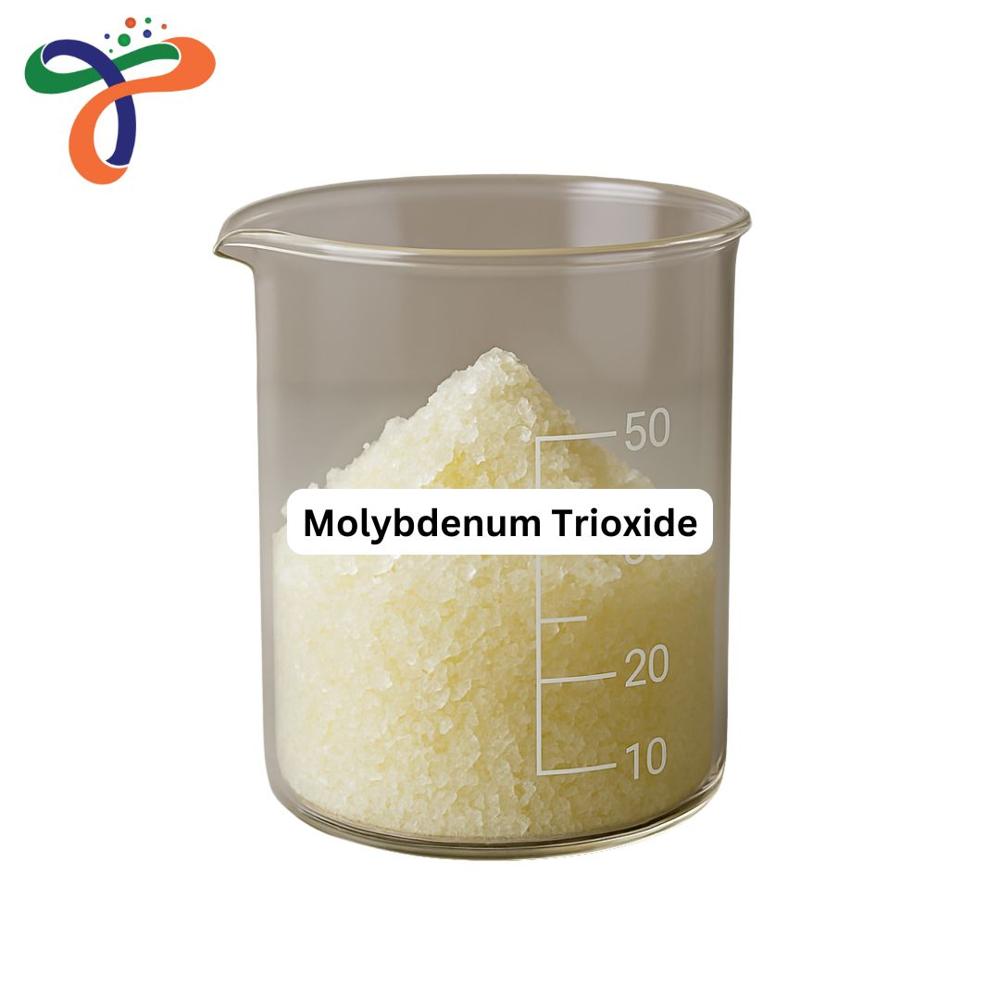
Physical Properties and FormSupplied as a yellow powder, Molybdenum Trioxide exhibits high purity (98-99%), excellent reactivity, and forms various polymorphs. Its melting point is 795C, and it has a refractive index of 2.2. The powder is slightly soluble in water but dissolves more readily in hot alkali solutions, supporting diverse processing methods and applications.
FAQ's of Molybdenum Trioxide (1313-27-5):
Q: How is Molybdenum Trioxide commonly used in industrial processes?
A: Molybdenum Trioxide is mainly utilized as a catalyst for industrial oxidation reactions, such as the production of acrylonitrile and formaldehyde. It is also employed in forming specialty alloys, high-grade ceramics, and as a pigment in various applications.
Q: What benefits does Molybdenum Trioxide offer in catalyst applications?
A: This compound's high purity and reactivity enable efficient oxidation and conversion processes, resulting in higher product yield and quality. Its polymorphic structures enhance its versatility for various industrial requirements.
Q: When should Molybdenum Trioxide be chosen over other catalysts?
A: It should be selected when reactions require robust oxidation capability, high thermal stability (melting at 795C), and where a yellow pigment is desired alongside catalytic activity, especially in chemical manufacturing and pigment industries.
Q: Where can Molybdenum Trioxide be sourced for industrial use?
A: It is available from specialized chemical manufacturers and suppliers, including reputable exporters in India, catering to global industrial and laboratory needs with purity levels of 98-99%.
Q: What is the process for using Molybdenum Trioxide in ceramic or alloy manufacturing?
A: During ceramic or alloy production, Molybdenum Trioxide is incorporated into the base material mix. Under high temperatures, it reacts or integrates with other components, enhancing mechanical strength and electrical properties.
Q: What is the solubility of this compound and how does it affect its applications?
A: Molybdenum Trioxide is slightly soluble in water but dissolves better in hot alkali solutions. This property allows ease of incorporation in processes where dissolution and subsequent reaction are required, especially in chemical syntheses and integration into coatings or pigments.







 Send Inquiry
 Send Inquiry
 Send Inquiry
 English
 Spanish
 French
 German
 Italian
 Chinese (Simplified)
 Japanese
 Korean
 Arabic
 Portuguese