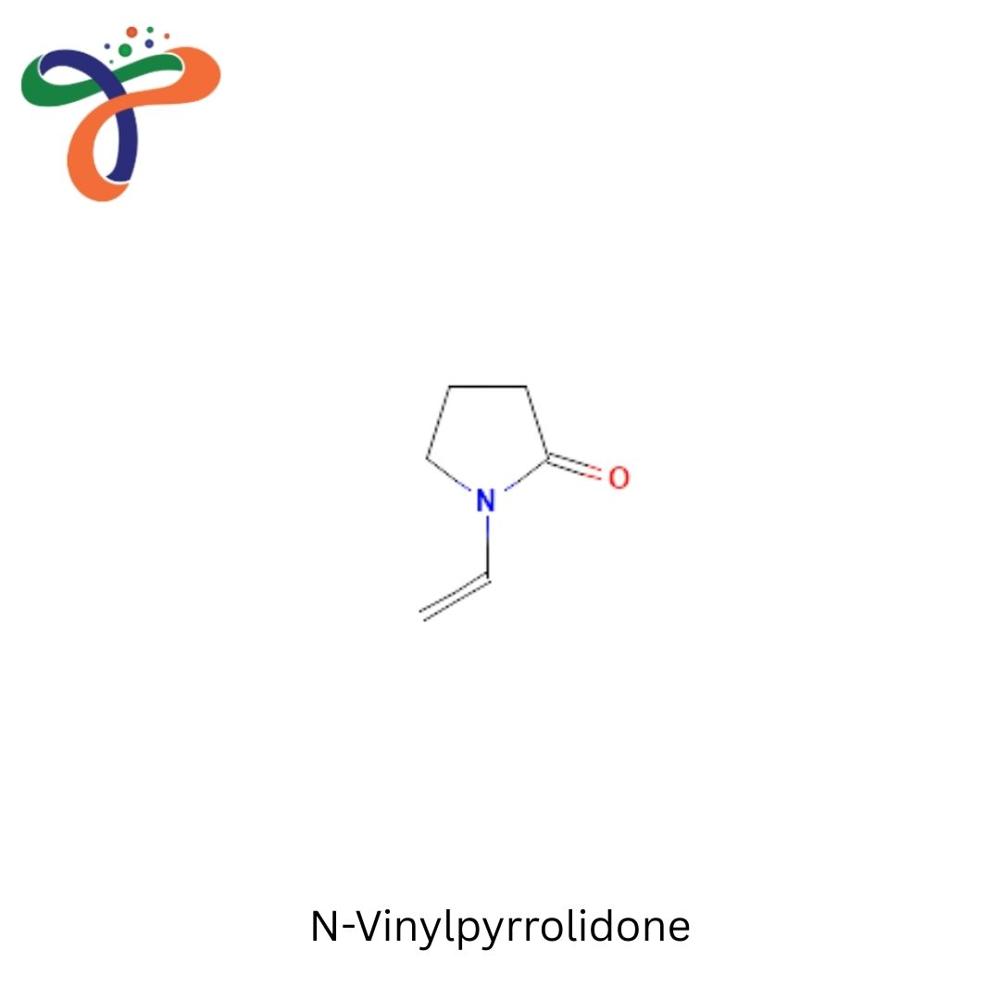
About N-Vinylpyrrolidone (88-12-0) (C6H9NO)
We are Supplier, Exporter and Contract Manufacturer.
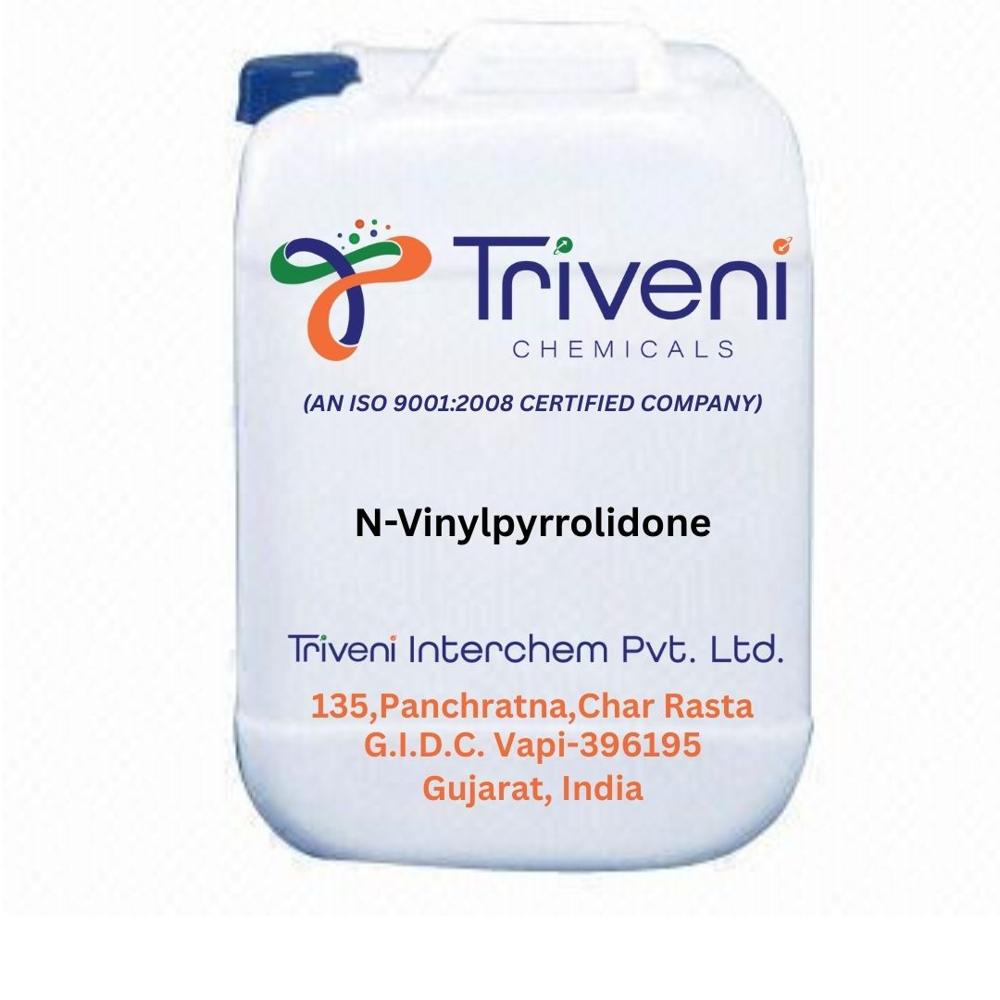
Technical profile of N-Vinylpyrrolidone, a high-purity raw chemical material supplied by Triveni Chemicals for industrial manufacturing and laboratory synthesis.
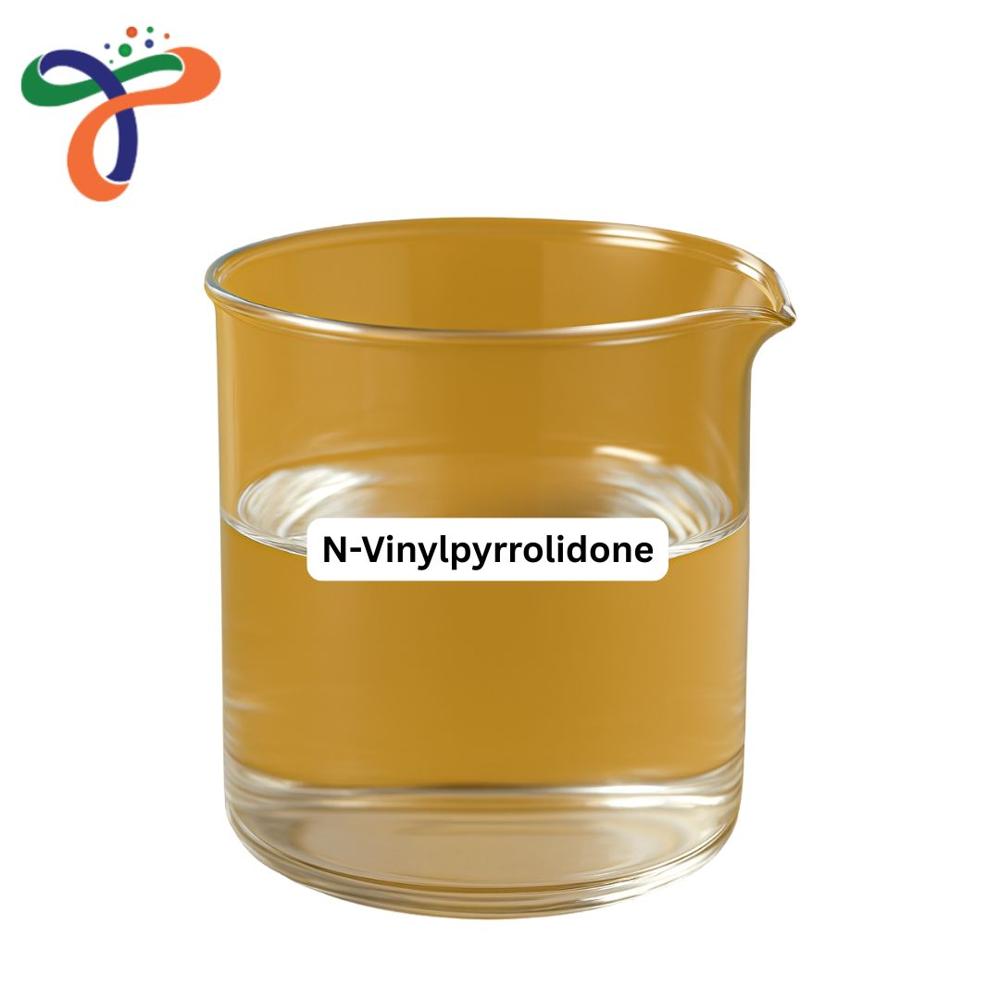
N-Vinylpyrrolidone (NVP) is a vinyl monomer with the chemical formula C6H9NO and molecular weight 112.15 g/mol. It appears as a clear, colorless to pale yellow liquid with a mild characteristic odor. It is miscible with water and many organic solvents. It is highly reactive due to its vinyl group and can polymerize easily, so it is typically stabilized during storage. It is flammable and should be handled under controlled conditions.
In terms of uses and applications, N-Vinylpyrrolidone is widely used in the polymer and chemical industries as a key monomer for producing polyvinylpyrrolidone (PVP) and related copolymers. These polymers are used in pharmaceuticals, cosmetics, and personal care products as binders, film formers, stabilizers, and solubilizers. It is also used in adhesives, coatings, inks, and textile finishing to improve adhesion and flexibility. In the pharmaceutical industry, PVP derived from NVP is used in tablets and drug delivery systems. Additionally, it finds applications in polymer chemistry and specialty materials.
Versatile Monomer for Advanced ApplicationsN-Vinylpyrrolidone serves as a primary building block for manufacturing polyvinylpyrrolidone and a range of copolymers. Its high reactivity and compatibility with various solvents make it invaluable to pharmaceutical excipients, specialty coatings, inks, and adhesives, ensuring enhanced performance and product consistency.
Safety and Storage RecommendationsDue to its sensitivity to heat and light, NVP should be stored below 25C in a cool, well-ventilated area. The product is stabilized with inhibitors, such as hydroquinone, preventing spontaneous polymerization. Proper handling and prevention from moisture and ignition sources are key to preserving its quality and safety.
Key Product AdvantagesNVP's water solubility, clarity, and low toxicity are complemented by its excellent film-forming and copolymerization capabilities. These features enable improved functionality in end products, while its neutral to slightly acidic pH reduces compatibility risks in sensitive formulations.
FAQ's of N-Vinylpyrrolidone (88-12-0) (C6H9NO):
Q: How can N-Vinylpyrrolidone (NVP) be used in industrial and pharmaceutical applications?
A: NVP is primarily applied as a monomer for synthesizing polyvinylpyrrolidone and various copolymers, which are used as pharmaceutical excipients, thickening agents, and specialty coatings. Its versatility extends to adhesives, inks, and electronics where its film-forming and water-soluble properties are highly valued.
Q: What storage conditions are optimal for maintaining N-Vinylpyrrolidone's stability?
A: To ensure stability, N-Vinylpyrrolidone should be stored in a cool (below 25C), well-ventilated environment, protected from sunlight and moisture. Use containers equipped with stabilizers to avoid unintended polymerization and degradation.
Q: When should stabilized NVP be used, and why is polymerization a concern?
A: Stabilized NVP should always be used to prevent premature polymerization, which can occur when the product is exposed to light, heat, or impurities. Inhibitors, such as hydroquinone, are added to maintain its shelf life and performance during storage and handling.
Q: Where is N-Vinylpyrrolidone typically supplied and manufactured?
A: N-Vinylpyrrolidone is made and supplied by chemical manufacturers in India and globally. It is commonly available through reputable chemical suppliers who specialize in monomers and raw materials for industrial and pharmaceutical use.
Q: What is the benefit of NVP's water solubility and clear surface finish in formulation?
A: The high water solubility and clarity of NVP allow for easy incorporation into aqueous systems, ensuring homogenous mixtures and transparent films. This results in improved final product aesthetics and functionality, especially for coatings and pharmaceutical applications.
Q: How does N-Vinylpyrrolidone's low toxicity enhance its usage in sensitive environments?
A: NVP's low toxicity makes it suitable for use in pharmaceutical formulations and personal care products, minimizing health risks and expanding its application range into biocompatible and sensitive materials.
Q: What process should be followed to safely handle N-Vinylpyrrolidone in the lab or manufacturing facility?
A: Always handle NVP in well-ventilated areas, use personal protective equipment, and protect from sources of ignition, heat, and moisture. Ensure containers are sealed and labeled, and dispose of waste following environmental and safety regulations.




![Polypropylene (9003-07-0) ([CH2CH(CH3)]n)](https://cpimg.tistatic.com/11897921/b/4/Polypropylene-9003-07-0-CH2CH-CH3-n-.jpeg)


 Send Inquiry
 Send Inquiry
 Send Inquiry
 Call Me Free
 English
 Spanish
 French
 German
 Italian
 Chinese (Simplified)
 Japanese
 Korean
 Arabic
 Portuguese