Back to top
Phthalimide (85-41-6) (C8H5NO2)

Phthalimide (85-41-6) (C8H5NO2)

Price 150.0 INR/ Kilograms

MOQ : 1 Kilograms

Phthalimide (85-41-6) (C8H5NO2) Specification

  • Application
  • Industrial
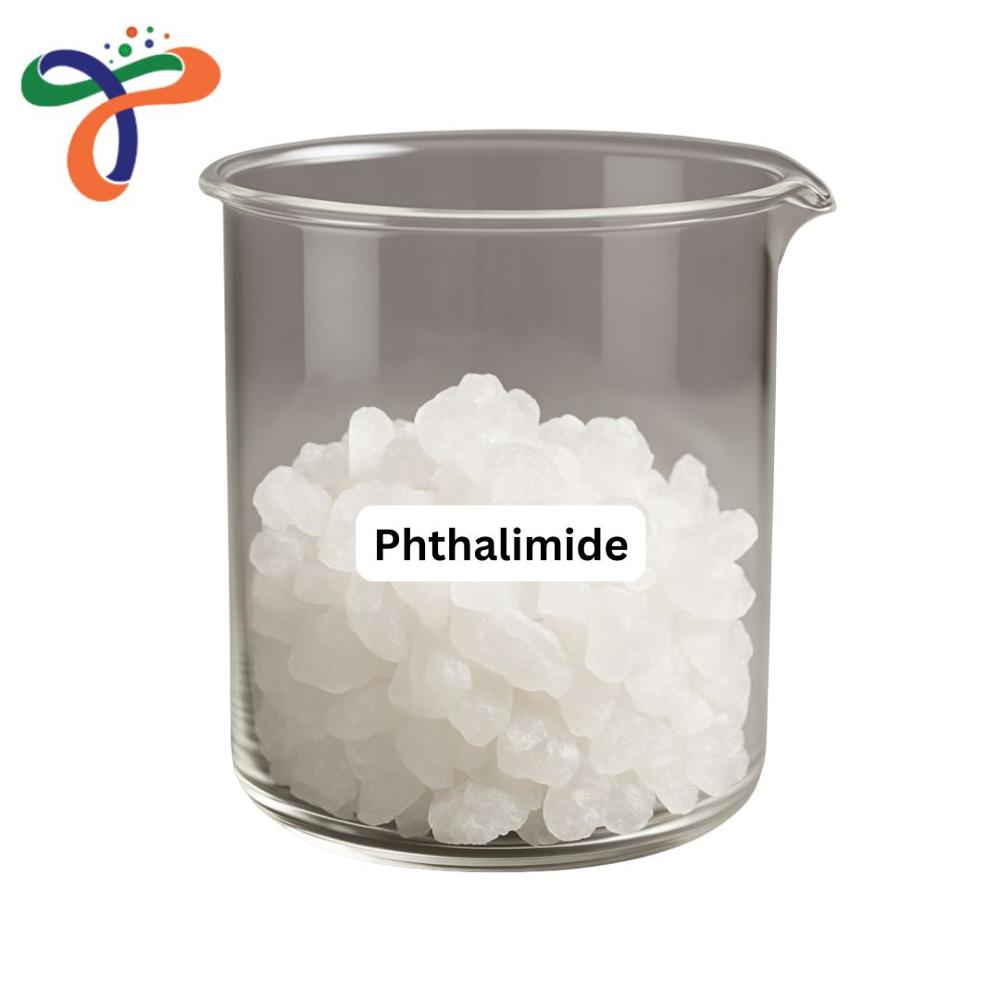
  • Appearance
  • White crystalline
  • Molecular Formula
  • C8H5NO2
  • Refractive Rate
  • 1.65
  • Physical Form
  • Solid
  • Molecular Weight
  • 147.13 g/mol Grams (g)
  • Purity
  • 96-98%
  • Melting Point
  • 234 238 C
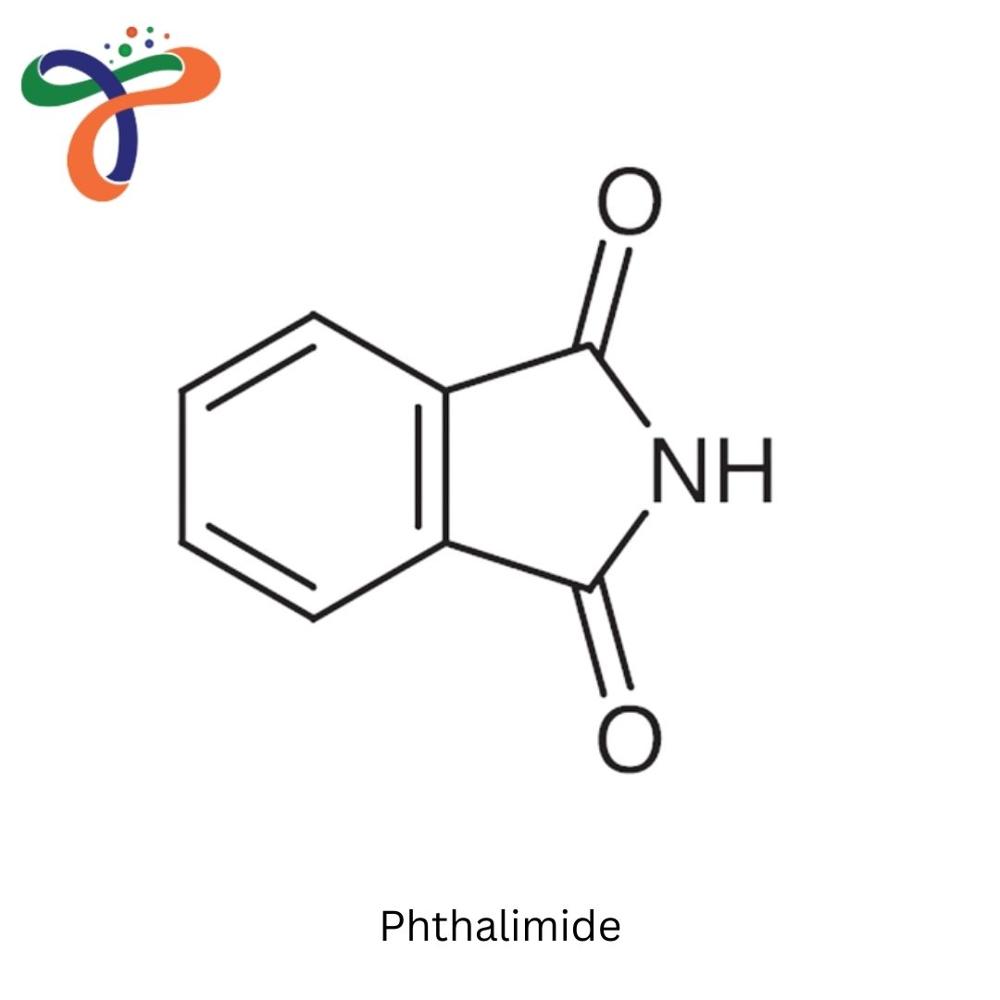
  • Structural Formula
  • C8H5NO2
  • Properties
  • Phthalimide is a white crystalline solid primarily used as a precursor in the synthesis of dyes, pigments, and agricultural chemicals, such as fungicides. It is a critical intermediate in the Gabriel synthesis for producing primary amines and serves as a building block for specialized polymers and pharmaceutical compounds.
  • Solubility
  • Slightly soluble in water; soluble in ethanol, acetone
  • Usage
  • Key intermediate in organic synthesis; precursor in Gabriel synthesis; used to prepare phthalimide-protected amines
  • CAS No
  • 85-41-6
 

Phthalimide (85-41-6) (C8H5NO2) Trade Information

  • Minimum Order Quantity
  • 1 Kilograms
  • Payment Terms
  • Cash in Advance (CID)
  • Supply Ability
  • 5000 Kilograms Per Month
  • Delivery Time
  • 10 Days
  • Main Domestic Market
  • All India
 

About Phthalimide (85-41-6) (C8H5NO2)

Phthalimide Is An Important Organic Compound Widely Used As An Intermediate In Chemical Synthesis.Phthalimide Is Also Used In The Pharmaceutical Industry For Manufacturing Active Ingredients And Drug Intermediates.Phthalimide Is Utilized In Dye And Pigment Production, Resin Formulations, And Plastic Additives.

Key Properties of Phthalimide

Phthalimide is recognized for its white crystalline appearance and its relatively high melting point (234-238C). Its solid physical form makes it easy to handle for various applications. Solubility in organic solvents like ethanol and acetone increases its versatility in industrial processes, while the compound maintains stability in typical storage and operating conditions.


Industrial and Pharmaceutical Applications

Phthalimide functions primarily as a chemical intermediate in diverse industries. In pharmaceuticals, it contributes to the synthesis of active ingredients and drug intermediates. It is also essential in the manufacturing of dyes, pigments, resin formulations, and as an additive in plastics, highlighting its importance in product development and innovation across sectors.

FAQ's of Phthalimide (85-41-6):


Q: How is Phthalimide typically used in industrial applications?

A: Phthalimide is widely utilized as an intermediate in chemical synthesis, contributing to the production of dyes, pigments, resin formulations, and plastic additives.

Q: What benefits does Phthalimide offer in pharmaceutical manufacturing?

A: In the pharmaceutical industry, phthalimide serves as a precursor for creating active ingredients and various drug intermediates, enhancing process efficiency and product purity.

Q: Where is Phthalimide manufactured and supplied in India?

A: Phthalimide is produced and distributed by manufacturers and suppliers across India, catering to both domestic and international industrial needs.

Q: What is the physical appearance and form of Phthalimide?

A: Phthalimide appears as a white crystalline solid, which makes it suitable for handling and processing across its applications.

Q: How should Phthalimide be stored for optimal stability?

A: Phthalimide should be stored under normal conditions, with attention to keeping it dry and away from excessive moisture due to its slight solubility in water.

Q: What is the process for utilizing Phthalimide in chemical synthesis?

A: Phthalimide forms the backbone for multiple synthesis processes by reacting as an intermediate compound, enabling the creation of specialized chemicals, dyes, pharmaceuticals, and other products.

Tell us about your requirement
product

Price:

Quantity
Select Unit

  • 50
  • 100
  • 200
  • 250
  • 500
  • 1000+
Additional detail
Mobile number

Email

More Products in Industrial Chemicals Category

Polyvinyl Alcohol (9002-89-5)

Polyvinyl Alcohol (9002-89-5)

Price 48.0 INR / Kilograms

Minimum Order Quantity : 25 Kilograms

Molecular Weight : 90000 g/mol Grams (g)

Properties : Polyvinyl Alcohol is a white, odorless, watersoluble synthetic polymer. It has excellent filmforming, emulsifying, and adhesive properties. It is resistant to oils and solvents and offers good chemical stability, flexibility, and biodegradability under specific environmental conditions.

Molecular Formula : NA

Appearance : White to offwhite powder

Trichloroethane (71-55-6) (C2H3Cl3)

Trichloroethane (71-55-6) (C2H3Cl3)

Price 70.0 INR / Kilograms

Minimum Order Quantity : 25 Kilograms

Molecular Weight : 133.40 g/mol Grams (g)

Properties : It is a chlorinated hydrocarbon solvent used in industrial cleaning and degreasing applications. It appears as a colorless liquid with a sweet odor, insoluble in water but miscible with organic solvents, and is volatile and stable under normal conditions.

Molecular Formula : C2H3Cl3

Appearance : Clear, colorless liquid

Sodium Iodate (7681-55-2)

Sodium Iodate (7681-55-2)

Price 5500.0 INR / Kilograms

Minimum Order Quantity : 25 Kilograms

Molecular Weight : 197.89 g/mol Grams (g)

Properties : It appears as a white crystalline solid, highly soluble in water and slightly soluble in alcohol. It is a strong oxidizing agent and stable under normal storage conditions, but must be kept away from reducing agents and organic materials.

Molecular Formula : INaO3

Appearance : White crystalline solid

Pyridinium Dichromate (20039-37-6)

Pyridinium Dichromate (20039-37-6)

Price 3500.0 INR / Kilograms

Minimum Order Quantity : 1 Kilograms

Molecular Weight : 376.22 g/mol Grams (g)

Properties : Pyridinium dichromate is an orange crystalline solid primarily used as a mild oxidizing agent in organic synthesis to convert alcohols into aldehydes or ketones. It is essential for selective oxidation reactions because it operates under mild conditions, preventing overoxidation to carboxylic acids and protecting sensitive functional groups during complex molecule synthesis.

Molecular Formula : C10H12N2 Cr2O7

Appearance : Orange crystalline solid