Back to top
Polyethylene Glycol Diacrylate

Polyethylene Glycol Diacrylate

Price 2700.0 INR/ Kilograms

MOQ : 25 Kilograms

Polyethylene Glycol Diacrylate Specification

  • Components
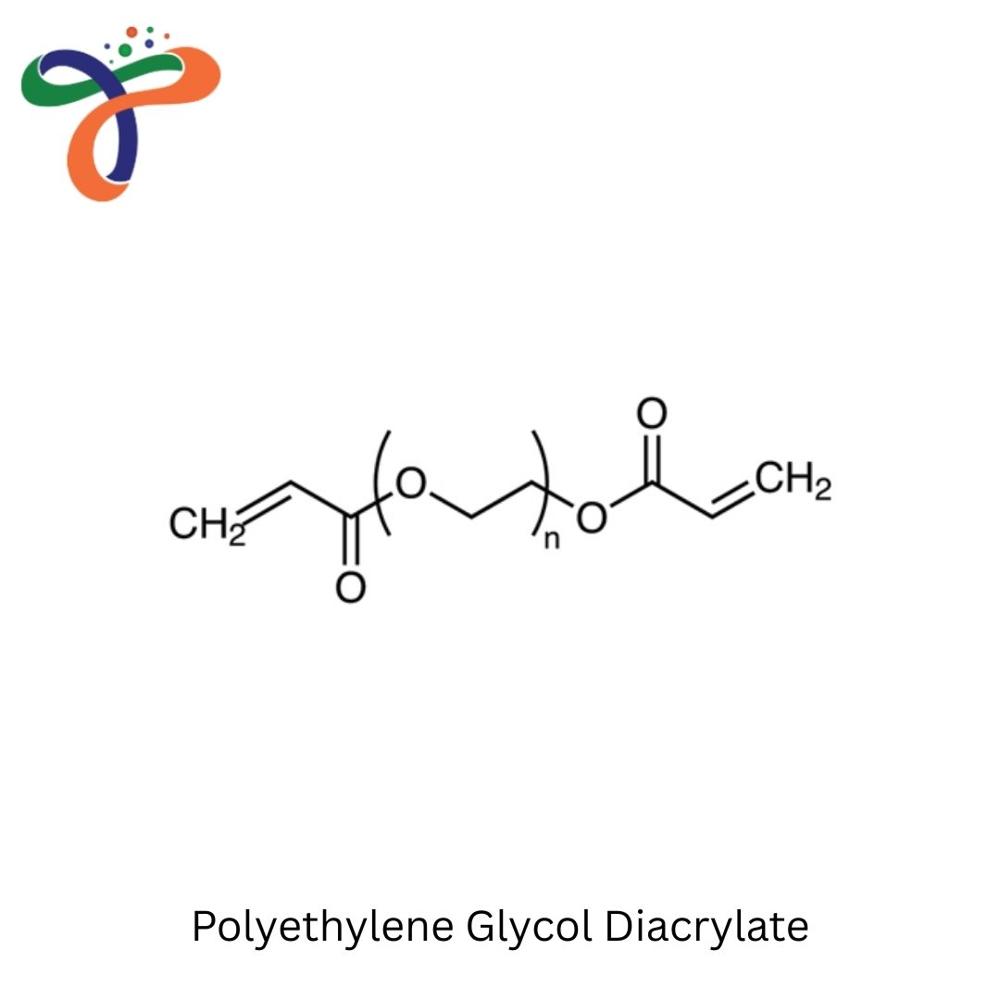
  • Polyethylene glycol backbone with terminal acrylate groups
  • Ash %
  • <0.1%
  • Part Type
  • Monomer/Intermediate
  • Feature
  • Biocompatible, crosslinkable, low toxicity, hydrophilic
  • Natural Rubber
  • No
  • Surface Finish
  • Clear, viscous liquid
  • Temperature Resistance
  • Stable up to 100C (uncured); solid hydrogel: dependent on formulation
  • Product Type
  • Polyethylene Glycol Diacrylate (PEGDA)
  • Volatile Matter (%)
  • <0.5%
  • Tolerance
  • High purity, suitable for sensitive biomedical applications
  • Thickness
  • Determined by curing process in application
  • Material
  • Synthetic polymer (derivative of polyethylene glycol)
  • Water Absorption
  • Hydrophilic, high water uptake after polymerization
  • Nitrogen Content (%)
  • 0%
  • Density
  • 1.15 Gram per cubic centimeter(g/cm3)
  • Hardness
  • Not applicable (liquid precursor); solid hydrogel: variable
  • Size
  • Customizable; commonly available in various molecular weights (e.g. PEGDA 400, 575, 700, 1000, 2000 Da)
  • Color
  • Colorless to pale yellow
  • Weight
  • Molecular weight specific: e.g., PEGDA 700 = 700 g/mol
  • Resistance level
  • Good hydrolytic and UV resistance after curing
  • Usage & Applications
  • Monomer for hydrogels, photopolymerization, biomedical devices, drug delivery systems, and tissue engineering.
  • Flame Resistance Level
  • Not rated
  • Style
  • Liquid, Viscous Solution
  • Tensile Strength
  • Depends on polymerized hydrogel, varies with formulation
  • Thermal Conductivity
  • Low, similar to other PEG derivatives
  • Compression Ratio
  • Dependent on crosslinking, not directly applicable
  • Viscosity
  • 60-120 cP at 25C (varies by molecular weight)
  • Purity
  • >98% (typical)
  • Storage Conditions
  • Store in cool, dry place, protected from light and moisture
  • CAS Number
  • 26570-48-9
  • Molecular Formula
  • C10H14O6 (for PEGDA 400, varies with MW)
  • Packaging
  • Plastic bottles, drums, or custom containers as required
  • Shelf Life
  • 12-24 months in unopened containers
  • pH
  • Neutral (approx. 6.0-7.0 in solution)
  • Odor
  • Almost odorless
  • Crosslinking Mechanism
  • UV- or visible-light-initiated free radical polymerization
  • Solubility
  • Miscible with water and most organic solvents
 

Polyethylene Glycol Diacrylate Trade Information

  • Minimum Order Quantity
  • 25 Kilograms
  • Supply Ability
  • 500 Kilograms Per Month
  • Delivery Time
  • 7 Days
 

About Polyethylene Glycol Diacrylate

We are Supplier, Exporter and Contract Manufacturer.
Technical profile of Polyethylene Glycol Diacrylate, a high-purity raw chemical material supplied by Triveni Chemicals for industrial manufacturing and laboratory synthesis.

Highlighted by its supreme quality and distinguished purity (>98%), Polyethylene Glycol Diacrylate (PEGDA) with CAS 26570-48-9 is a soaring choice for advanced scientific applications. Its hydrophilic and biocompatible nature makes it ideal for biomedical device fabrication, drug delivery systems, and tissue engineering solutions. PEGDA's versatility is complemented by its clear, viscous liquid form, marked by low toxicity and high crosslinking potential under UV or visible light. Utilise this offer for a customizable product available in various molecular weights, with outstanding water miscibility and robust hydrolytic and UV resistance, manufactured and supplied from India.

Supreme Versatility and Usage

Polyethylene Glycol Diacrylate is primarily used as a monomer in photopolymerization for hydrogels, biomedical devices, and drug delivery systems, highlighting its strong crosslinking potential. The surface of application ranges from polymeric networks for tissue engineering to coatings on medical implants. Users benefit from its liquid, viscous consistency and its compatibility with both water and most organic solvents, making it easy to integrate into a variety of production environments and research settings.


Distinguished Market Value & Logistics

Pegylated materials such as Polyethylene Glycol Diacrylate are acknowledged for their significant market value due to their specialized biomedical applications. Goods transport efficiency is ensured through customizable packaging, with FOB port options available from major ports in India. Our supply ability meets soaring demands year-round, and delivery time is optimized for global transportation, facilitating prompt arrival of goods to ensure uninterrupted research and production cycles.


FAQ's of Polyethylene Glycol Diacrylate:


Q: How should Polyethylene Glycol Diacrylate be stored to maintain its quality?

A: To preserve its supreme purity and distinction, Polyethylene Glycol Diacrylate should be stored in a cool, dry place, protected from both light and moisture, within unopened containers. This will help maintain its shelf life of 12-24 months.

Q: What are the primary applications of PEGDA in scientific and industrial settings?

A: PEGDA is greatly utilised as a monomer for hydrogels, photopolymerization, biomedical devices, drug delivery systems, and tissue engineering. Its crosslinking mechanism, initiated by UV or visible light, is essential for these advanced applications.

Q: When can I expect delivery after placing an order for Polyethylene Glycol Diacrylate?

A: Delivery times are optimized to support global research and industrial needs. Typically, once your goods are dispatched from an Indian FOB port, transportation timelines depend on the destination but strive to be as prompt as possible.

Q: Where is Polyethylene Glycol Diacrylate supplied from?

A: This distinguished product is manufactured and supplied from India, with flexible shipping and packaging to meet diverse international requirements.

Q: What are the benefits of using PEGDA with high purity in biomedical applications?

A: The high purity (>98%) ensures low toxicity, superior biocompatibility, and consistent crosslinking, making it ideal for sensitive biomedical applications where supreme material performance and safety is critical.
Tell us about your requirement
product

Price:

Quantity
Select Unit

  • 50
  • 100
  • 200
  • 250
  • 500
  • 1000+
Additional detail
Mobile number

Email

More Products in Plastic & Rubber Chemicals Category

Ammonium Persulphate (7727-54-0)

Ammonium Persulphate (7727-54-0)

Price 93.0 INR / Kilograms

Minimum Order Quantity : 25 Kilograms

Usage & Applications : Polymerization initiator, etching of copper, cleaning agents, bleaching, cosmetics

Color : White

Density : 1.98 Gram per cubic centimeter(g/cm3)

Product Type : Inorganic Chemical

Polypropylene Glycol (25322-69-4)

Polypropylene Glycol (25322-69-4)

Price 165.0 INR / Kilograms

Minimum Order Quantity : 25 Kilograms

Usage & Applications : Used as a base material in the manufacture of polyurethane foams, elastomers, and adhesives; also as a lubricant, surfactant, and in personal care products.

Color : Colorless to pale yellow

Density : 1.01 Gram per cubic centimeter(g/cm3)

Product Type : Polypropylene Glycol (PPG)

Diphenylguanidine (0102-06-07) (C13H13N3)

Diphenylguanidine (0102-06-07) (C13H13N3)

Price 600.0 INR / Kilograms

Minimum Order Quantity : 25 Kilograms

Usage & Applications : Used as a secondary accelerator and activator in the vulcanization of rubber.

Color : White to light gray

Density : 1.24 Gram per cubic centimeter(g/cm3)

Product Type : Rubber Accelerator

Dioctyl Adipate (123-79-5)

Dioctyl Adipate (123-79-5)

Price 130.0 INR / Kilograms

Minimum Order Quantity : 25 Kilograms

Usage & Applications : Primarily as a plasticizer in PVC and other polymers; used in food packaging, cling film, cables, synthetic leather, and coatings

Color : Clear

Density : 0.929 Gram per cubic centimeter(g/cm3)

Product Type : Dioctyl Adipate (DOA)