Back to top
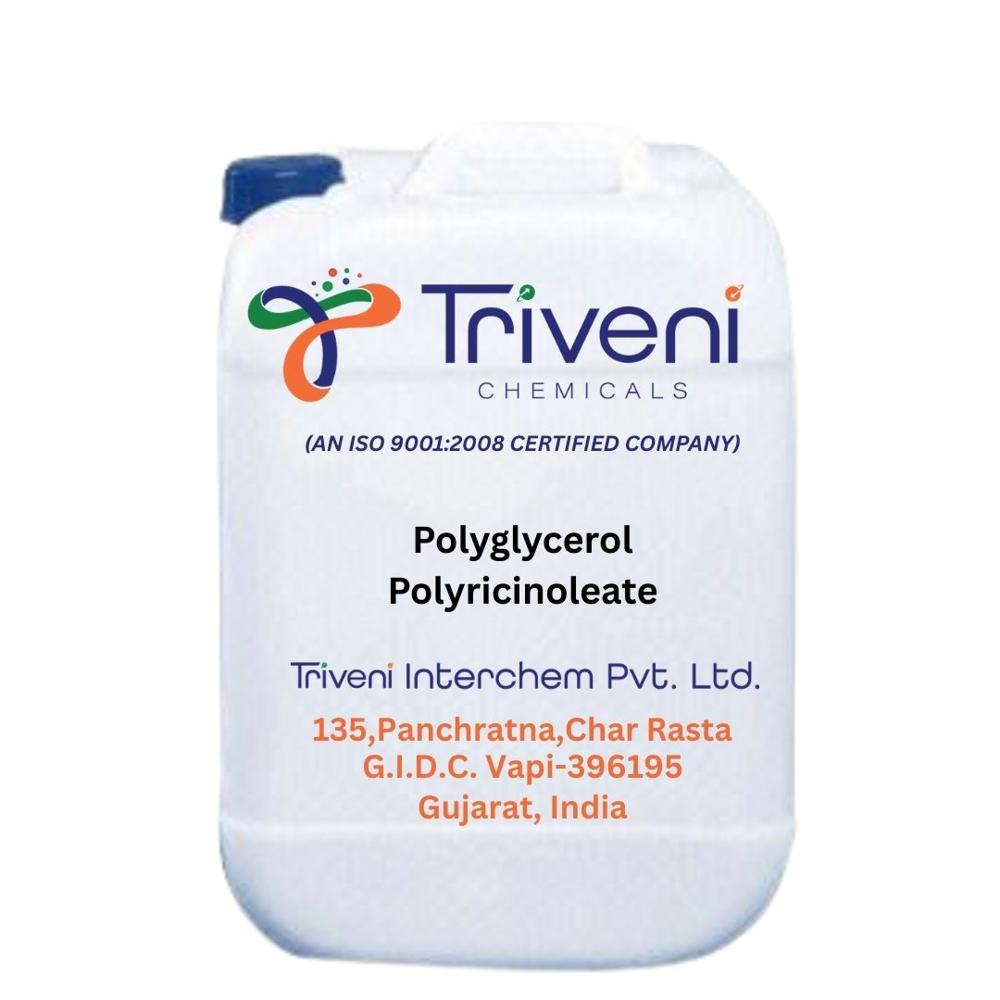
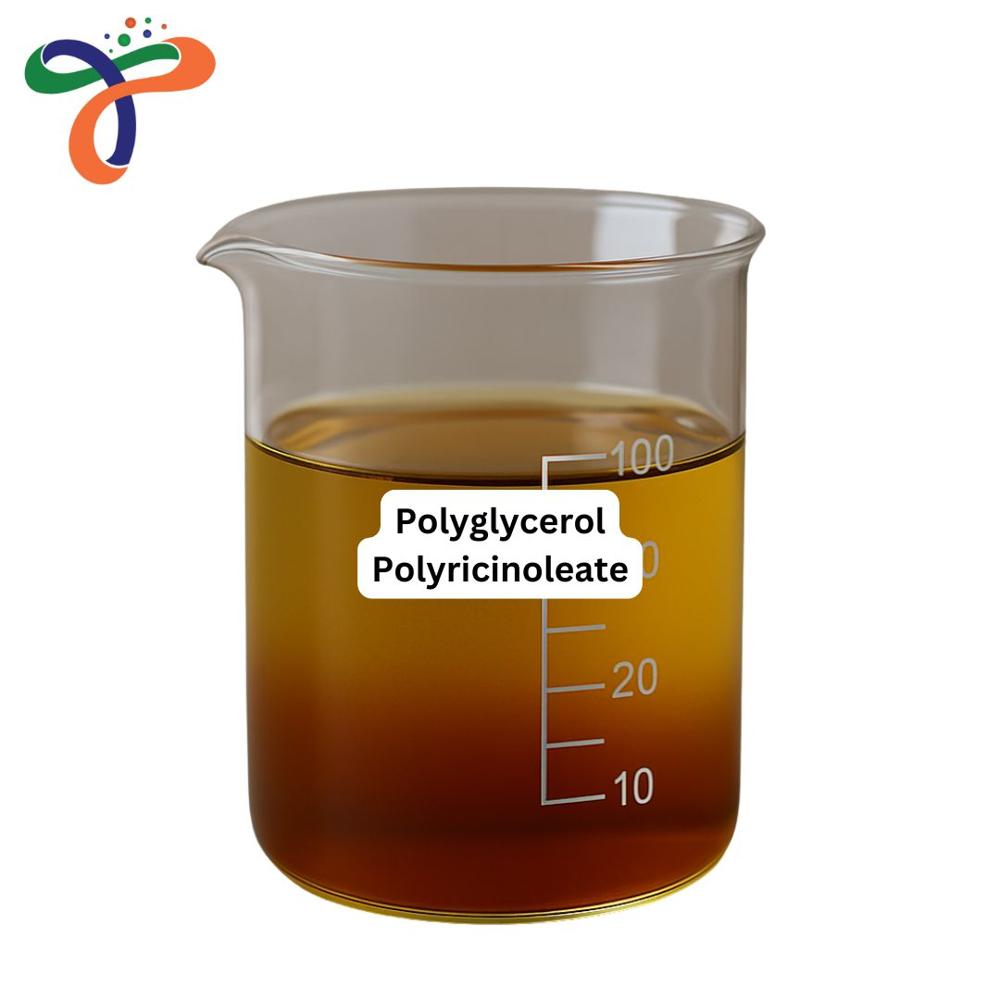
Polyglycerol Polyricinoleate

Polyglycerol Polyricinoleate

Price 275.0 INR/ Kilograms

MOQ : 1 Kilograms

Polyglycerol Polyricinoleate Specification

  • Shelf Life
  • 2 years in original packing under recommended storage conditions
  • Poisonous
  • Non-poisonous
  • Density
  • 0.98 Gram per cubic centimeter(g/cm3)
  • Ingredients
  • Polyglycerol esters of polycondensed fatty acids (mainly of ricinoleic acid)
  • Structural Formula
  • Not fixed, contains polyglycerol backbone esterified with ricinoleic acid
  • Taste
  • Neutral or bland
  • EINECS No
  • 249-918-4
  • Shape
  • Amorphous Liquid
  • Purity
  • Min. 99%
  • Smell
  • Characteristic, mild odor
  • CAS No
  • 29894-35-7
  • Molecular Weight
  • Average ~520-600 g/mol
  • Properties
  • Excellent emulsifying and dispersing properties, stable to acids and heat, compatible with a wide range of oils and fats.
  • Storage
  • Store in cool, dry places in tightly closed containers, protected from light and moisture
  • Melting Point
  • -5 to 20C
  • Refractive Rate
  • 1.452 - 1.462 at 25C
  • Molecular Formula
  • C27H52O8 (Representative, may vary depending on grade/chain length)
  • Solubility
  • Dispersible in fats and oils; insoluble in water
  • HS Code
  • 38244090
  • Ph Level
  • 5.5 - 7.5
  • Grade
  • Food Grade
  • Appearance
  • Viscous yellow to brownish liquid
  • Product Type
  • Emulsifier
  • Usage
  • Used as a water-in-oil emulsifier, mainly in chocolate and confectionery to reduce viscosity and improve flow properties
  • Application
  • Physical Form
  • Liquid
  • Saponification Value
  • 130-186 mg KOH/g
  • Lead Content
  • <2 mg/kg
  • Allergen Information
  • Free from common allergens (gluten, dairy, soy, nuts)
  • Heavy Metals
  • <10 mg/kg (as Pb)
  • Iodine Value
  • 80-105 g I2/100g
  • Residue on Ignition
  • <1.5%
  • Packaging
  • Available in 25 kg, 200 kg drums, or IBC totes
  • Arsenic Content
  • <3 mg/kg
  • Peroxide Value
  • <10 meq O2/kg
  • Acid Value
  • 50-120 mg KOH/g
  • GMO Status
  • Non-GMO
 

Polyglycerol Polyricinoleate Trade Information

  • Minimum Order Quantity
  • 1 Kilograms
  • Payment Terms
  • Cash in Advance (CID)
  • Supply Ability
  • 5000 Kilograms Per Month
  • Delivery Time
  • 10 Days
  • Main Domestic Market
  • All India
 

Polyglycerol Polyricinoleate About


Grab your chance to elevate food formulations with world-class Polyglycerol Polyricinoleate (PGPR)-the invincible emulsifier designed for premium applications. Available now for a limited time, this unassailable food-grade liquid boasts min. 99% purity and robust performance in chocolate, confectionery, and bakery fats. With exceptional stability against acids and heat, PGPR guarantees superior flow and reduced viscosity. It's non-GMO, allergen-free, and meets rigorous safety standards. Jump on this opportunity-PGPR's dependable quality and versatility make it a must-have for manufacturers demanding nothing less than excellence.

Unlock Seamless Food Innovation with PGPR

Polyglycerol Polyricinoleate is your trusted, high-grade water-in-oil emulsifier, tailored for enhancing surface application across chocolates, fatty spreads, ice cream, margarines, and diverse food emulsions. Its primary usage type is to reduce product viscosity and uneven flow, granting a smoother handling texture and improved stability. The main advantage lies in its compatibility with a wide range of oils and fats, efficiently ensuring consistent dispersion and blending in even the most challenging culinary formulations.


Fast, Secure Shipping and Global Market Assurance

Maximize your market value with PGPR, reliably shipped in 25 kg drums, 200 kg drums, and IBC totes to meet industry-scale needs. Goods are expertly packed to minimize handling charges and ensure integrity from shipment to delivery. PGPR is delivered promptly worldwide, with strong export market presence in Europe, Asia, and beyond. Experience on-time arrivals and competitive shipping arrangements-enabling you to maintain seamless production and distribution chains everywhere you operate.


FAQ's of Polyglycerol Polyricinoleate:


Q: How is Polyglycerol Polyricinoleate used in food processing?

A: Polyglycerol Polyricinoleate (PGPR) is primarily used as a water-in-oil emulsifier in chocolate, confectionery, bakery fats, and food emulsions to reduce viscosity and improve flow properties during processing and manufacturing.

Q: What benefits does PGPR offer for chocolate and confectionery?

A: PGPR enhances chocolate's fluidity, allowing for easier moulding, enrobing, and coating. It results in smoother textures, efficient blending of fats, and better stability, which improves the quality and appearance of finished products.

Q: Where can PGPR be applied beyond chocolates?

A: Beyond chocolate, PGPR is widely used in margarine, bakery fats, ice cream, and various food emulsion products, supporting consistency and performance in different fat-based food systems.

Q: What is the process for storing PGPR to maximize shelf life?

A: Store PGPR in tightly closed containers in cool, dry locations protected from light and moisture. Following these guidelines ensures up to 2 years of shelf life in original packaging under recommended conditions.

Q: How is PGPR shipped and in what packaging forms?

A: PGPR is securely shipped in 25 kg and 200 kg drums or IBC totes, ensuring product safety during transportation. These packaging options cater to various industry requirements and minimize handling charges during delivery.

Q: What are the allergen and GMO statuses of PGPR?

A: PGPR is both non-GMO and free from common allergens such as gluten, dairy, soy, and nuts, making it a safe ingredient choice for a broad range of consumers.

Tell us about your requirement
product

Price:

Quantity
Select Unit

  • 50
  • 100
  • 200
  • 250
  • 500
  • 1000+
Additional detail
Mobile number

Email

More Products in Industrial Chemicals Category

Tetrabutylammonium Bromide (1643-19-2)

Tetrabutylammonium Bromide (1643-19-2)

Price 550.0 INR / Kilograms

Minimum Order Quantity : 25 Kilograms

Purity : 98 99%

Properties : It Is A Quaternary Ammonium Compound Widely Used In Chemical And Industrial Applications. It Is Primarily Used As A Phase Transfer Catalyst In Organic Synthesis, Enabling Reactions Between Compounds In Different Phases, Such As Aqueous And Organic Systems.

Melting Point : 66 C

Molecular Weight : 322.37 g/mol Grams (g)

Triethyl Borate (150-46-9)

Triethyl Borate (150-46-9)

Price 3000.0 INR / Kilograms

Minimum Order Quantity : 25 Kilograms

Purity : 98 99%

Properties : Triethyl Borate is a volatile liquid with molecular weight 130.91 g/mol. It is soluble in alcohols and ethers, hydrolyzes in water to release boric acid and ethanol, and burns with a characteristic green flame. Flammable, irritant, and moisture sensitive, requiring storage in tightly sealed containers under dry conditions.

Melting Point : 66 C

Molecular Weight : 145.99 g/mol Grams (g)

Cryptohalite (16919-19-0) (Ammonium Fluorosilicate)

Cryptohalite (16919-19-0) (Ammonium Fluorosilicate)

Price 5586.0 INR / Kilograms

Minimum Order Quantity : 1 Kilograms

Purity : 98 99%

Properties : Cryptohalite is a rare, white, inorganic mineral primarily found in volcanic fumaroles. It is scientifically significant as an ammonium fluorosilicate that serves as a specialized reagent in laboratory research. It is also historically recognized for its association with specific geological environments and its unique crystal lattice structure.

Melting Point : 650 C

Molecular Weight : 289.50 g/mol Grams (g)

Boron (7440-42-8) (B)

Boron (7440-42-8) (B)

Price 145.0 INR / Kilograms

Minimum Order Quantity : 1 Kilograms

Purity : 99 99.9%

Properties : Boron is a versatile metalloid element found in various compounds, primarily borates. In agriculture, it is essential for plant cell wall structural integrity, making it a vital micronutrient for crop growth.

Melting Point : 2076 C

Molecular Weight : 10.81 g/mol Grams (g)