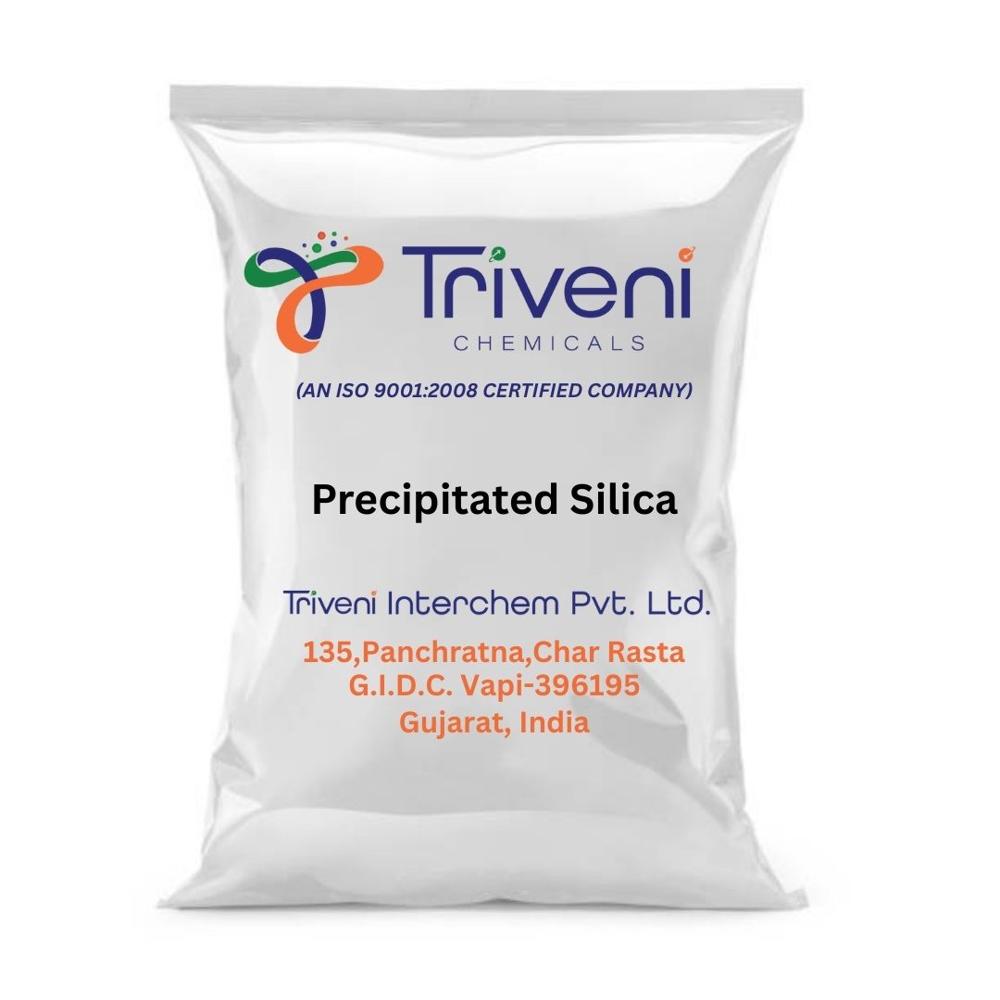
Precipitated Silica (60.08 g/mol) About
We are Supplier, Exporter and Contract Manufacturer.
Technical profile of Precipitated Silica, a high-purity raw chemical material supplied by Triveni Chemicals for industrial manufacturing and laboratory synthesis.
Industrial Uses & Applications:
Precipitated Silica Is A Synthetic, Amorphous Form Of Silicon Dioxide Produced By Chemical Precipitation. It Is Valued For Its High Surface Area, Controlled Particle Size, And Excellent Reinforcing Properties. Precipitated Silica Is Widely Used In Rubber And Tyre Manufacturing To Improve Strength, Abrasion Resistance, And Fuel Efficiency. It Is Also Used As A Thickening And Anti Settling Agent In Paints, Coatings, Adhesives, And Sealants, As Well As A Flow Aid In Powders.
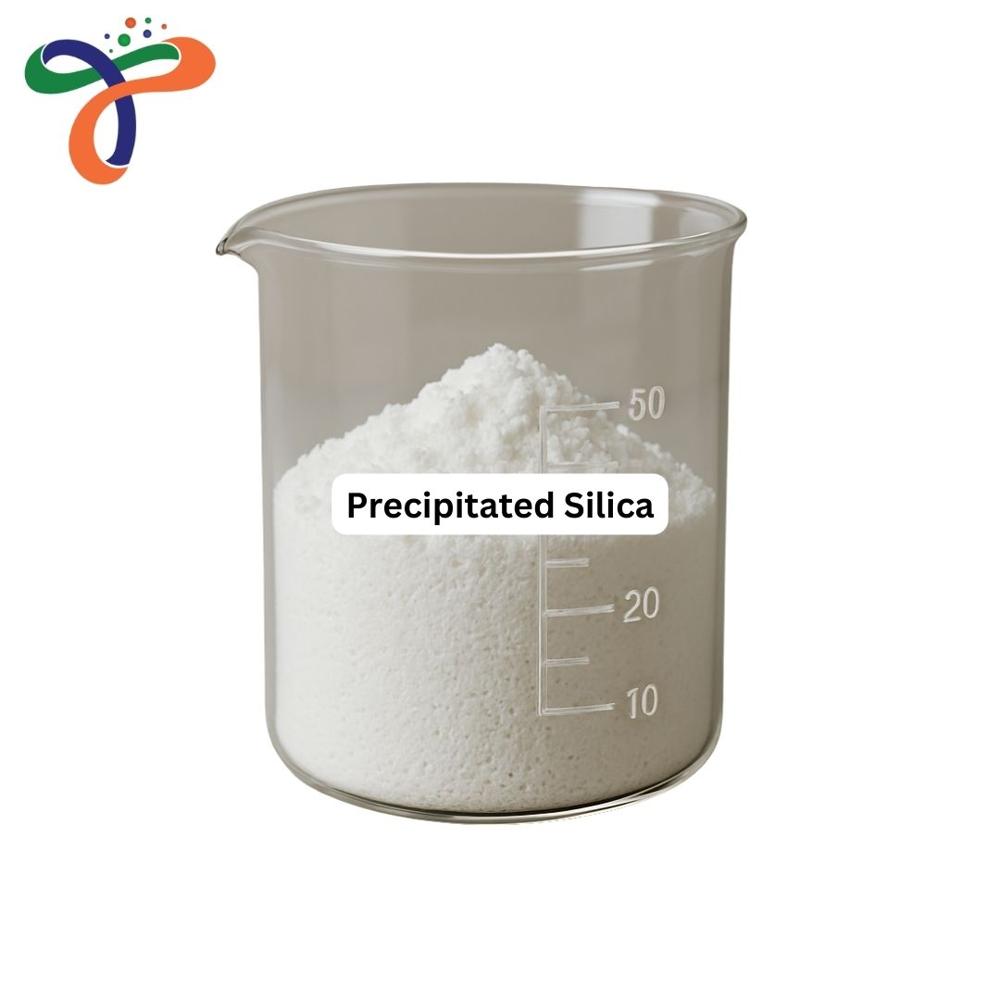
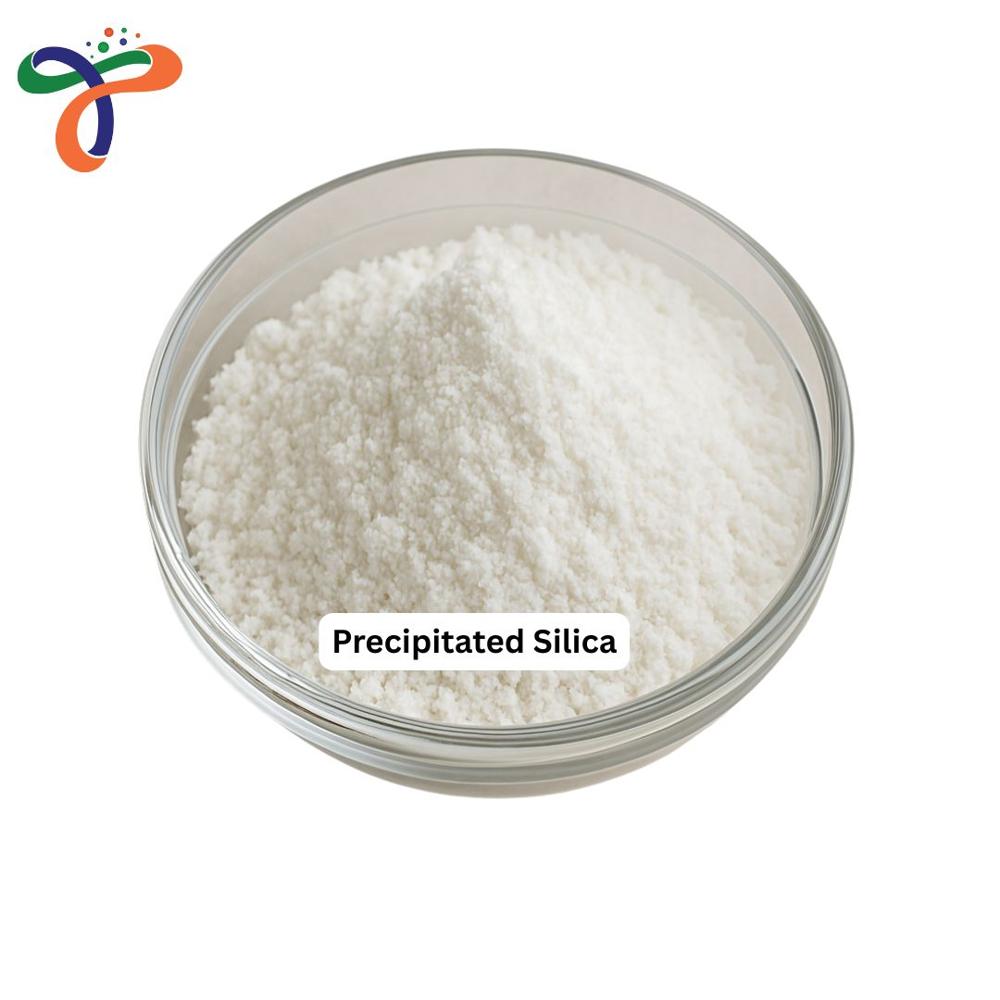
Enhancing Industrial ApplicationsWith its fine amorphous structure, precipitated silica excels as a reinforcing filler in rubber and tire manufacturing, providing increased strength and longevity. Beyond the automotive industry, it's used in plastics and coatings, lending durability and resistance. Its purity (99-99.5%) makes it equally suitable as a functional food and cosmetic additive.
Versatile Additive for Multiple UsesPrecipitated silica's exceptional anti-caking and thickening properties make it valuable across industries. As a food additive, it maintains product flowability; in paints and coatings, it ensures consistent texture. In cosmetics, it stabilizes formulations. Its highly insoluble, white powder form supports ease of incorporation in numerous manufacturing processes.
Manufacturing and Quality StandardsProduced by sodium silicate precipitation, precipitated silica is manufactured to high standards in India. Its amorphous nature, purity, and consistent particle size fulfill demanding industry requirements. Quality oversight ensures its effectiveness as both a performance additive and a process aid in diverse applications.
FAQ's of Precipitated Silica (60.08 g/mol):
Q: How is precipitated silica manufactured?
A: Precipitated silica is produced through the chemical precipitation of sodium silicate solution, resulting in a fine, amorphous white powder. This process allows for control over purity and particle size, making it suitable for industrial applications.
Q: What are the main industrial uses of precipitated silica?
A: It is primarily used as a reinforcing filler in rubber and tires to enhance strength and grip. Additionally, it serves as an anti-caking agent in foods, a rheology modifier in coatings, and as a thickener or stabilizer in paints and cosmetics.
Q: When should precipitated silica be considered in product formulation?
A: Precipitated silica should be chosen when there is a need to enhance mechanical properties (like durability and grip in rubber), prevent caking in powders, or stabilize the texture in various formulations, owing to its unique structure and purity.
Q: Where is precipitated silica commonly utilized?
A: It finds broad usage within the rubber, plastics, food, paint, and cosmetics industries. Manufactures and suppliers across India provide this powder to both domestic and international markets.
Q: What is the process of incorporating precipitated silica in manufacturing?
A: Manufacturers typically blend the white powder directly into rubber, plastic, food, or coating formulations. Its insolubility and fine, amorphous texture enable easy dispersion throughout matrices, improving end product performance.
Q: How does precipitated silica benefit product performance?
A: It enhances physical properties in rubber and plastics, increases flowability in food powders, and stabilizes viscosity in paints and cosmetics, resulting in more durable, consistent, and reliable products.







 Send Inquiry
 Send Inquiry
 Send Inquiry
 Call Me Free
 English
 Spanish
 French
 German
 Italian
 Chinese (Simplified)
 Japanese
 Korean
 Arabic
 Portuguese