About Pyridinium Dichromate (20039-37-6)
We are Supplier, Exporter and Contract Manufacturer.
Technical profile of Pyridinium Dichromate, a high-purity raw chemical material supplied by Triveni Chemicals for industrial manufacturing and laboratory synthesis.
Technical Specifications:
CAS Number: 20039-37-6
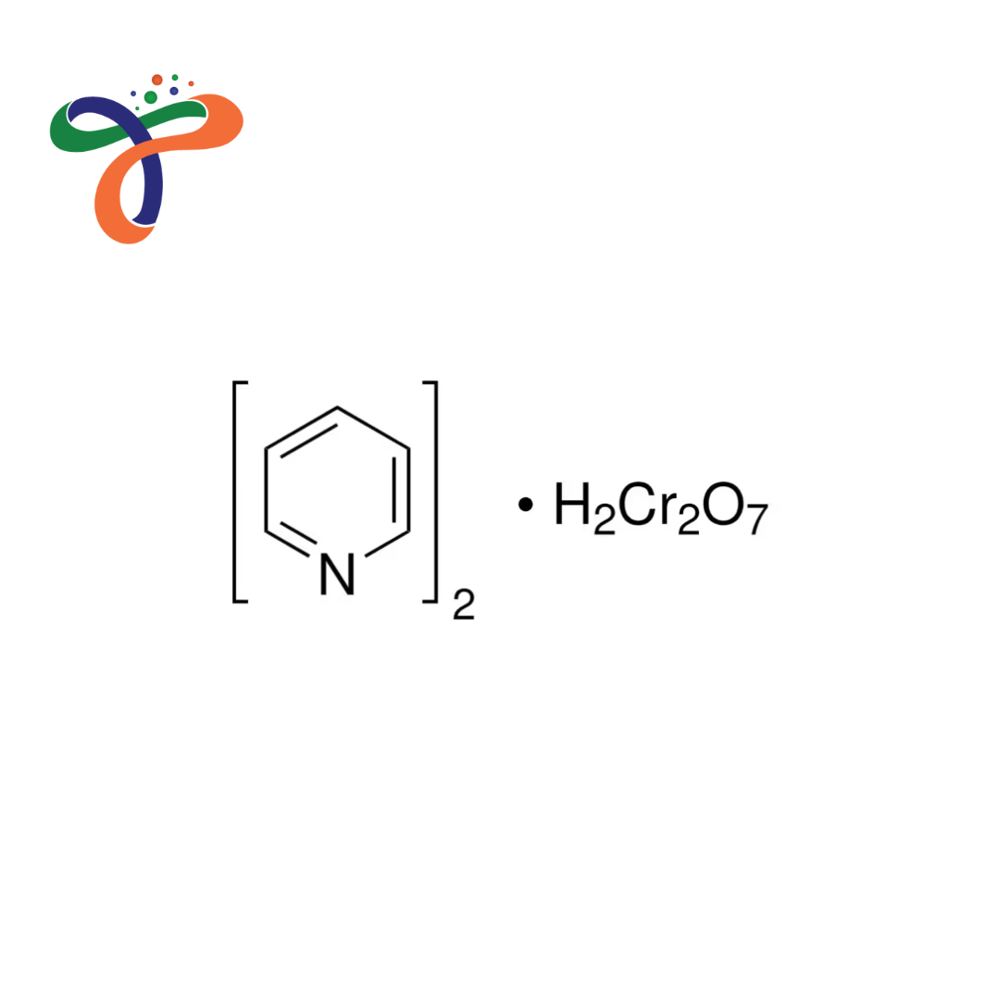
Chemical Formula: C10H12N2Cr2O7
Industrial Uses & Applications:
Pyridinium Dichromate Is A Mild And Selective Oxidizing Agent Commonly Used In Organic Synthesis. It Is Primarily Applied For The Oxidation Of Primary And Secondary Alcohols To Aldehydes And Ketones Under Controlled, Non Aqueous Conditions.
Precision in Oxidation ReactionsPyridinium Dichromate is valued in industrial chemistry for its ability to perform controlled oxidation reactions. Its application is particularly significant in synthesizing complex organic molecules, as it selectively converts alcohols to aldehydes or ketones without over-oxidation. This feature makes it a powerful tool for chemists aiming to preserve vulnerable functional groups.
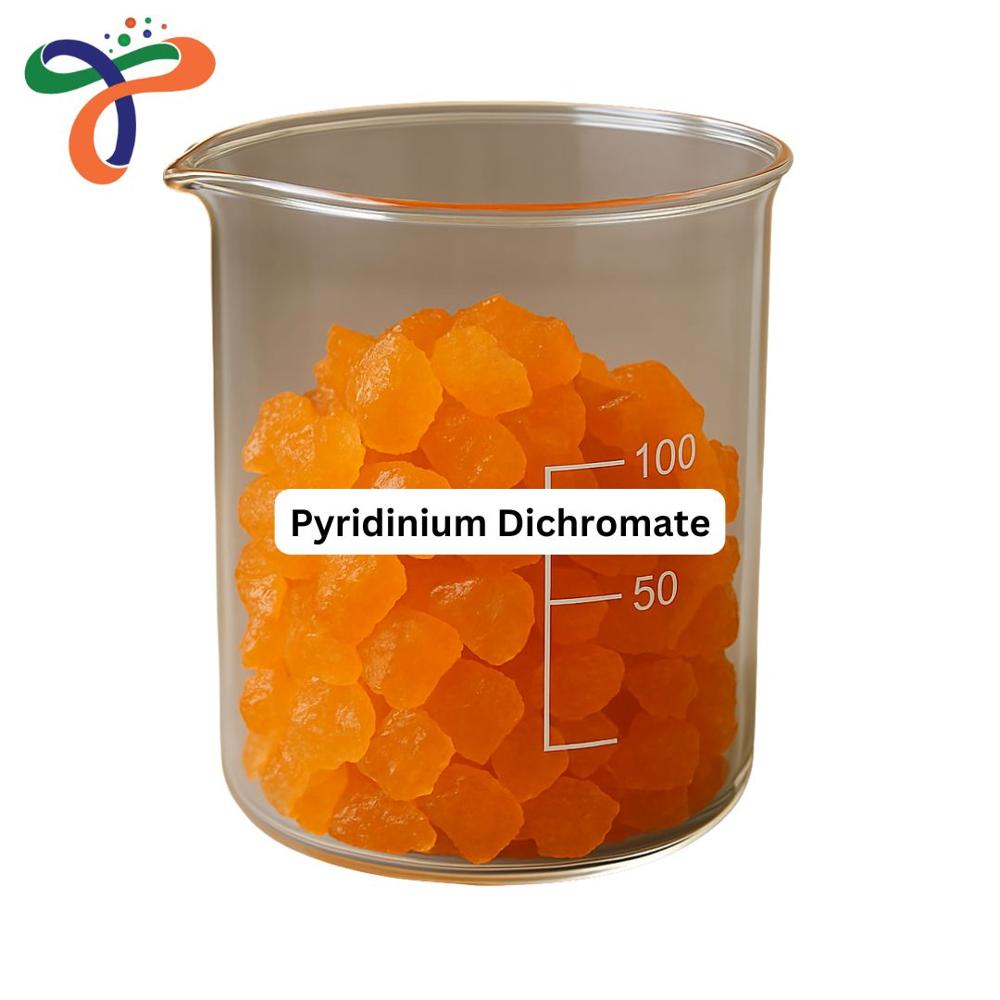
Exceptional Solubility and StabilityThis reagent dissolves readily in water and polar organic solvents, enhancing its suitability for a variety of laboratory protocols. Its orange crystalline form and high purity ensure consistent results, while its operational stability contributes to safe and reliable performance during industrial processes.
FAQ's of Pyridinium Dichromate (20039-37-6):
Q: How is Pyridinium Dichromate commonly used in industrial applications?
A: Pyridinium Dichromate serves as a mild oxidizing agent in industrial organic synthesis, primarily converting primary alcohols into aldehydes and secondary alcohols into ketones while preventing over-oxidation to carboxylic acids.
Q: What are the main benefits of using Pyridinium Dichromate for organic oxidation?
A: The primary benefit of this reagent is its selectivity: it achieves precise oxidation under mild conditions, which limits side reactions and protects sensitive functional groups, making it suitable for synthesizing complex molecules.
Q: When should Pyridinium Dichromate be used instead of other oxidizing agents?
A: It should be selected when gentle, controlled oxidation is necessary, especially when working with substrates vulnerable to over-oxidation or when a specific functional group needs preservation during synthesis.
Q: Where is Pyridinium Dichromate typically sourced from?
A: This compound is manufactured and supplied by chemical companies, with reputable manufacturers and suppliers located in India known for providing high-purity industrial chemicals.
Q: What is the process for using Pyridinium Dichromate in organic synthesis?
A: Typically, the solid is dissolved in a suitable solvent, and the alcohol substrate is introduced under controlled conditions. The reaction mixture is then monitored until the desired level of oxidation is achieved, followed by standard workup procedures.
Q: How soluble is Pyridinium Dichromate, and in which solvents can it be used?
A: Pyridinium Dichromate is soluble in water and polar organic solvents, enabling its use in a broad range of industrial and laboratory applications where such solubility is advantageous.







 Send Inquiry
 Send Inquiry
 Send Inquiry
 Call Me Free
 English
 Spanish
 French
 German
 Italian
 Chinese (Simplified)
 Japanese
 Korean
 Arabic
 Portuguese