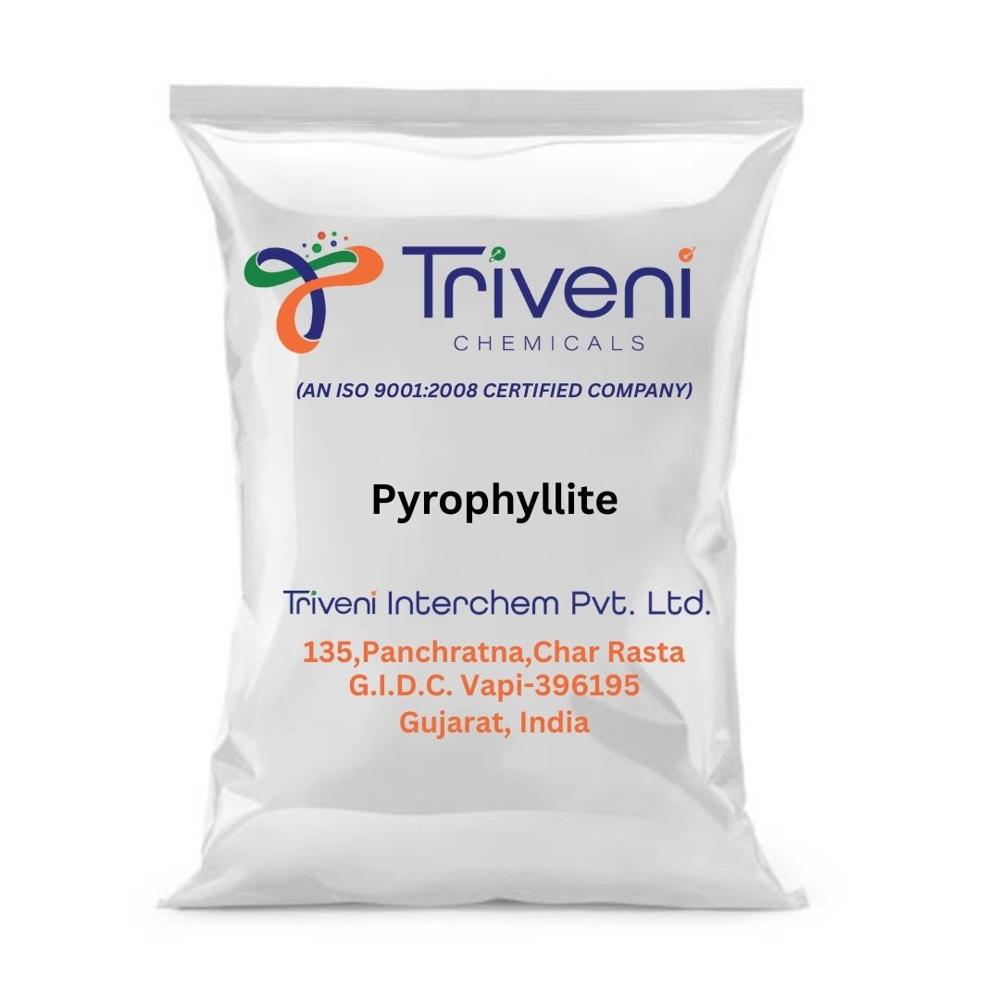
Pyrophyllite (Al2Si4O10(OH)2) (360.31 g/mol) About
We are Supplier, Exporter and Contract Manufacturer.
Technical profile of Pyrophyllite, a high-purity raw chemical material supplied by Triveni Chemicals for industrial manufacturing and laboratory synthesis.
Technical Specifications:
Chemical Formula: Al2Si4O10(OH)2
Industrial Uses & Applications:
Pyrophyllite Is A Naturally Occurring Aluminum Silicate Mineral Widely Used In Industrial Applications Due To Its Excellent Thermal Stability And Low Thermal Expansion. It Is Valued For Its Chemical Inertness, Softness, And Good Insulating Properties. Pyrophyllite Is Commonly Used In Ceramics, Refractories, Glass, Rubber, Paints, And Insecticide Formulations. It Improves Dimensional Stability, Surface Finish, And Resistance To Heat And Chemicals.
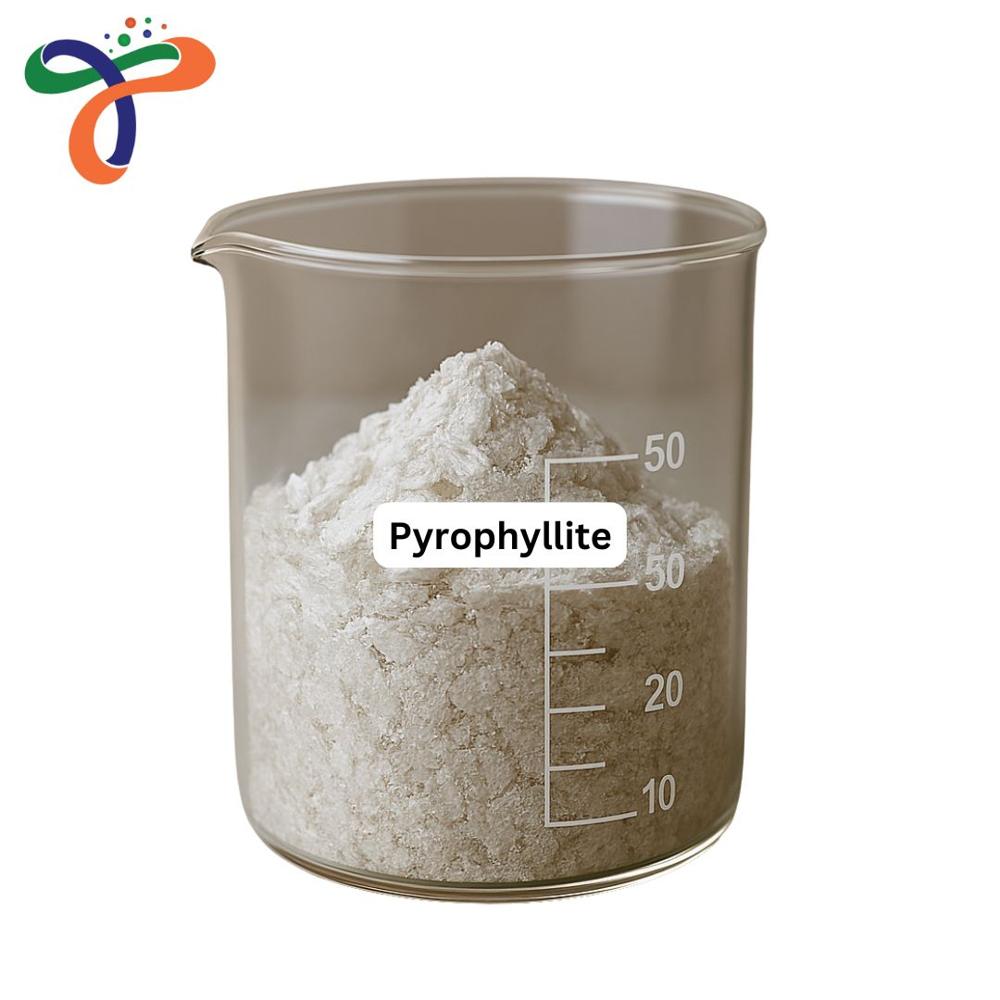
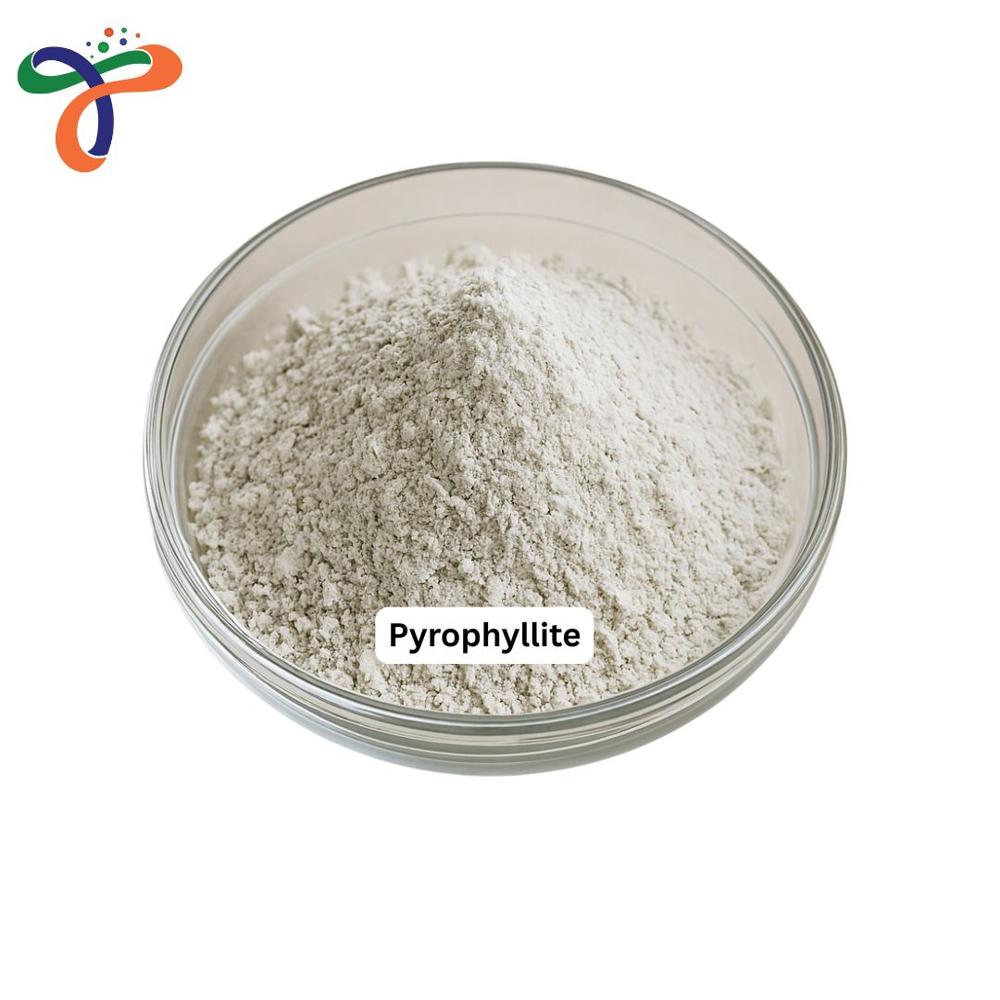
Unique Physical and Chemical PropertiesPyrophyllite stands out due to its soft, platy texture and remarkable resistance to chemical attack. Its thermal stability allows it to withstand high temperatures, making it indispensable in the production of refractory materials for the steel and ceramics industries. Its moderate refractive rate (1.58) and earthy appearance also enhance its suitability as an industrial filler.
Versatile Industrial ApplicationsThis mineral serves as a critical ingredient in a wide array of sectors. From acting as a filler in paints, plastics, paper, and rubber to serving as a raw material for the fabrication of high-quality ceramic products and insulating coatings, pyrophyllite's adaptability ensures its relevance across numerous industries seeking durability and specialized performance.
FAQ's of Pyrophyllite (Al2Si4O10(OH)2) (360.31 g/mol):
Q: How is pyrophyllite typically processed for industrial applications?
A: Pyrophyllite is mined and then ground into a fine powder to achieve the desired consistency and purity (98-99%). This processed form is supplied to various industries for use as a filler or refractory material, ensuring optimal performance in ceramics, paints, rubber, and glass manufacturing.
Q: What are the main industrial uses of pyrophyllite powder?
A: Pyrophyllite is used as a filler in ceramics, paints, plastics, paper, and rubber. It also acts as a key raw material in producing refractories for steel ladles and forms part of specialty glass and insulating coatings, thanks to its thermal and chemical stability.
Q: When should pyrophyllite be chosen over other fillers or raw materials?
A: Pyrophyllite is preferred when high chemical resistance, thermal stability, and a platy, non-abrasive texture are required. Its use is recommended in processes needing resistance to high temperatures or chemically aggressive environments, such as refractory linings and specialty ceramics.
Q: Where is pyrophyllite typically sourced and supplied from?
A: Major suppliers and manufacturers of pyrophyllite are located in India, where the mineral is mined, processed, and distributed for domestic and international industrial applications.
Q: What benefits does pyrophyllite offer over similar minerals?
A: Pyrophyllite's unique combination of softness, chemical inertness, and high-temperature endurance provides better performance as a filler and refractory compared to many alternatives, ensuring longevity and reliability in demanding applications.
Q: Is pyrophyllite soluble in water or common solvents?
A: No, pyrophyllite is insoluble in water and common solvents, but it can dissolve in strong acids when heated, a property that contributes to its stability in most industrial environments.






 Send Inquiry
 Send Inquiry
 Send Inquiry
 English
 Spanish
 French
 German
 Italian
 Chinese (Simplified)
 Japanese
 Korean
 Arabic
 Portuguese