Back to top
Retarder (C13H10Cl3NO2S2) (218.14 g/mol)

Retarder (C13H10Cl3NO2S2) (218.14 g/mol)

Price 20.0 INR/ Kilograms

MOQ : 25 Kilograms

Retarder (C13H10Cl3NO2S2) (218.14 g/mol) Specification

  • Material
  • C13H10Cl3NO2S2
  • Ash %
  • 0.5%
  • Weight
  • According to packaging (commonly 25 kg bags)
  • Resistance level
  • Good thermal and chemical resistance
  • Nitrogen Content (%)
  • 1.0 - 1.2%
  • Volatile Matter (%)
  • 0.3%
  • Surface Finish
  • Powdered
  • Density
  • 0.05 Gram per cubic centimeter(g/cm3)
  • Rubber Type
  • Suitable for natural and synthetic rubber
  • Style
  • Solid, Powdered Form
  • Flame Resistance Level
  • Not Classified
  • Components
  • C, H, Cl, N, O, S
  • Natural Rubber
  • Compatible
  • Size
  • Customizable
  • Product Type
  • Chemical Compound
  • Color
  • Off-White to Pale Yellow
  • Part Type
  • Additive
  • Usage & Applications
  • Used as a retarder in rubber processing to control the vulcanization speed and improve processing safety
  • Water Absorption
  • Negligible
  • Temperature Resistance
  • Up to 120C for processing
  • Feature
  • Delays vulcanization to enhance processing safety
  • Molecular Weight
  • 218.14 g/mol
  • Solubility
  • Insoluble in water, soluble in organic solvents
  • Melting Point
  • 88 - 92C
  • Packaging
  • 25 kg paper/plastic bags or as per customer requirement
  • Molecular Formula
  • C13H10Cl3NO2S2
  • Chemical Name
  • N-(1,3-dichloro-2-propyl)-N'-phenylurea
  • Storage
  • Store in a cool, dry, and ventilated place
  • Shelf Life
  • 2 years from manufacture date if properly stored
  • Trade Name
  • Retarder (C13H10Cl3NO2S2)
  • Safety Precautions
  • Use personal protective equipment; avoid inhalation and contact with skin/eyes
 

Retarder (C13H10Cl3NO2S2) (218.14 g/mol) Trade Information

  • Minimum Order Quantity
  • 25 Kilograms
  • Supply Ability
  • 500 Kilograms Per Month
  • Delivery Time
  • 7 Days
 

About Retarder (C13H10Cl3NO2S2) (218.14 g/mol)

We are Supplier, Exporter and Contract Manufacturer.

Technical profile of retarder, a high-purity raw chemical material supplied by Triveni Chemicals for industrial manufacturing and laboratory synthesis.


A retarder is a chemical additive used to slow down the setting or curing process of materials, allowing extended workability and better control during application. It is commonly a liquid or powder and is compatible with various materials, such as cement, concrete, paints, coatings, adhesives, and resins. Retarders work by delaying chemical reactions, such as hydration in cement or polymerization in resins, without compromising the final strength or performance of the material. They often improve workability, reduce cracking, and enhance surface finishing.

In construction, retarders are widely used in concrete and cement formulations to prevent premature setting, especially in hot climates or large pours. In paints and coatings, they extend drying time, allowing smoother application and reducing brush marks. Retarders are also applied in adhesives and resin systems to control curing time for precise molding, casting, and bonding operations. Their versatility makes them essential in industrial, construction, and artistic applications where controlled setting is crucial.
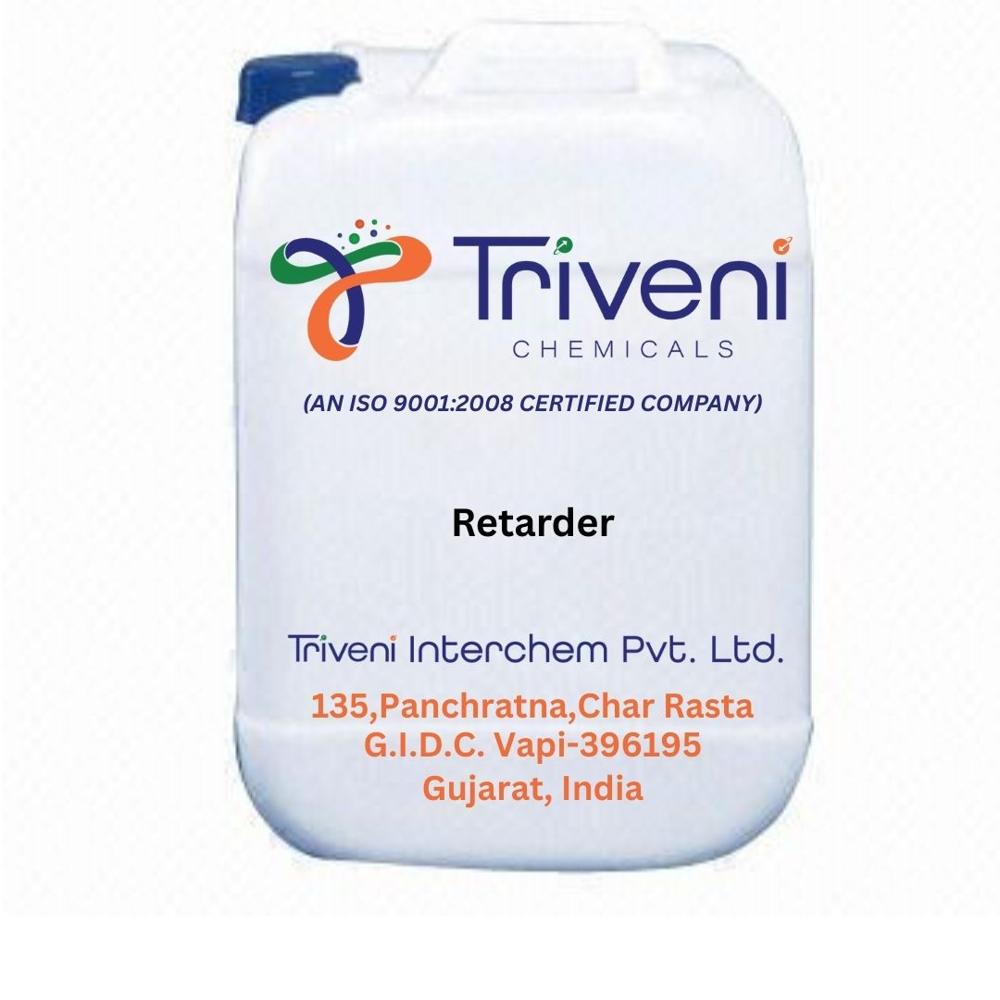
Optimized Vulcanization Control

Retarder (C13H10Cl3NO2S2) ensures precise control over rubber vulcanization, making the production process safer and more flexible. By delaying the curing time, it helps prevent premature vulcanization (scorching), allowing processors to achieve consistent quality in their final products.


Exceptional Thermal and Chemical Resistance

Known for its notable resistance to heat and chemicals, Retarder remains effective under processing temperatures up to 120C. Its stability allows manufacturers to use it in both natural and synthetic rubber applications, ensuring durability and performance in challenging industrial environments.


Safe and Convenient Packaging

Supplied in sturdy 25 kg bags-paper or plastic-Retarder is designed for ease of transport and storage. The packaging can also be customized based on specific customer needs, helping facilities maintain workplace organization and safety.

FAQ's of Retarder (C13H10Cl3NO2S2) (218.14 g/mol):


Q: How should Retarder (C13H10Cl3NO2S2) be stored for maximum shelf life?

A: To ensure Retarder retains its effectiveness, store it in a cool, dry, and well-ventilated area. Avoid exposure to moisture and direct sunlight. Under these conditions, the product maintains its stability for up to two years from the manufacture date.

Q: What is the main benefit of using Retarder in rubber processing?

A: Retarder is primarily used to delay the vulcanization process in rubber manufacturing, which enhances processing safety by preventing premature curing. This allows for greater flexibility in production and helps in maintaining the desired properties of the rubber.

Q: When is Retarder typically added during the rubber compounding process?

A: Retarder is incorporated during the initial mixing stages of rubber compounding. Adding it early ensures uniform dispersion and effective control over the vulcanization rate throughout the batch.

Q: Where can Retarder be effectively applied?

A: Retarder can be used in the production of various rubber goods, including both natural and synthetic rubber products. It is suitable for manufacturing automotive parts, tires, industrial hoses, and molded rubber components where controlled vulcanization is crucial.

Q: What safety precautions are required when handling Retarder?

A: Personal protective equipment, including gloves and safety goggles, should be worn to avoid skin and eye contact, as well as inhalation of dust. Ensure adequate ventilation in the work area during handling and processing.

Q: How is Retarder supplied and packaged?

A: Retarder is commonly packaged in 25 kg paper or plastic bags, but packaging can be tailored to specific customer requirements. Each package is labeled for safe handling and storage.

Q: What are the material's solubility characteristics and suitable solvents?

A: Retarder is insoluble in water but dissolves readily in organic solvents. This property makes it easy to incorporate into various rubber formulations during processing.

Tell us about your requirement
product

Price:

Quantity
Select Unit

  • 50
  • 100
  • 200
  • 250
  • 500
  • 1000+
Additional detail
Mobile number

Email

More Products in Plastic & Rubber Chemicals Category

Redispersible Polymer (1000000 g/mol)

Redispersible Polymer (1000000 g/mol)

Price 120.0 INR / Kilograms

Minimum Order Quantity : 25 Kilograms

Color : White or offwhite

Usage & Applications : Used as a binder in cementbased or gypsumbased drymix mortars, tile adhesives, plasters, selfleveling compounds, grouts, EIFS render, and repair mortars.

Resistance level : Good resistance to water and alkali

Nitrogen Content (%) : 0.1%

Dodecanedioic Acid (693-23-2)

Dodecanedioic Acid (693-23-2)

Price 715.0 INR / Kilograms

Minimum Order Quantity : 25 Kilograms

Color : White

Usage & Applications : Used as a monomer in nylon and polyester resins, powder coatings, lubricants, adhesives, fragrances, and plasticizers.

Resistance level : Good chemical resistance

Nitrogen Content (%) : 0%

Aluminium Trihydrate (Al(OH)3.3H2O)

Aluminium Trihydrate (Al(OH)3.3H2O)

Price 31.5 INR / Kilograms

Minimum Order Quantity : 25 Kilograms

Color : White

Usage & Applications : Flame retardant in plastics, rubber, paints, adhesives, paper, and as a filler in resins

Resistance level : Excellent flame and arc resistance

Dibutyltin Dilaurate (77-58-7)

Dibutyltin Dilaurate (77-58-7)

Price 1500.0 INR / Kilograms

Minimum Order Quantity : 25 Kilograms

Color : Colorless to pale yellow

Usage & Applications : Catalyst for polyurethane foams, curing agent for silicones, stabilizer for PVC

Resistance level : High chemical stability