Sebacic Acid (111-20-6) About
We are Supplier, Exporter and Contract Manufacturer.
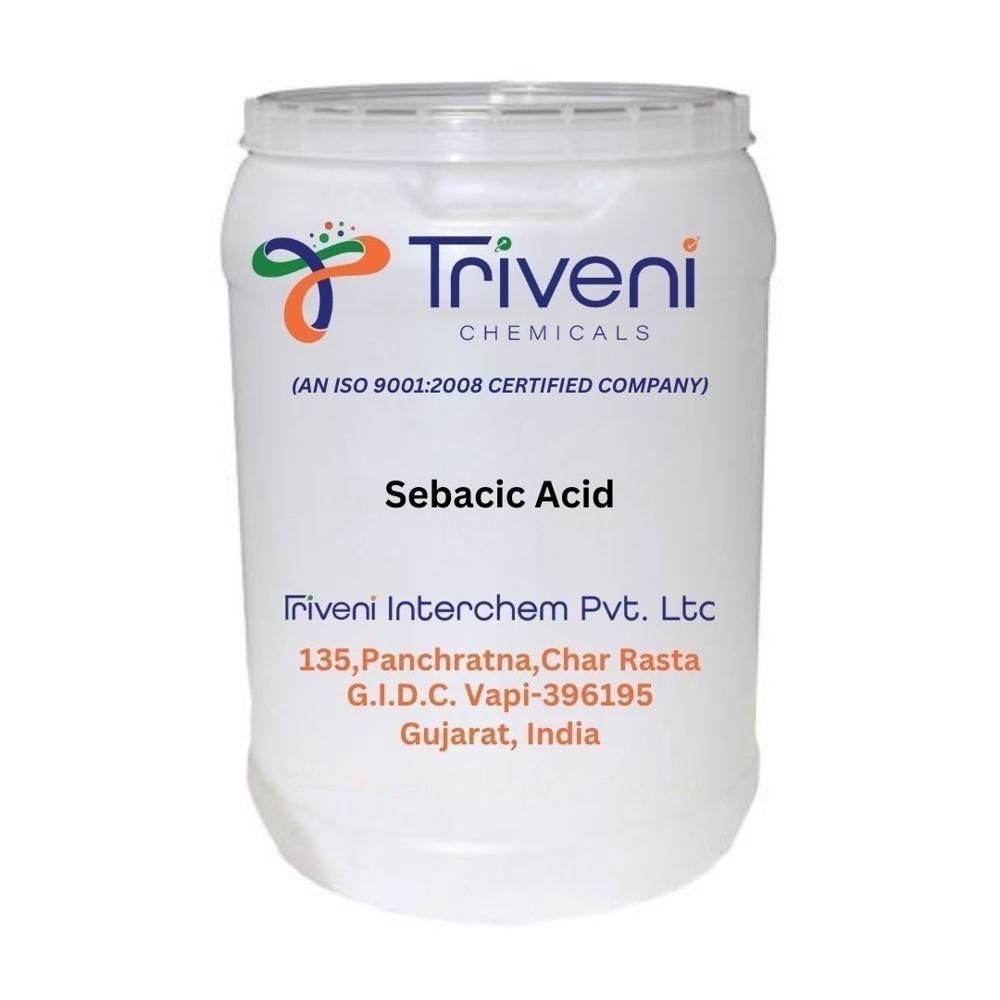
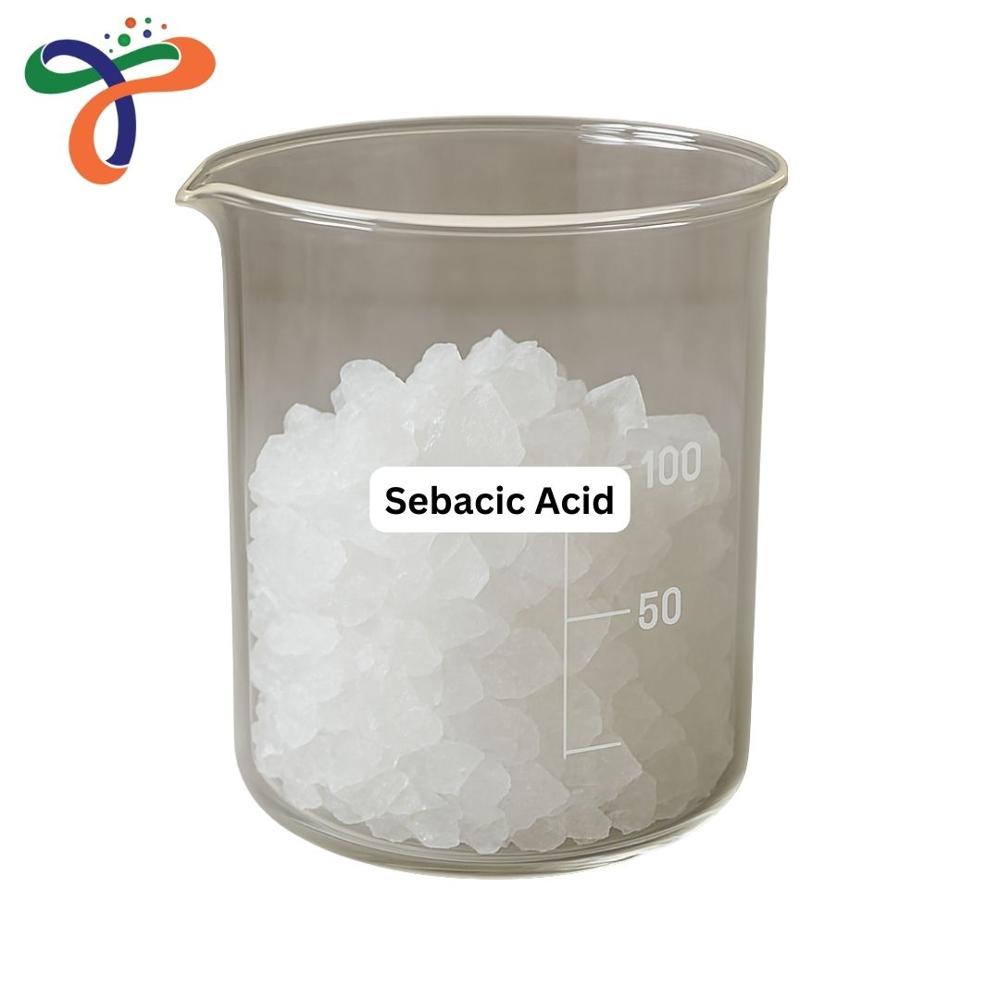
Technical profile of Sebacic Acid, a high-purity raw chemical material supplied by Triveni Chemicals for industrial manufacturing and laboratory synthesis.
Technical Specifications:
CAS Number: 111-20-6
Synonyms: 1,8-Octanedicarboxylic Acid
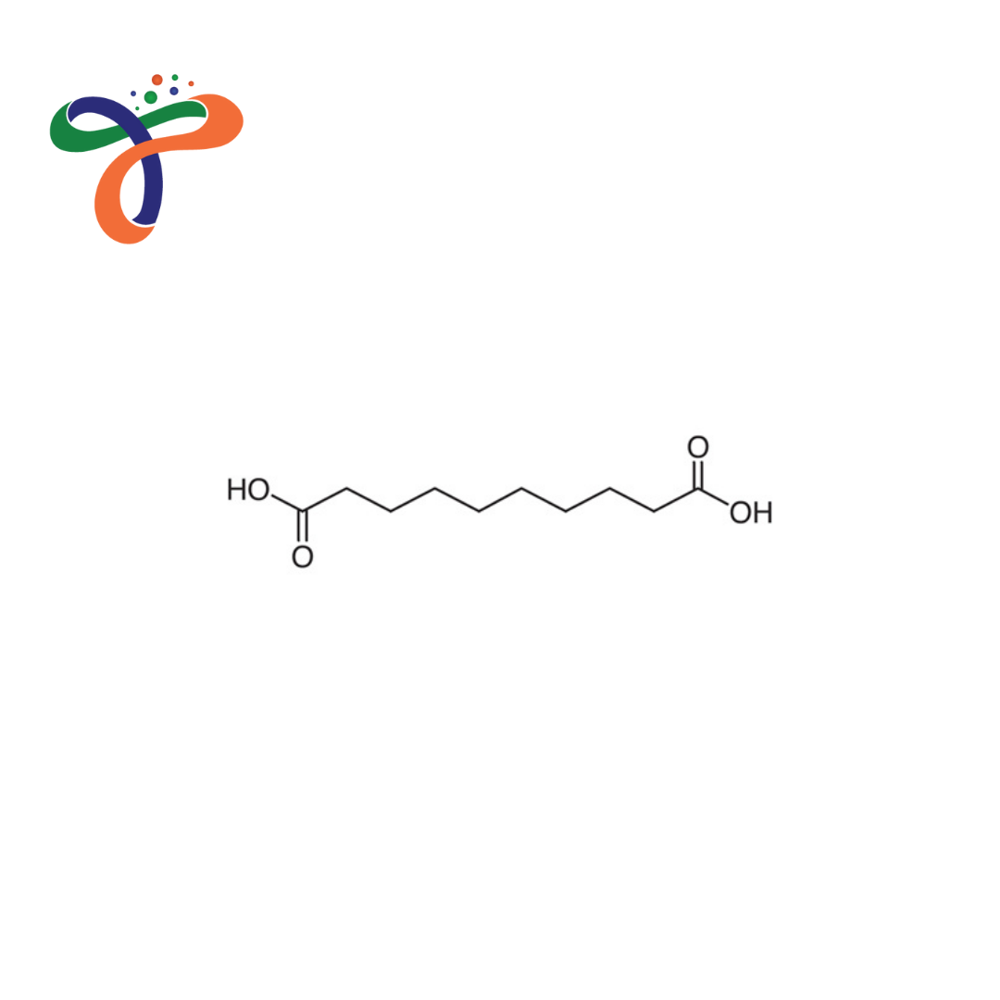
Chemical Formula: C10H18O4
Industrial Uses & Applications:
Sebacic Acid Is A Naturally Derived Dicarboxylic Acid Widely Used In Polymer And Chemical Manufacturing. It Is Commonly Applied In The Production Of Nylon-6,10, Plasticizers, Lubricants, Adhesives, And Specialty Resins. Sebacic Acid Provides Flexibility, Thermal Stability, And Good Hydrolytic Resistance To Polymers.
Versatility in Polymer SynthesisSebacic acid is essential in the creation of Nylon 6,10, contributing to polymers known for their resilience and flexibility. Additionally, its use extends to the synthesis of biodegradable polyesters, making it highly valuable for eco-friendly product development in various industries.
Enhancing Performance in Lubricants and PlasticizersEsters derived from sebacic acid function as high-performance plasticizers and are prized for providing excellent flexibility to plastics. In the aerospace and automotive sectors, these esters serve as low-temperature lubricants, ensuring reliable performance under demanding conditions.
Industrial and Specialty UsesWith broad application in the industrial sector, sebacic acid is commonly utilized in specialty resins, coatings, and specialty lubricants. Its high purity and unique physicochemical properties enable manufacturers to achieve premium product quality.
FAQ's of Sebacic Acid (111-20-6):
Q: How is sebacic acid typically produced?
A: Sebacic acid is primarily derived from the cleavage of castor oil, a natural and renewable source. The process involves hydrolysis and subsequent oxidation steps to isolate and purify the acid.
Q: What are the principal uses of sebacic acid in industry?
A: Sebacic acid serves as a key monomer for Nylon 6,10 and various biodegradable polyesters. It is also used in formulating high-performance plasticizers, low-temperature lubricants, coatings, specialty resins, and other industrial products.
Q: When is sebacic acid preferred over alternatives in polymer production?
A: Sebacic acid is chosen for applications that require polymers with enhanced flexibility, durability, and biodegradability, such as in the production of nylons, specialty polyesters, and high-performance plasticizers.
Q: Where can sebacic acid be sourced and who are the typical suppliers?
A: Sebacic acid is manufactured and supplied predominantly in India, with numerous chemical suppliers catering to both local and international industrial markets.
Q: What are the benefits of using sebacic acid-derived esters in lubricants?
A: Esters of sebacic acid offer superior performance as low-temperature lubricants, making them ideal for use in demanding sectors such as aerospace and automotive where consistent lubrication is crucial under extreme conditions.
Q: How does the solubility of sebacic acid impact its industrial applications?
A: Although sebacic acid is sparingly soluble in water, its good solubility in ethanol and acetone makes it compatible with a wide range of industrial formulation processes, ensuring ease of incorporation into various products.






 Send Inquiry
 Send Inquiry
 Send Inquiry
 Call Me Free
 English
 Spanish
 French
 German
 Italian
 Chinese (Simplified)
 Japanese
 Korean
 Arabic
 Portuguese