Back to top
Sodium Azide (26628-22-8)

Sodium Azide (26628-22-8)

Price 1100.0 INR/ Kilograms

MOQ : 1 Kilograms

Sodium Azide (26628-22-8) Specification

  • Purity
  • 98 99%
  • Molecular Weight
  • 65.01 g/mol Grams (g)
  • Melting Point
  • 255 C
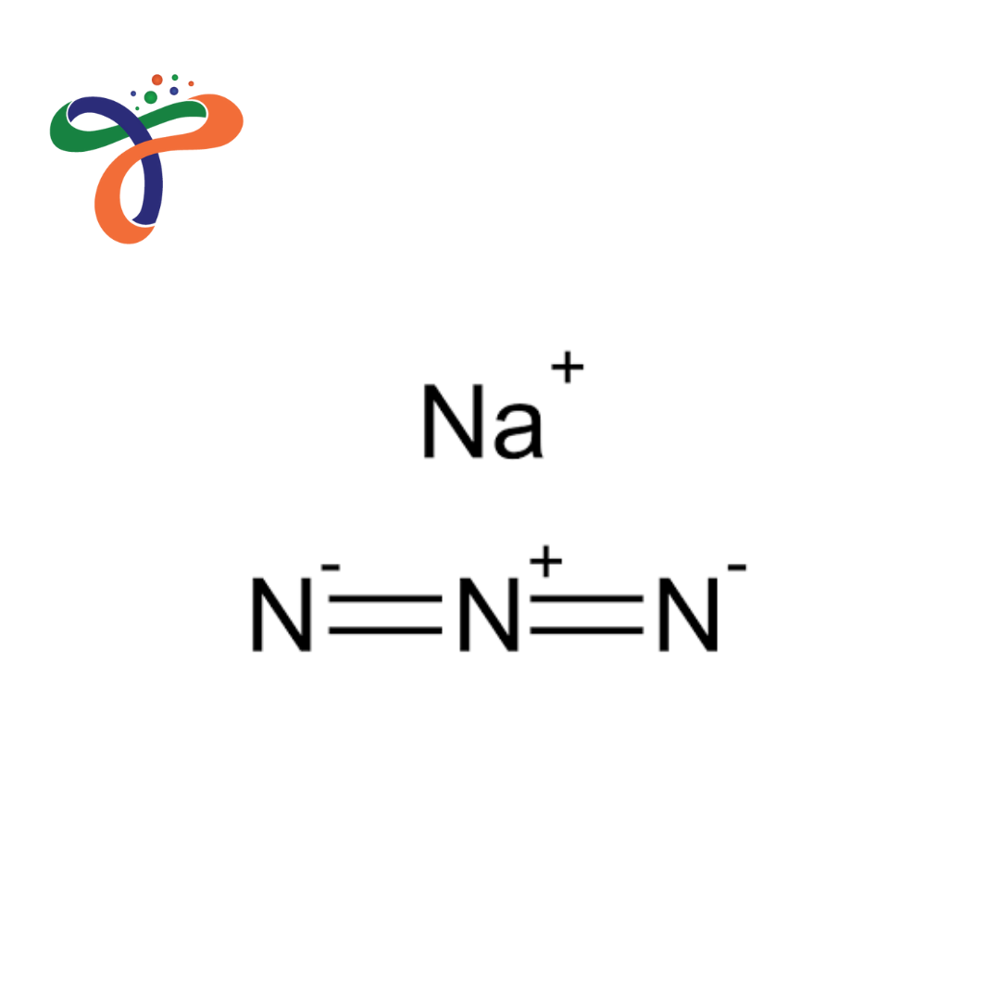
  • Structural Formula
  • NaN3
  • Solubility
  • Highly soluble in water; soluble in polar solvents
  • Properties
  • Sodium azide is a rapidly decomposing inorganic compound primarily used as the chemical propellant in automobile airbags. Upon impact, it detonates to release nitrogen gas. It is also an essential preservative in biomedical laboratories and a versatile intermediate in the synthesis of organic azides and pharmaceuticals.
  • CAS No
  • 26628-22-8
  • Usage
  • Reagent in organic synthesis; historically used in airbags to generate nitrogen gas
  • Molecular Formula
  • NaN3
  • Application
  • Industrial
  • Appearance
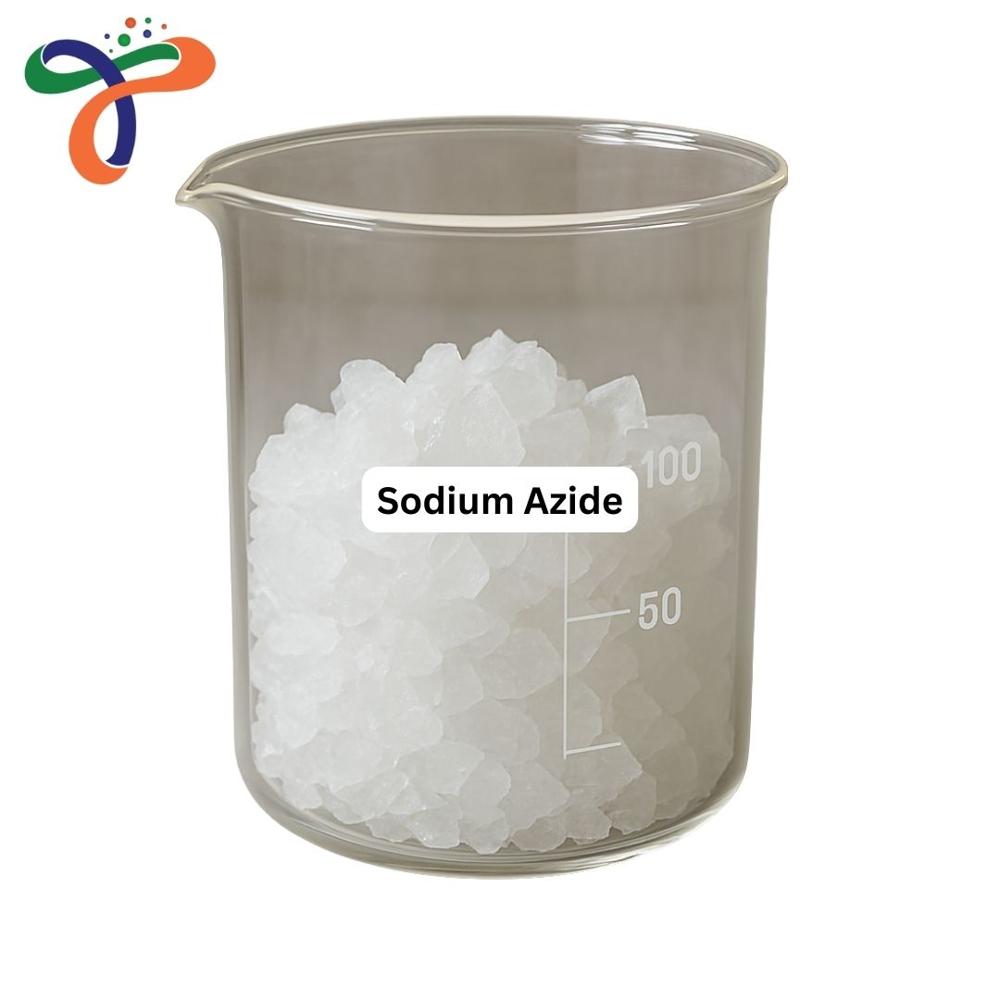
  • White crystalline solid
  • Physical Form
  • Solid
  • Refractive Rate
  • 1.65
 

Sodium Azide (26628-22-8) Trade Information

  • Minimum Order Quantity
  • 1 Kilograms
  • Payment Terms
  • Cash in Advance (CID)
  • Supply Ability
  • 5000 Kilograms Per Month
  • Delivery Time
  • 10 Days
  • Main Domestic Market
  • All India
 

About Sodium Azide (26628-22-8)

We are Supplier, Exporter and Contract Manufacturer.
Technical profile of Sodium Azide, a high-purity raw chemical material supplied by Triveni Chemicals for industrial manufacturing and laboratory synthesis.

Technical Specifications:
CAS Number: 26628-22-8
Chemical Formula: NaN3

Industrial Uses & Applications:
Sodium Azide Is An Inorganic Compound Widely Used In Industrial, Laboratory, And Automotive Applications. It Is Primarily Known For Its Use As A Gas Generating Agent In Automobile Airbag Systems, Where It Rapidly Decomposes To Produce Nitrogen Gas. Sodium Azide Is Also Used As A Preservative And Biocide In Laboratories, As A Reagent In Organic Synthesis, And In Pharmaceutical Research.


Key Industrial Applications

Sodium azide's primary industrial use is as a propellant in automobile airbags, where it safely generates nitrogen gas upon impact. In laboratories, it serves as a crucial preservative for biological samples, preventing the growth of unwanted microbes. Its versatility extends into chemical synthesis, where it acts as an intermediate for producing organic azides and pharmaceutical compounds.


Distinctive Physical and Chemical Properties

This compound appears as a white crystalline solid and exhibits high solubility in water and polar solvents, which facilitates its usage in chemical reactions. With a melting point of 255C and a refractive index of 1.65, sodium azide boasts a high purity level, ensuring consistent results in various industrial and laboratory applications.

FAQ's of Sodium Azide (26628-22-8):


Q: How is sodium azide commonly utilized in the automotive industry?

A: Sodium azide is primarily used in the automotive sector as a chemical propellant within airbag systems. When a collision is detected, sodium azide rapidly decomposes, releasing nitrogen gas that inflates the airbag to cushion passengers.

Q: What makes sodium azide suitable as a preservative in biomedical laboratories?

A: Due to its ability to inhibit microbial growth, sodium azide is used as a preservative for biological samples, reagents, and diagnostic solutions, helping maintain their integrity over extended periods.

Q: When is sodium azide applied in organic synthesis?

A: Chemists employ sodium azide as a reagent and intermediate during the synthesis of organic azides, which are crucial for creating pharmaceuticals and other advanced chemicals. Its high reactivity and solubility in polar solvents enhance its efficiency in such processes.

Q: Where should sodium azide be stored for optimal safety and stability?

A: It should be stored in a cool, dry, well-ventilated area, away from acids, metals, and sources of ignition, as it is sensitive to heat and shock. Proper containment prevents accidental decomposition or hazardous reactions.

Q: What is the benefit of using sodium azide in the industrial sector?

A: Sodium azide provides a reliable and controlled method for generating nitrogen gas, making it essential for applications where rapid inflation or gas production is required, such as airbags or specific industrial reactions.

Q: How is sodium azide supplied and distributed in India?

A: Manufacturers and suppliers in India provide sodium azide with a typical purity of 98-99% as a solid crystalline form, primarily catering to industrial and research needs.

Tell us about your requirement
product

Price:

Quantity
Select Unit

  • 50
  • 100
  • 200
  • 250
  • 500
  • 1000+
Additional detail
Mobile number

Email

More Products in Industrial Chemicals Category

Naphthalene (91-20-3) (C10H8)

Naphthalene (91-20-3) (C10H8)

Price 98.0 INR / Kilograms

Minimum Order Quantity : 25 Kilograms

Molecular Formula : C10H8

Usage : Used in mothballs; production of phthalic anhydride; solvent and chemical intermediate

Physical Form : Solid

Appearance : White crystalline solid

3-Methoxypropylamine (5332-73-0) (C4H11NO)

3-Methoxypropylamine (5332-73-0) (C4H11NO)

Price 250.0 INR / Kilograms

Minimum Order Quantity : 25 Kilograms

Molecular Formula : C4H11NO

Usage : It is used in pharmaceuticals, surfactants, and specialty chemical manufacturing.

Physical Form : Liquid

Appearance : Colorless liquid

N-Hexyl Bromide (111-25-1)

N-Hexyl Bromide (111-25-1)

Price 250.0 INR / Kilograms

Minimum Order Quantity : 25 Kilograms

Molecular Formula : C6H13Br

Usage : Alkylating agent in organic synthesis; used to prepare hexyl derivatives via nucleophilic substitution

Physical Form : Liquid

Appearance : Colorless liquid

Hydrofluoric Acid 70%

Hydrofluoric Acid 70%

Price 168.0 INR / Kilograms

Minimum Order Quantity : 25 Kilograms

Molecular Formula : HF

Usage : Glass etching; metal cleaning and pickling; semiconductor fabrication; oil and gas well acidizing

Physical Form : Liquid

Appearance : Colorless, clear liquid