Sodium Dichromate Dihydrate About
We are Supplier, Exporter and Contract Manufacturer.
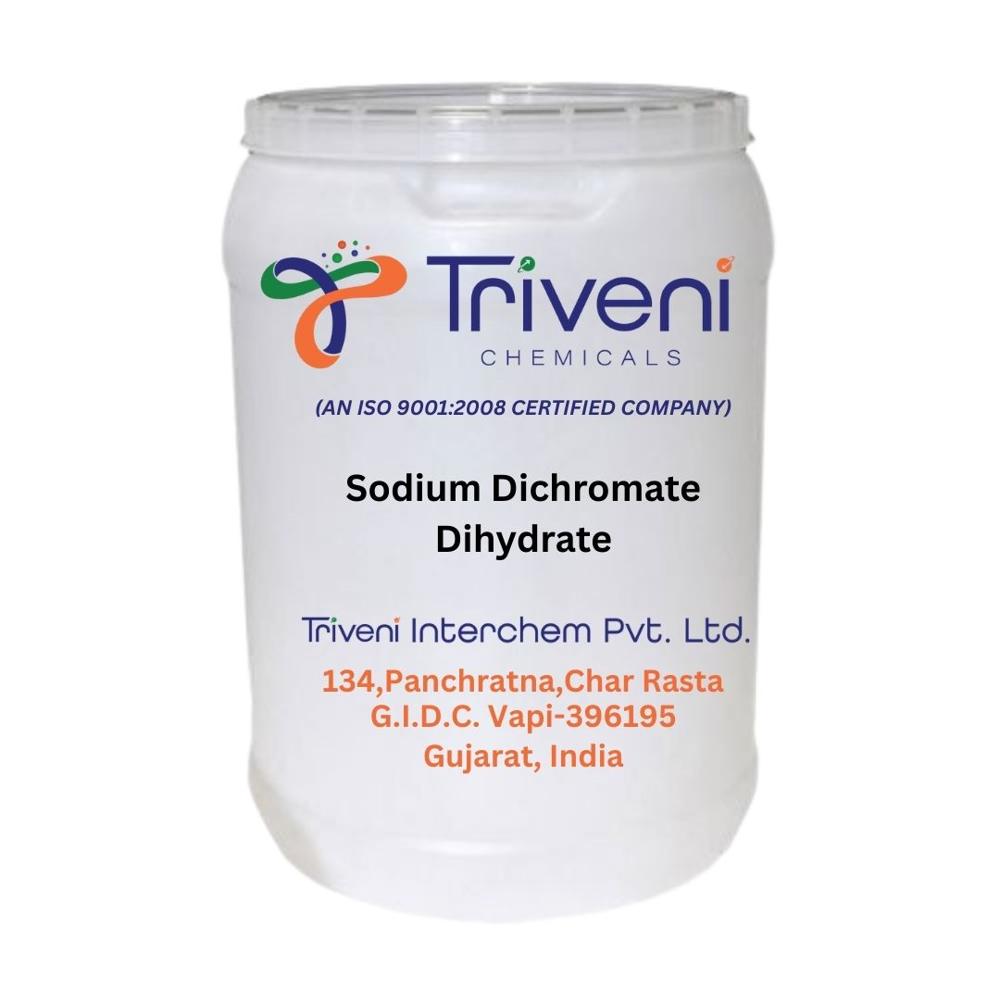
Technical profile of Sodium Dichromate Dihydrate, a high-purity raw chemical material supplied by Triveni Chemicals for industrial manufacturing and laboratory synthesis.
Technical Specifications:
CAS Number: 7789-12-0
Synonyms: Sodium Bichromate Dihydrate
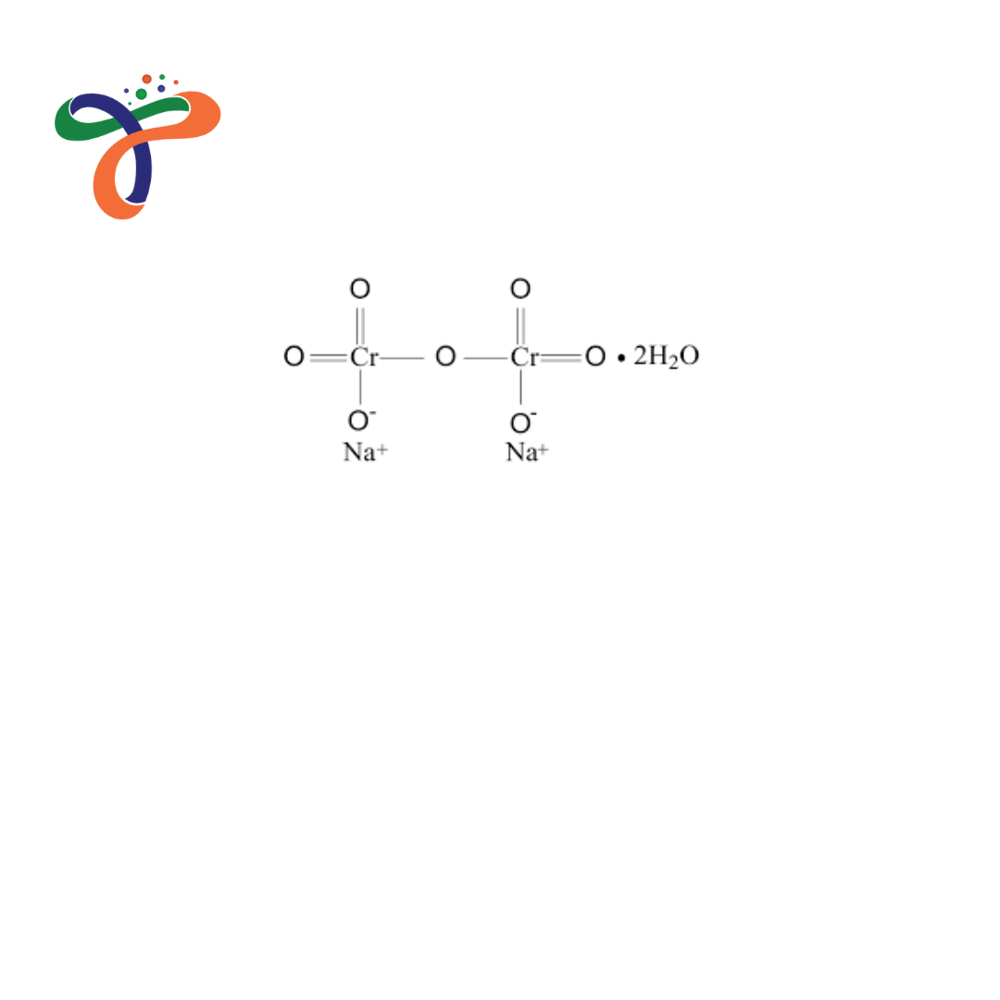
Chemical Formula: Cr2H4Na2O9
Industrial Uses & Applications:
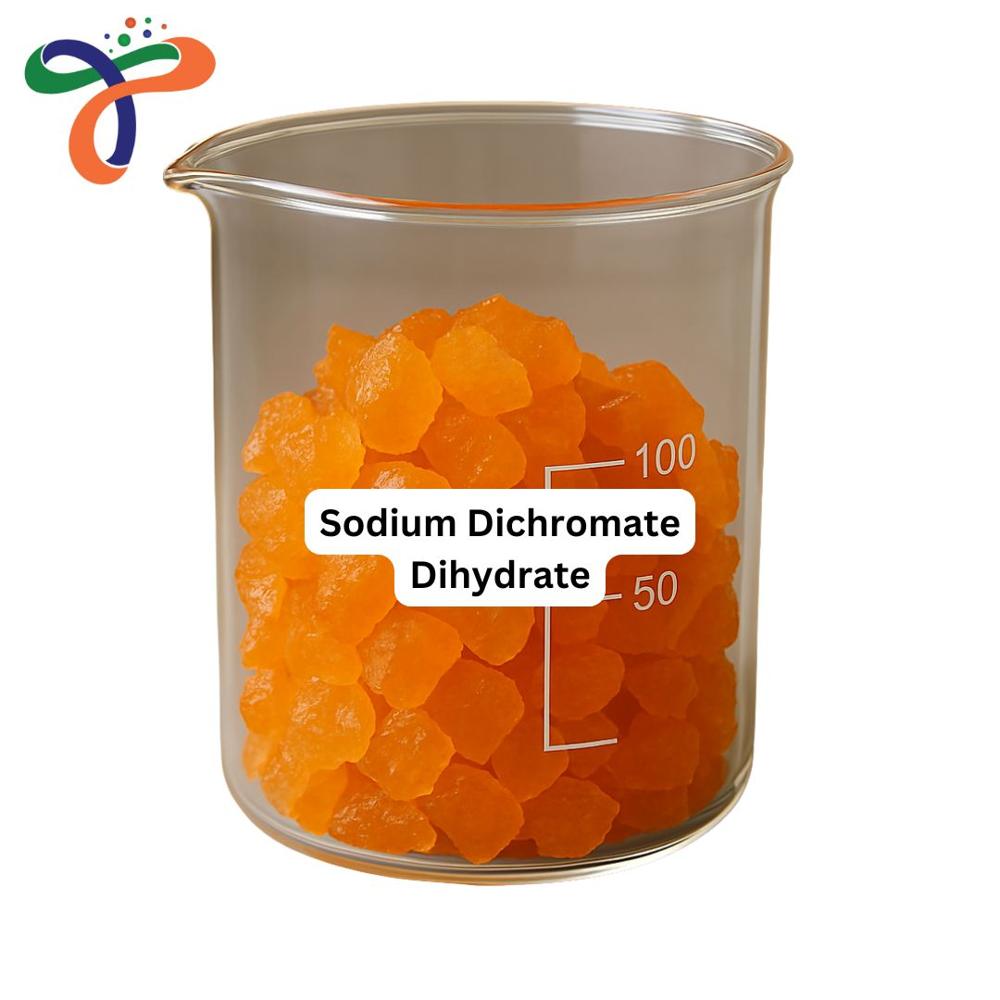
It Appears As Bright Orange To Red Crystalline Solids And Is Highly Soluble In Water. Sodium Dichromate Dihydrate Is Widely Used As An Oxidizing Agent And As A Key Intermediate In The Manufacture Of Chromium Chemicals, Pigments, Corrosion Inhibitors, And Leather Tanning Agents.
High-Efficiency Industrial Oxidizing AgentSodium Dichromate Dihydrate's potent oxidizing qualities make it indispensable across industries. Its solid form ensures ease of handling, storage, and dosing. Its use in synthesizing complex organic and inorganic compounds enables efficient reactions that support pigment production, metal finishing, and advanced chemical manufacturing.
Versatility in Metal Treatment and Pigment ManufactureThis compound offers superior performance for metal finishing and pigment manufacturing. It is favored for electroplating and corrosion prevention due to its chemical stability and effectiveness, while pigment producers benefit from its ability to impart lasting coloration to various products.
FAQ's of Sodium Dichromate Dihydrate:
Q: How is sodium dichromate dihydrate typically used in industrial processes?
A: Sodium dichromate dihydrate serves as a primary oxidizing agent in chemical synthesis, enabling the transformation of raw materials into valuable compounds. It is also employed in metal finishing, electroplating, wood preservation, and production of color pigments due to its efficiency and reactivity.
Q: What benefits does sodium dichromate dihydrate offer as an oxidizing agent?
A: Its strong oxidizing capability facilitates essential chemical reactions required in organic and inorganic synthesis, leading to higher product yield and quality. These benefits make it fundamental in industrial sectors that demand precise control of oxidation during manufacturing.
Q: When should sodium dichromate dihydrate be used in pigment production?
A: It should be incorporated during the initial stages of pigment synthesis, where its oxidizing properties activate color-forming reactions, resulting in consistent, vibrant pigment shades that meet industry standards for longevity and appearance.
Q: Where is sodium dichromate dihydrate commonly applied in the manufacturing industry?
A: Industries such as chemical synthesis, metal finishing, wood treatment, pigment manufacturing, and electroplating utilize sodium dichromate dihydrate for its effectiveness in refining and protecting materials, ensuring their durability and quality.
Q: What is the process for using sodium dichromate dihydrate in metal finishing?
A: During metal finishing, sodium dichromate dihydrate is dissolved in water and applied to metal surfaces, where it acts as an oxidizer, promoting the formation of protective coatings or facilitating electroplating, which enhances surface durability and appearance.
Q: How does the physical form of sodium dichromate dihydrate influence its application?
A: Being a solid crystalline material, it is easy to handle, measure, and dissolve, ensuring precise dosing during industrial procedures and simplifying storage and transport requirements.







 Send Inquiry
 Send Inquiry
 Send Inquiry
 Call Me Free
 English
 Spanish
 French
 German
 Italian
 Chinese (Simplified)
 Japanese
 Korean
 Arabic
 Portuguese