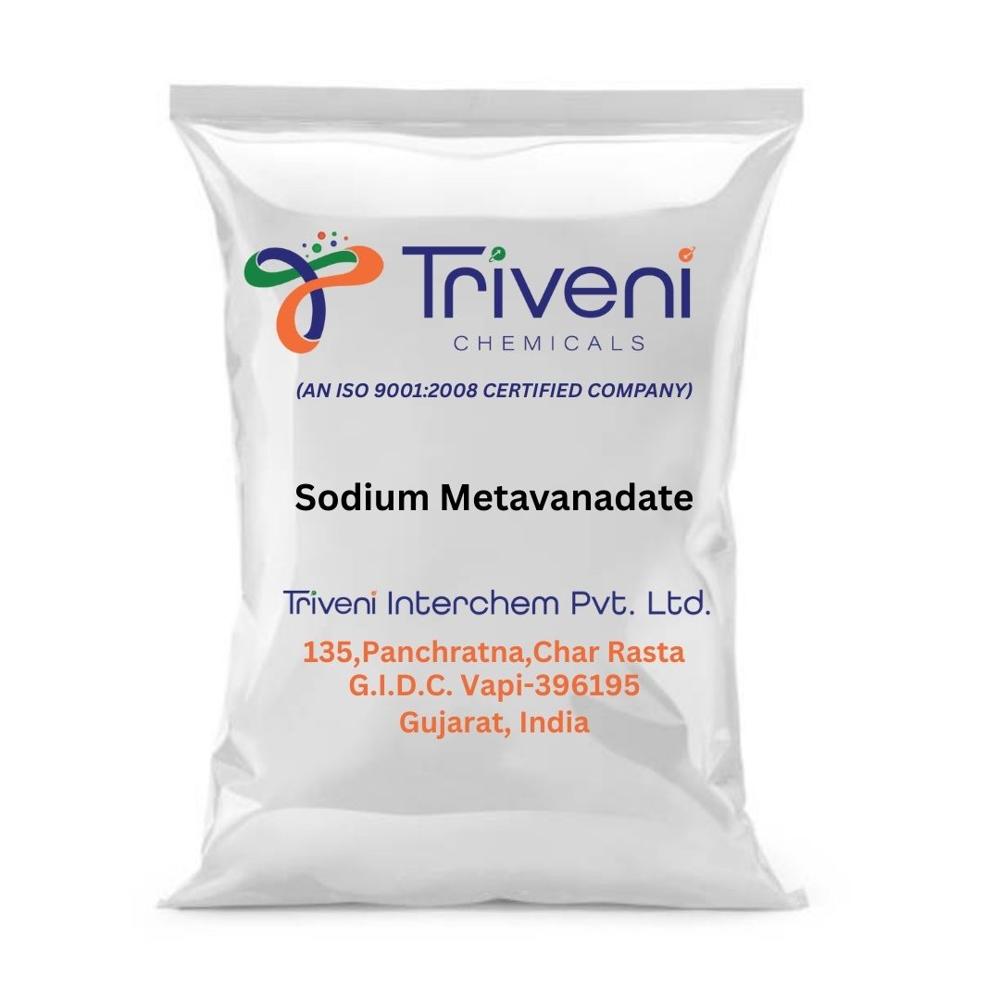
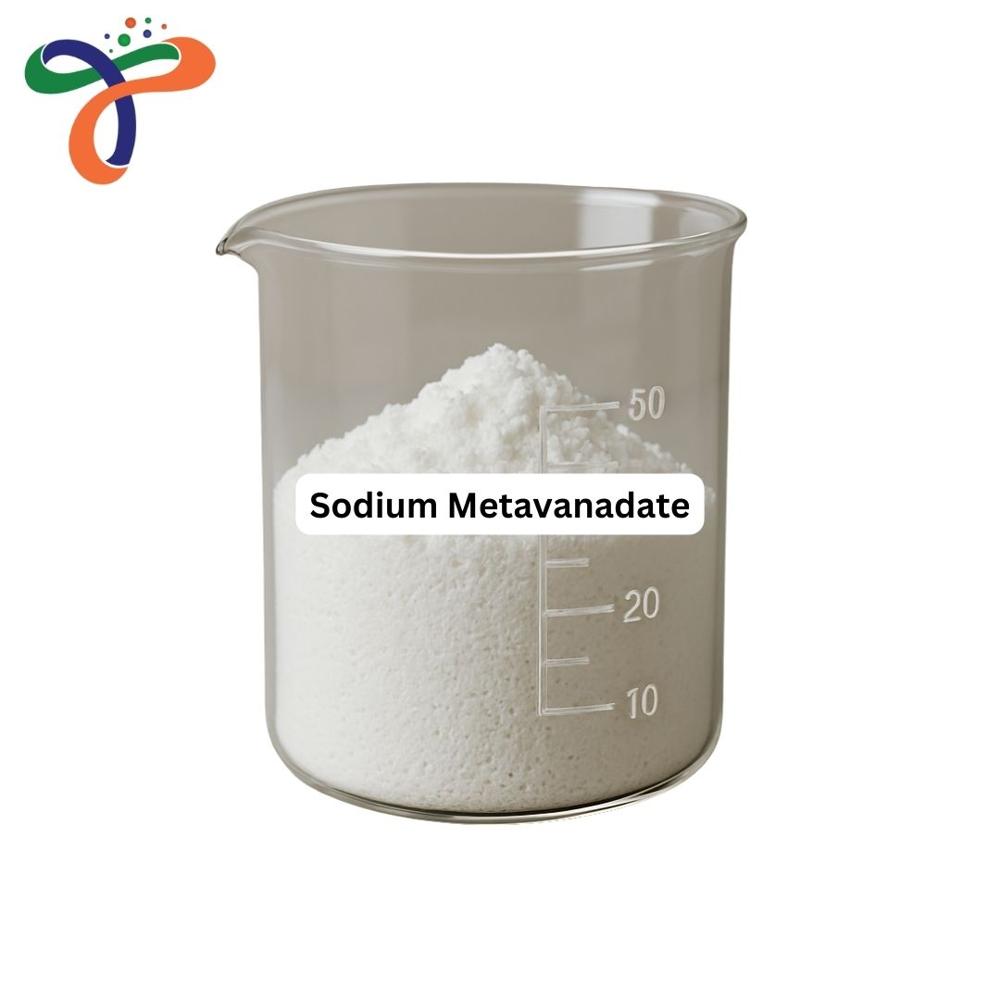
Sodium Metavanadate (13718-26-8) About
We are Supplier, Exporter and Contract Manufacturer.
Technical profile of Sodium Metavanadate, a high-purity raw chemical material supplied by Triveni Chemicals for industrial manufacturing and laboratory synthesis.
Technical Specifications:
CAS Number: 13718-26-8
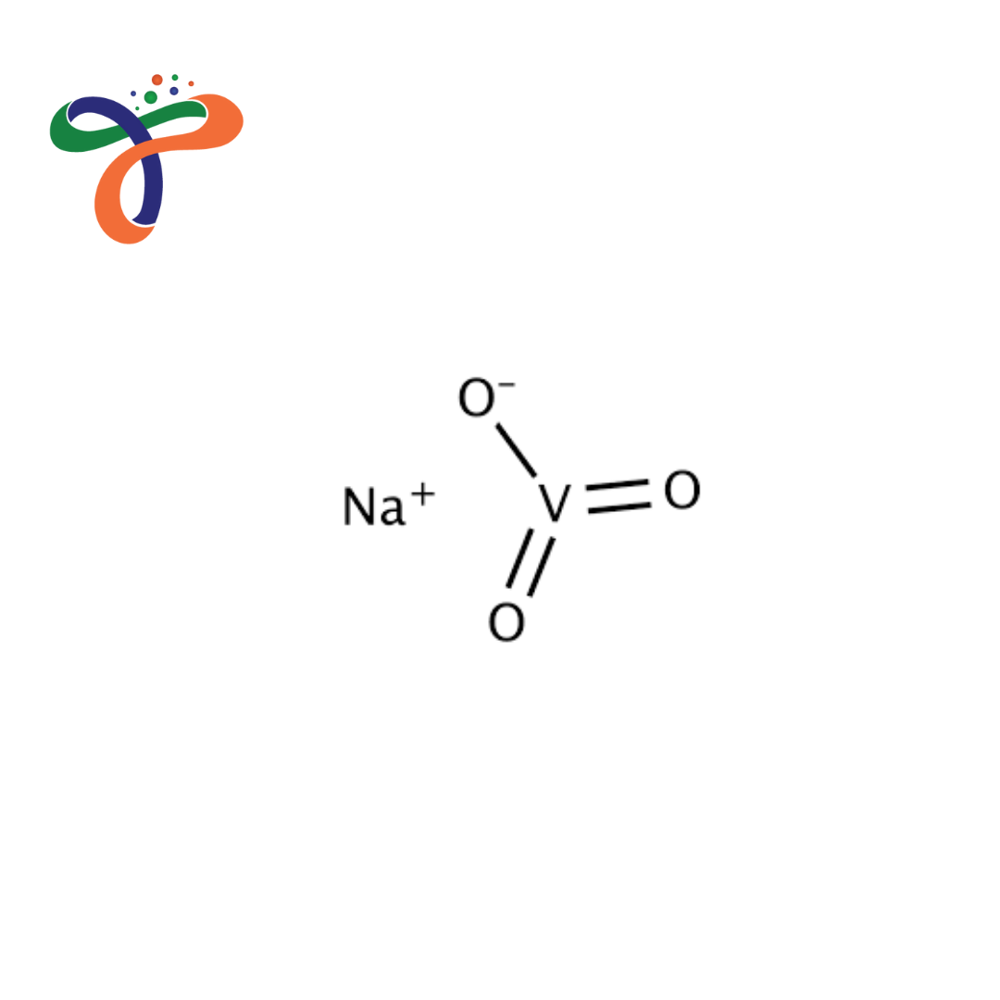
Synonyms: Sodium Trioxovanadate, Sodium Vanadate(V), Sodium (Meta)Vanadate
Chemical Formula: NaO3V
Industrial Uses & Applications:
Sodium Metavanadate Is An Inorganic Vanadium Compound Widely Used In Chemical, Industrial, And Research Applications. It Is Valued For Its Strong Oxidizing Properties And Good Solubility In Water.
Versatile Industrial ApplicationsSodium Metavanadate's chemical properties make it essential for diverse industrial uses. It functions as a catalyst in chemical manufacturing, particularly sulfuric acid production, and is employed as a mordant in dyeing textiles. Industries also utilize it as a corrosion inhibitor in metal processing and cooling systems, and it finds application in ceramics, glass, electrochemistry, and as an analytical reagent in laboratories.
Safe Storage and HandlingThis toxic substance should be stored in a tightly closed container in a cool, dry location to maintain stability and ensure long shelf life. It does not burn or have a flash point, but poses health risks and should be handled with care. Avoid contact with acids and strong reducing agents, as incompatibility may result in hazardous reactions. Proper storage minimizes risks and preserves product integrity.
Environmental and Safety ConsiderationsSodium Metavanadate is toxic and poses significant environmental hazards, especially to aquatic life. Always follow local, state, and federal disposal regulations to ensure safe handling and environmental protection. Use personal protective equipment (PPE) and maintain good industrial hygiene practices to limit exposure, as ingestion, inhalation, or skin contact may be harmful.
FAQ's of Sodium Metavanadate (13718-26-8):
Q: How should Sodium Metavanadate be stored to ensure maximum stability?
A: Sodium Metavanadate should be stored in a tightly closed container, placed in a cool, dry area away from incompatible substances such as acids and strong reducing agents. Under recommended storage conditions, the compound remains stable and retains its purity for extended periods.
Q: What are the main industrial applications of Sodium Metavanadate?
A: This compound is used primarily as a catalyst in chemical manufacturing (notably sulfuric acid production), as a mordant for dyeing textiles, and as a corrosion inhibitor in metal processing and industrial cooling water systems. It is also used in ceramics, glass production, electrochemistry, and laboratory analysis.
Q: When is Sodium Metavanadate considered hazardous and what precautions should be taken?
A: Sodium Metavanadate is classified as hazardous (UN 2862, Hazard Class 6.1) due to its toxicity and environmental risks. It may cause harm if inhaled, ingested, or if it comes into contact with skin. Use appropriate personal protective gear, follow proper handling protocols, and prevent release into water sources to minimize health and environmental risks.
Q: Where should Sodium Metavanadate disposal be conducted?
A: Disposal must be carried out in accordance with local, state, and federal environmental regulations. Due to its toxic nature and potential harm to aquatic life, it should not be released into the environment. Engage authorized hazardous waste disposal contractors for safe handling.
Q: What benefits does Sodium Metavanadate offer in industrial processes?
A: Its use as a catalyst enhances efficiency in chemical reactions, and as a corrosion inhibitor, it prolongs equipment lifespan in industrial cooling and metal processing. In the textile sector, it improves dye uptake and colorfastness, leading to superior product quality.
Q: How should Sodium Metavanadate be handled during transfer or application?
A: Always use personal protective equipment such as gloves, goggles, and protective clothing. Handle the product in well-ventilated areas, avoid generating dust, and prevent contact with skin or eyes. Seal containers immediately after use to limit exposure and contamination.






 Send Inquiry
 Send Inquiry
 Send Inquiry
 English
 Spanish
 French
 German
 Italian
 Chinese (Simplified)
 Japanese
 Korean
 Arabic
 Portuguese