Back to top
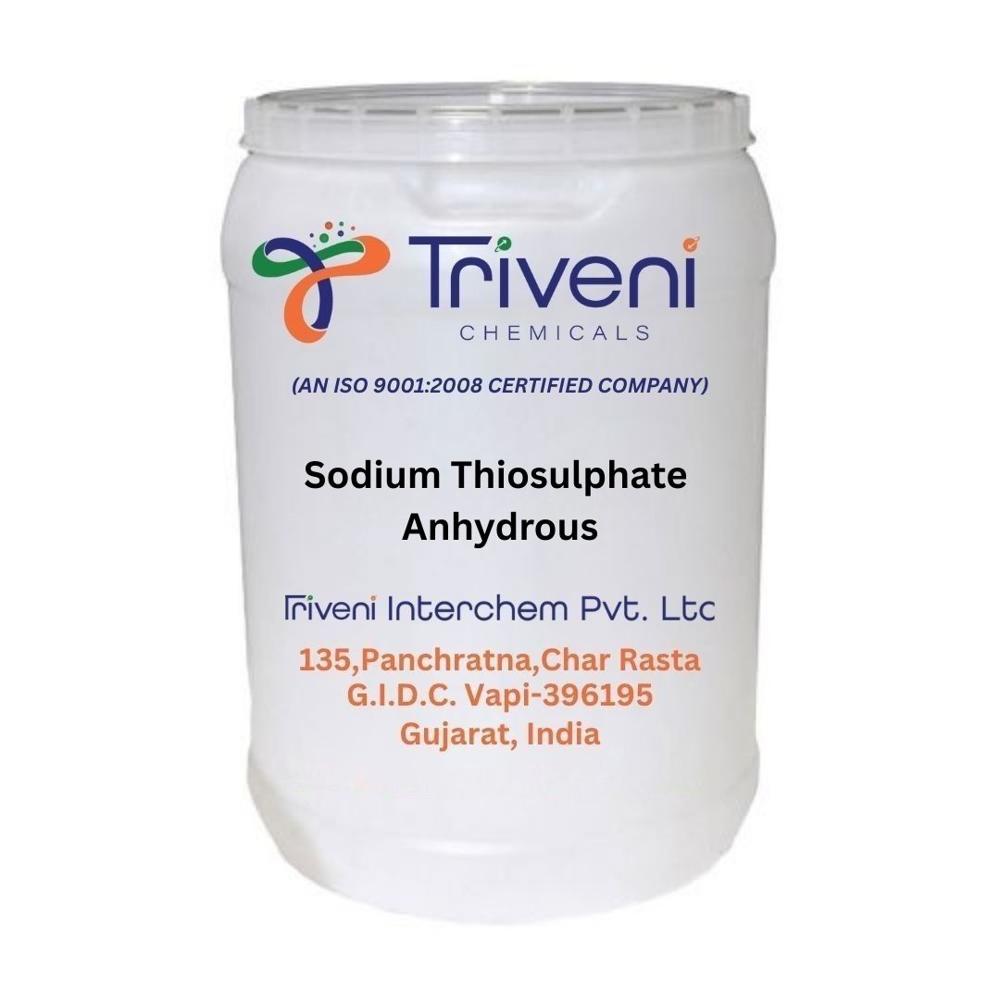
Sodium Thiosulphate Anhydrous

Sodium Thiosulphate Anhydrous

Price 50.0 INR/ Kilograms

MOQ : 25 Kilograms

Sodium Thiosulphate Anhydrous Specification

  • Solubility
  • Highly soluble in water
  • Usage
  • Reducing agent; employed in photography, bleaching, dechlorination of water, and analytical chemistry
  • Properties
  • Sodium thiosulphate anhydrous is a vital reducing agent widely used in photography as a "hypo" fixing agent to dissolve unexposed silver halides. In industrial applications, it serves as a dechlorinating agent for water treatment and a key reagent in iodometric titrations to detect oxidizing agents like chlorine.
  • Appearance
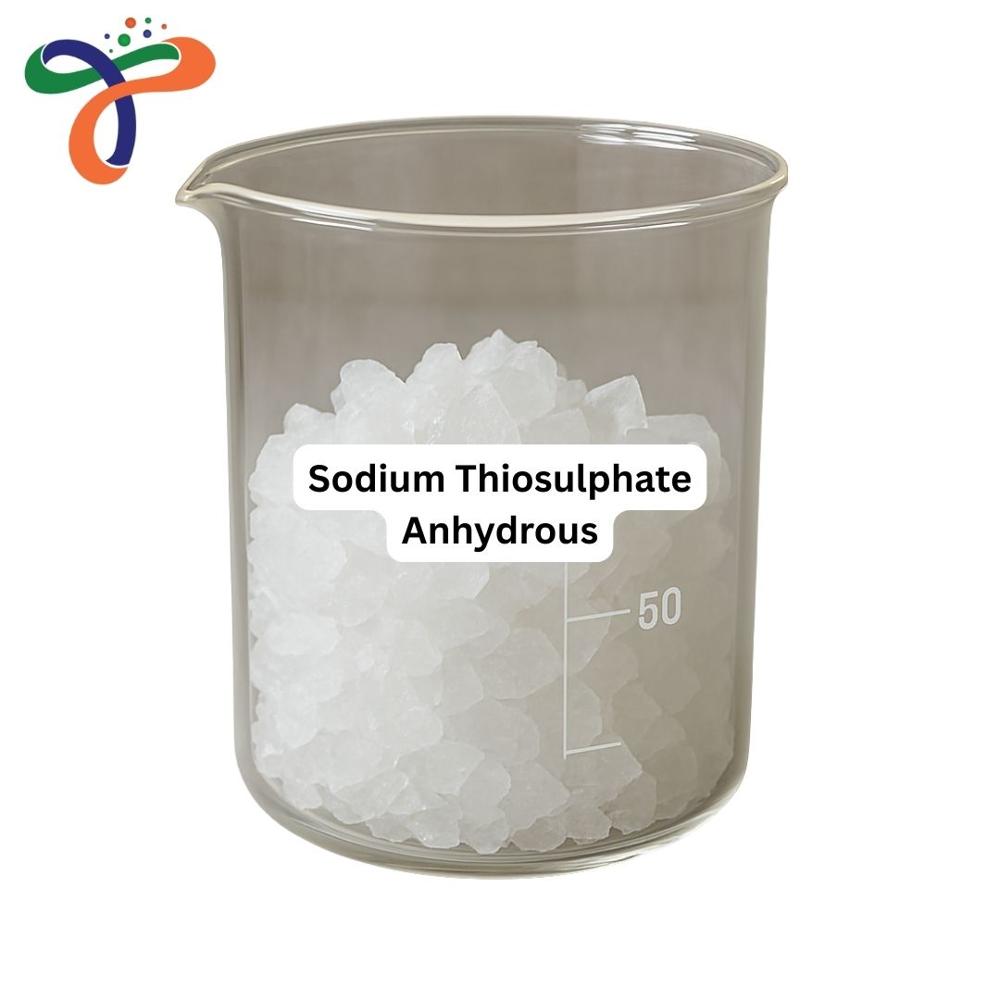
  • White crystalline solid
  • Refractive Rate
  • 1.515
  • Molecular Formula
  • Na2O3S2
  • CAS No
  • 7772-98-7
  • Molecular Weight
  • 158.11 g/mol Grams (g)
  • Purity
  • 98 99%
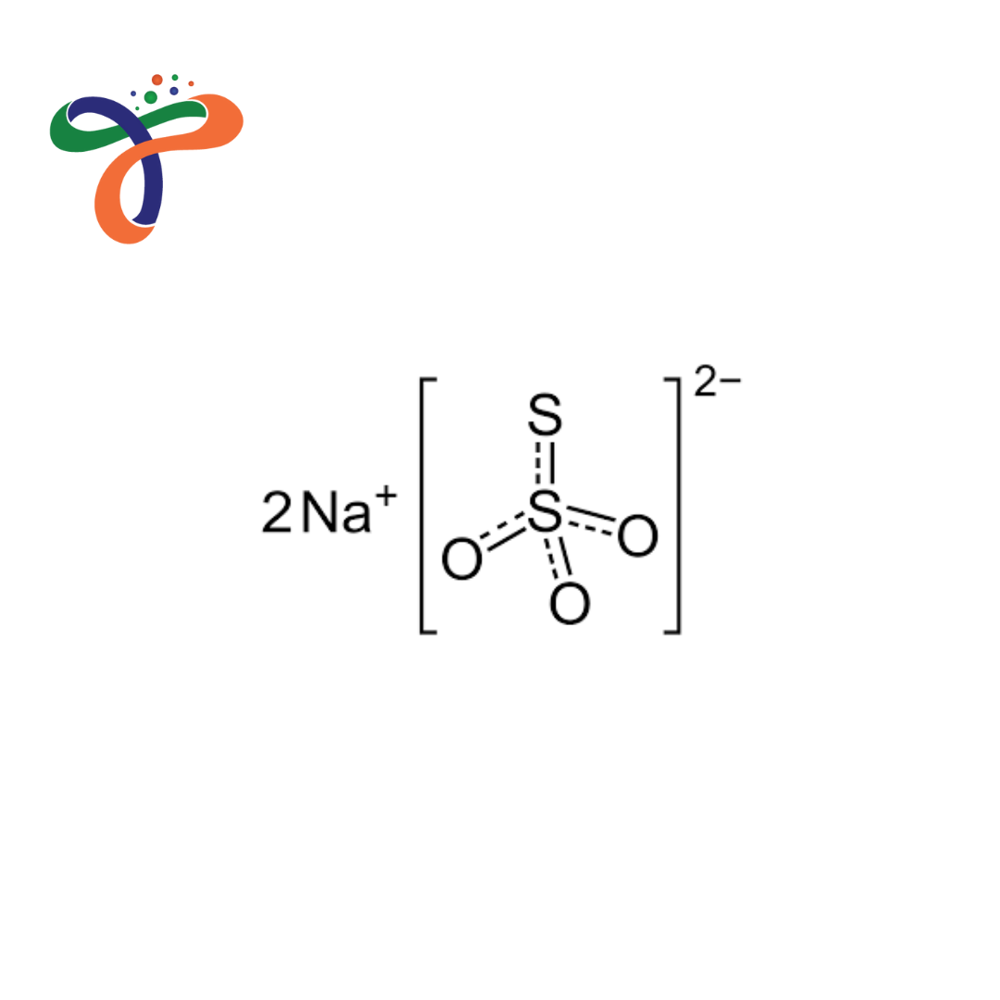
  • Structural Formula
  • Na2O3S2
  • Melting Point
  • 48.5 C
  • Physical Form
  • Solid
  • Application
  • Industrial
 

Sodium Thiosulphate Anhydrous Trade Information

  • Minimum Order Quantity
  • 25 Kilograms
  • Payment Terms
  • Cash in Advance (CID)
  • Supply Ability
  • 5000 Kilograms Per Month
  • Delivery Time
  • 10 Days
  • Main Domestic Market
  • All India
 

About Sodium Thiosulphate Anhydrous

We are Supplier, Exporter and Contract Manufacturer.
Technical profile of Sodium Thiosulphate Anhydrous, a high-purity raw chemical material supplied by Triveni Chemicals for industrial manufacturing and laboratory synthesis.

Technical Specifications:
CAS Number: 7772-98-7
Synonyms: Sulfothiorine Anhydrous, Sodium Oxide Sulfide Anhydrous, Disodium Thiosulfate Anhydrous
Chemical Formula: Na2O3S2

Industrial Uses & Applications:
It Appears As A White, Crystalline Powder That Is Readily Soluble In Water. The Anhydrous Form Is Used Where Precise Concentration And Low Moisture Content Are Required. Sodium Thiosulphate Is Widely Applied In Photographic Processing As A Fixing Agent, In Water Treatment For Dechlorination, And In Chemical Manufacturing.


Wide Industrial Applications

Sodium thiosulphate anhydrous is used across photography, water treatment, and analytical chemistry. As a reducing agent, it plays a significant role in dechlorinating water, making it safe for various uses. Its hypo fixing properties are essential in photographic processing, ensuring high-quality image development. Additionally, it serves as a reagent for detecting oxidizing agents, highlighting its vital role in laboratories and industries.


Physical and Chemical Properties

This compound is recognized by its white crystalline appearance and high solubility in water. With a melting point of 48.5C and a refractive rate of 1.515, it is easy to handle in industrial environments. The product is offered with high purity (98-99%), ensuring reliable and consistent performance for both small-scale laboratory and large-scale industrial uses.

FAQ's of Sodium Thiosulphate Anhydrous:


Q: How is sodium thiosulphate anhydrous used in photographic processes?

A: Sodium thiosulphate anhydrous acts as a hypo fixing agent in traditional photography. It dissolves unexposed silver halides from photographic films and papers, preventing further exposure and stabilizing the developed image.

Q: What industrial benefits does sodium thiosulphate anhydrous offer in water treatment?

A: In water treatment, sodium thiosulphate anhydrous serves as a dechlorinating agent. It effectively neutralizes excess chlorine, reducing the risk of toxicity and making water safer for industrial and municipal applications.

Q: When should sodium thiosulphate anhydrous be added during iodometric titration procedures?

A: Sodium thiosulphate anhydrous is typically introduced after an oxidizing agent, such as chlorine, reacts with iodide ions. The thiosulphate then reduces iodine, allowing for quantitative analysis of the oxidizing agent present in the sample.

Q: Where is sodium thiosulphate anhydrous primarily produced and supplied?

A: This chemical is largely manufactured and supplied by companies based in India, catering to a global market that includes industrial, laboratory, and photographic sectors.

Q: What is the process for dissolving sodium thiosulphate anhydrous in water for laboratory use?

A: To prepare sodium thiosulphate solution, the crystalline solid is measured and gradually stirred into distilled water until completely dissolved. Due to its high solubility, complete dissolution is achieved rapidly at room temperature.

Q: How does sodium thiosulphate anhydrous benefit analytical chemistry applications?

A: Sodium thiosulphate anhydrous is essential for detecting oxidizing agents through iodometric titrations. Its reliable reducing properties enable accurate quantification, which is crucial in quality control and research laboratories.

Tell us about your requirement
product

Price:

Quantity
Select Unit

  • 50
  • 100
  • 200
  • 250
  • 500
  • 1000+
Additional detail
Mobile number

Email

More Products in Industrial Chemicals Category

Sodium Bisulfate Monohydrate

Sodium Bisulfate Monohydrate

Price 30.0 INR / Kilograms

Minimum Order Quantity : 25 Kilograms

Physical Form : Powder

Application : Industrial

Purity : 98 99%

Solubility : Soluble in water

Cobalt Sulphate Heptahydrate

Cobalt Sulphate Heptahydrate

Price 790.0 INR / Kilograms

Minimum Order Quantity : 1 Kilograms

Physical Form : Solid

Application : Industrial

Purity : 99 99.5%

Solubility : Soluble in water

1,2-Dichloropropane (78-87-5) (C3H6Cl2)

1,2-Dichloropropane (78-87-5) (C3H6Cl2)

Price 50.0 INR / Kilograms

Minimum Order Quantity : 25 Kilograms

Physical Form : Liquid

Application : Industrial

Purity : 98 99%

Solubility : Slightly soluble in water; soluble in organic solvents

Aluminium Isopropoxide (555-31-7)

Aluminium Isopropoxide (555-31-7)

Price 370.0 INR / Kilograms

Minimum Order Quantity : 1 Kilograms

Physical Form : Powder

Application : Industrial

Purity : 9899%

Solubility : Slightly soluble in water; soluble in organic solvents (toluene, acetone); hydrolyzes in moisture