Stearoyl Chloride (112-76-5) About
We are Supplier, Exporter and Contract Manufacturer.
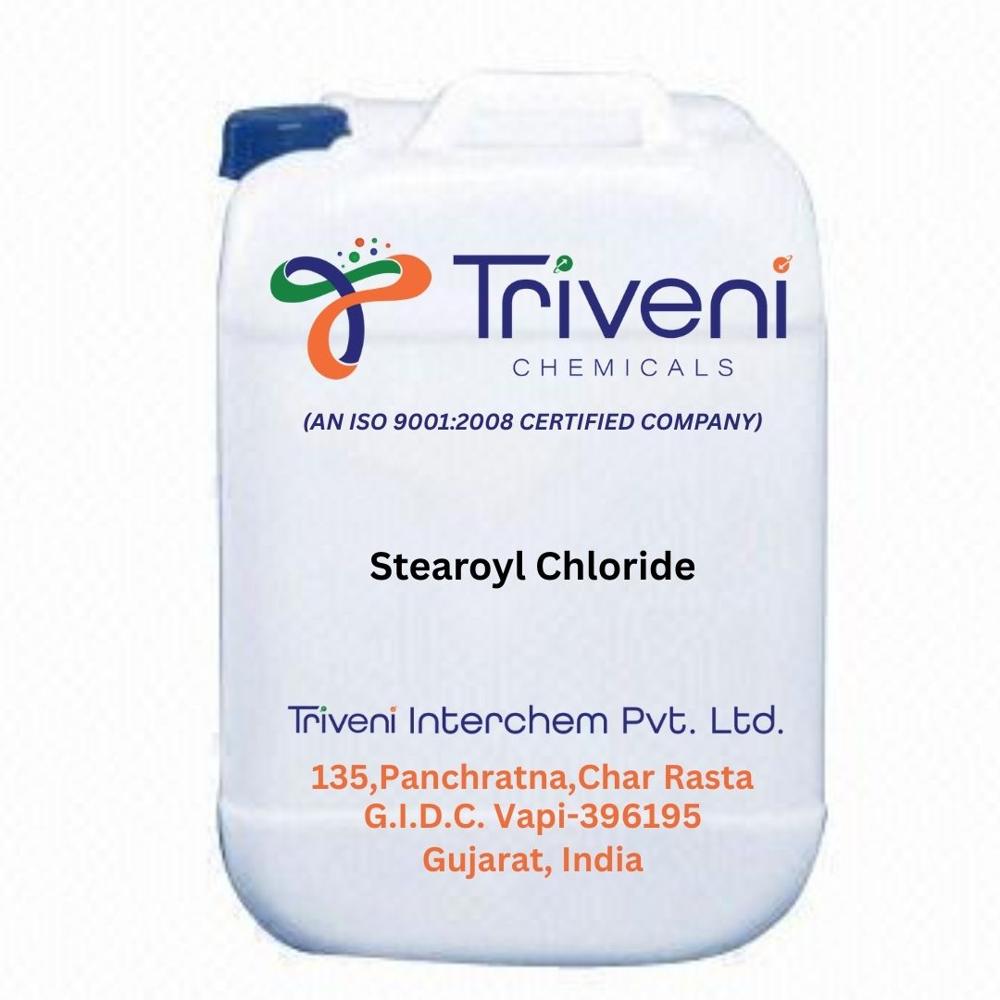
Technical profile of Stearoyl Chloride, a high-purity raw chemical material supplied by Triveni Chemicals for industrial manufacturing and laboratory synthesis.
Technical Specifications:
CAS Number: 112-76-5
Synonyms: Octadecanoyl Chloride, Octadecanoic Acid Chloride
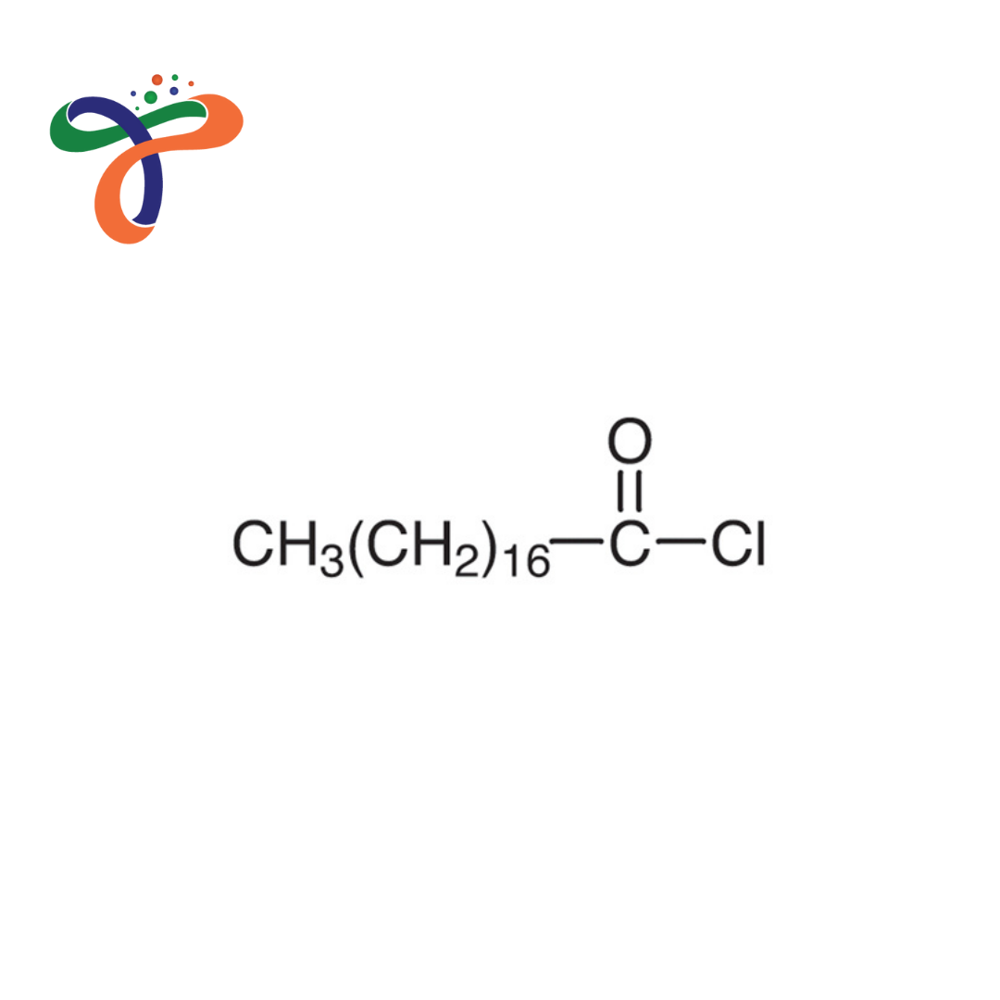
Chemical Formula: C18H35ClO
Industrial Uses & Applications:
It Is A Fatty Acid Chloride Derived From Stearic Acid And Is Widely Used As An Acylating Agent In The Manufacture Of Surfactants, Lubricants, Pharmaceuticals. Stearoyl Chloride Readily Reacts With Water, Alcohols, And Amines, Forming Corresponding Esters, Amides, And Releasing Hydrogen Chloride.
Versatile Industrial Synthesis AgentStearoyl Chloride is a crucial component in industrial chemical processes, serving as a key acylating agent for the production of esters, amides, and diverse fatty acid derivatives. Its reactivity allows efficient introduction of hydrophobic stearoyl groups, supporting the formulation of polymers, surfactants, and specialty intermediates essential in cosmetics and pharmaceutical manufacturing.
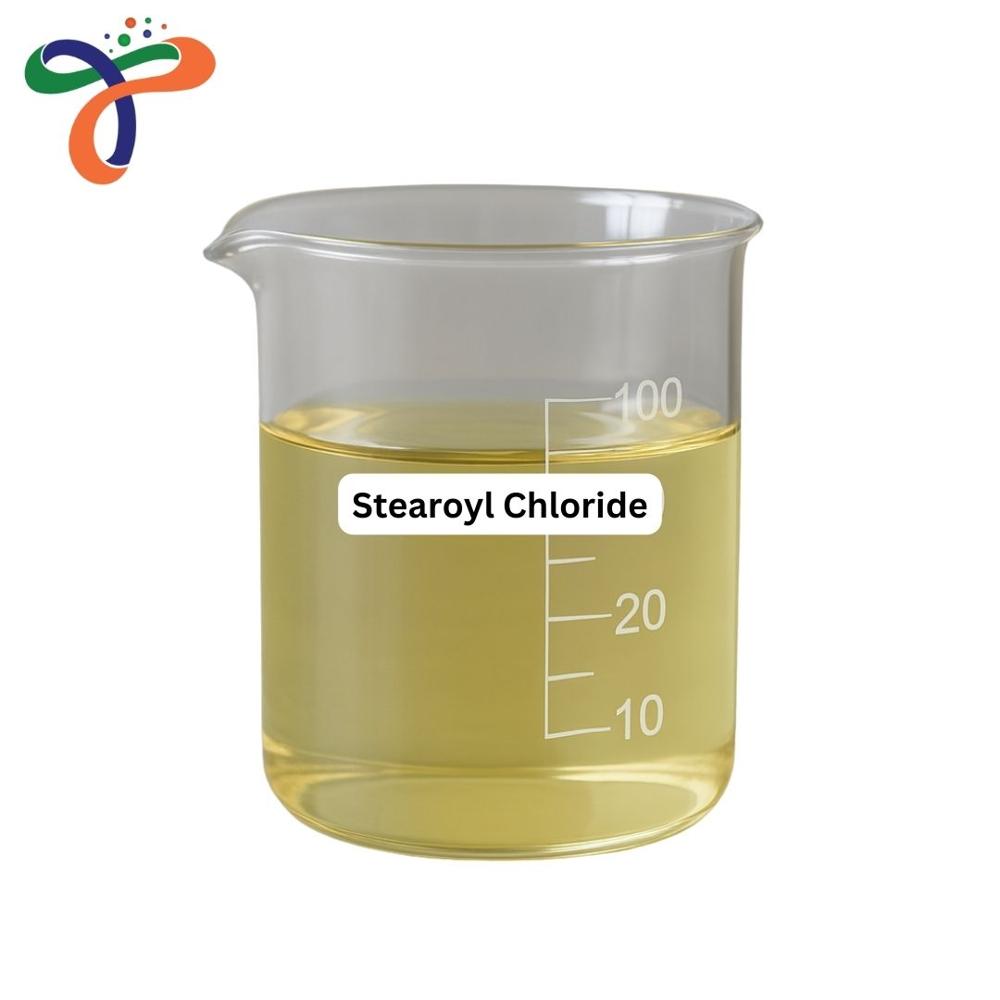
Physical and Chemical PropertiesThis compound is a colorless to pale yellow liquid with a purity of 98-99%, melting at -10C. It is insoluble in water but dissolves readily in organic solvents such as benzene, chloroform, and diethyl ether. Its molecular characteristics (C18H35ClO, 302.93 g/mol) make it highly suitable for rapid and reliable synthesis tasks in an array of chemical processes.
FAQ's of Stearoyl Chloride (112-76-5):
Q: How is Stearoyl Chloride typically used in industrial applications?
A: Stearoyl Chloride is primarily used as a reactive acylating agent in the industrial synthesis of fatty acid derivatives, esters, polymers, and specialty intermediates. Its main function is to introduce stearoyl groups via acylation, aiding in the manufacture of surfactants, cosmetics, and various pharmaceutical compounds.
Q: What are the key benefits of employing Stearoyl Chloride in chemical synthesis?
A: The primary benefits include its high reactivity and efficiency in acylation reactions, enabling rapid formation of desired products. This facilitates the production of complex molecules used in surfactants, specialty polymers, and pharmaceutical intermediates, making processes more streamlined and yielding consistent results.
Q: Where can Stearoyl Chloride be sourced for industrial use?
A: Stearoyl Chloride is manufactured and supplied by chemical manufacturers and suppliers across India, catering to both domestic and international industrial markets. It is available in varying quantities to match diverse production requirements.
Q: What is the process for handling and storing Stearoyl Chloride?
A: Due to its reactivity and insolubility in water, Stearoyl Chloride should be handled using appropriate protective equipment in well-ventilated areas. It should be stored in tightly sealed containers, away from moisture and incompatible substances, and kept at a controlled temperature to maintain stability.
Q: When is Stearoyl Chloride most commonly employed during chemical manufacturing?
A: It is most commonly utilized during the synthesis steps that involve introducing stearoyl groups into organic molecules, particularly in the production of esters, amides, and polymeric materials. Its use is critical when rapid and efficient acylation is needed to manufacture intermediate or final products.
Q: What makes Stearoyl Chloride insoluble in water but soluble in organic solvents?
A: The hydrophobic nature and long carbon chain of Stearoyl Chloride result in poor affinity for water molecules, rendering it insoluble in water. Conversely, its structure enables easy dissolution in organic solvents such as benzene, chloroform, and diethyl ether.






 Send Inquiry
 Send Inquiry
 Send Inquiry
 English
 Spanish
 French
 German
 Italian
 Chinese (Simplified)
 Japanese
 Korean
 Arabic
 Portuguese