About Tetrabutylammonium Fluoride Anhydrous
We are Supplier, Exporter and Contract Manufacturer.
Technical profile of Tetrabutylammonium Fluoride Anhydrous, a high-purity raw chemical material supplied by Triveni Chemicals for industrial manufacturing and laboratory synthesis.
Technical Specifications:
CAS Number: 429-41-4
Industrial Uses & Applications:
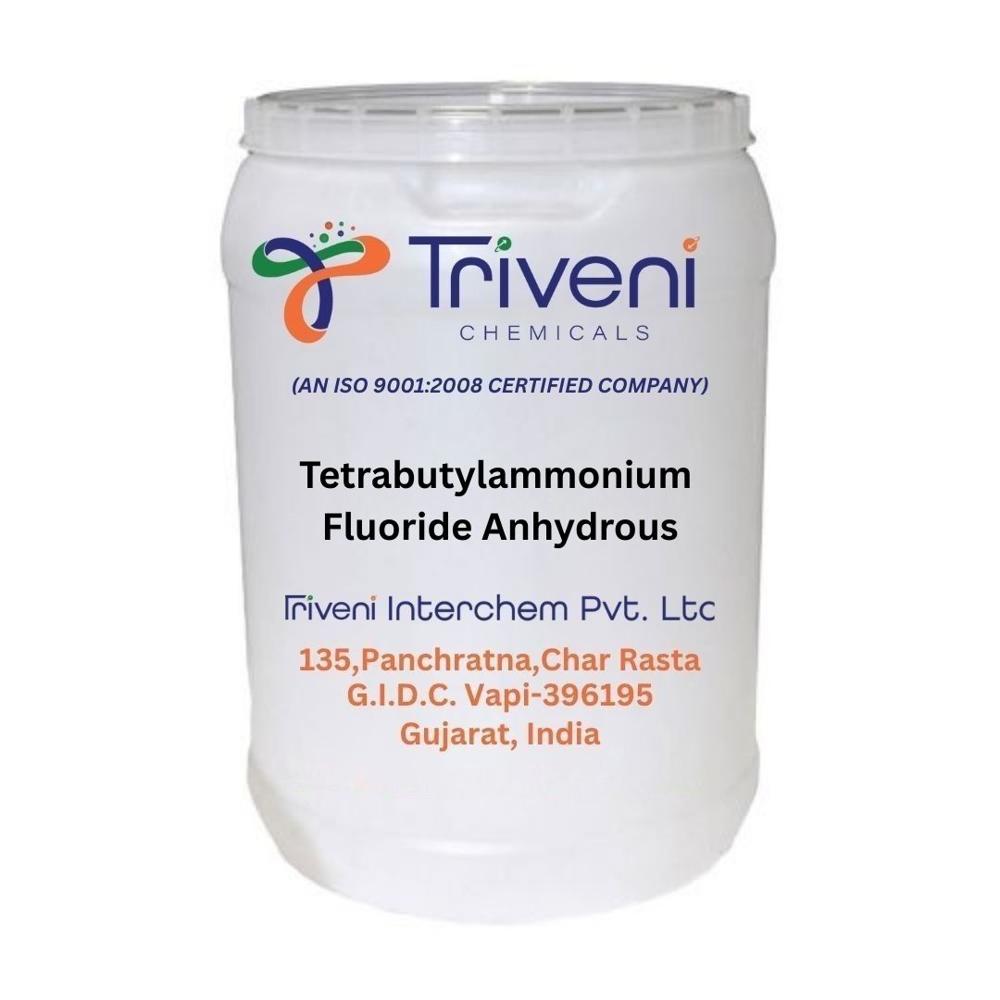
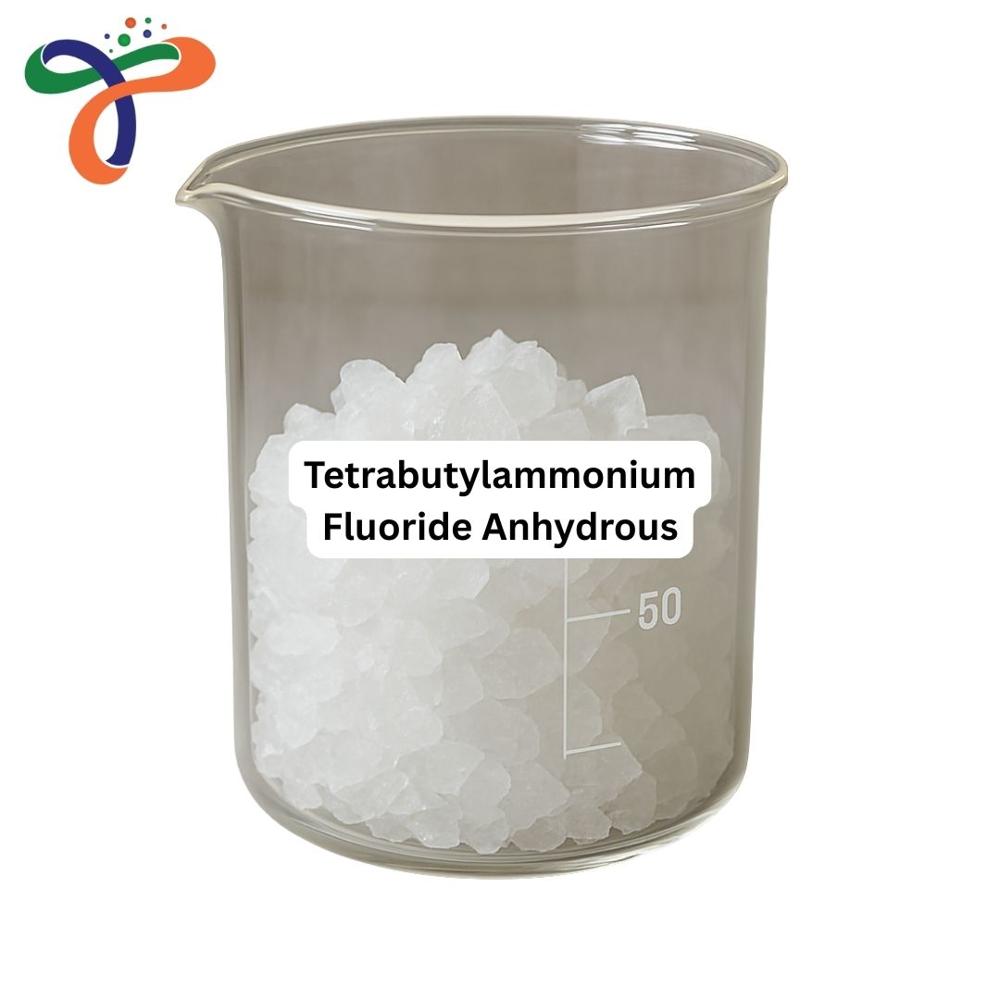
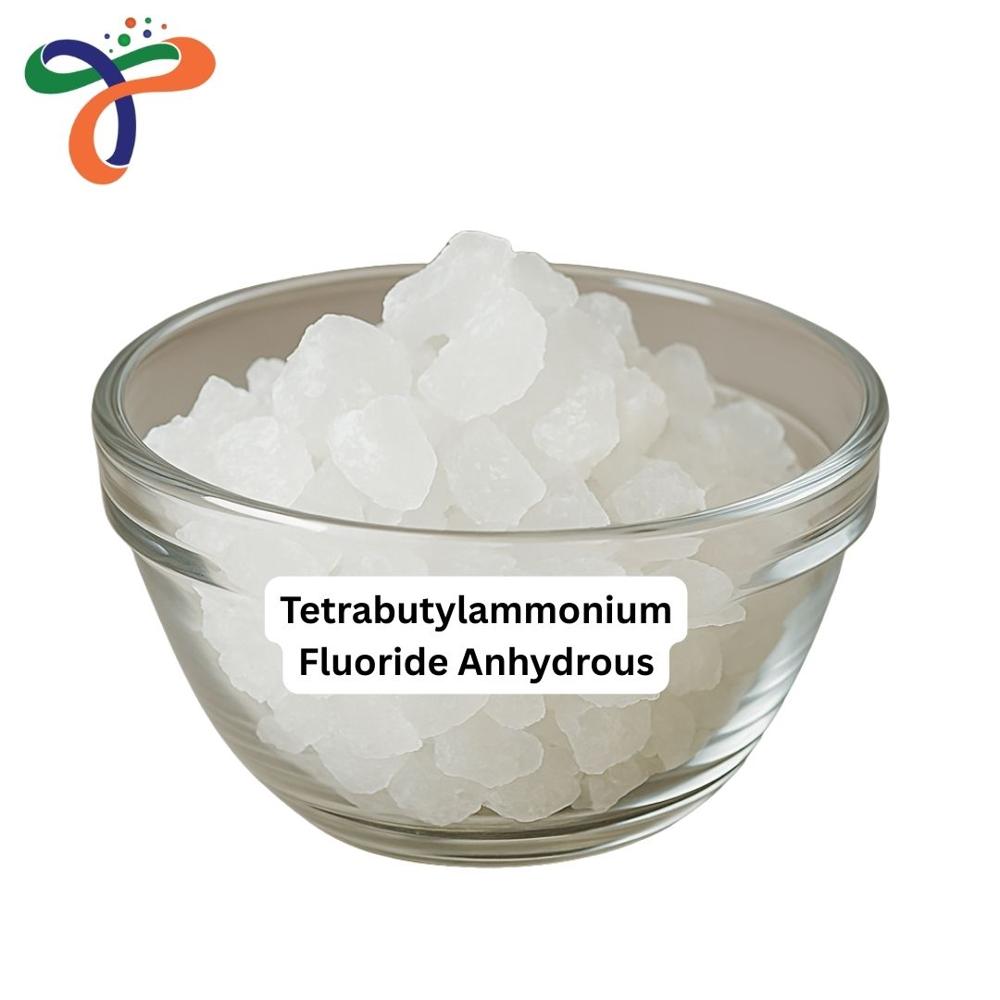
It Appears As A White To Off White Crystalline Solid And Is Highly Soluble In Polar Organic Solvents Such As Thf. Baf Is Widely Used In Organic Synthesis As A Strong Nucleophilic Fluoride Source, Particularly For Deprotection Of Silyl Protecting Groups. It Is Also Employed In Fluorination Reactions And Pharmaceutical Research.
Key Features and PropertiesTetrabutylammonium Fluoride stands out for its high purity, white crystalline form, and notable melting point of 102C. With high solubility in both water and methanol, but insolubility in nonpolar solvents, this reagent is ideally suited for a range of organic synthetic applications. Its refractive rate of 1.52, combined with phase-transfer catalysis capability, makes it a versatile choice in medicinal chemistry laboratories.
Industrial ApplicationsPrimarily used for desilylation, Tetrabutylammonium Fluoride Anhydrous efficiently removes silyl protecting groups during organic synthesis. Its role extends to catalyzing phase-transfer reactions and acting as an effective nucleophilic fluorination reagent. Industries utilizing this compound typically engage in fine chemical, pharmaceutical, and research-oriented synthetic processes, benefiting from its reliability and broad compatibility.
FAQ's of Tetrabutylammonium Fluoride Anhydrous:
Q: How is Tetrabutylammonium Fluoride Anhydrous commonly used in organic synthesis?
A: Tetrabutylammonium Fluoride Anhydrous is extensively used for the desilylation of silyl ethers, enabling the selective deprotection of hydroxyl groups during organic synthesis. Its solubility in polar solvents allows for efficient application in medicinal and natural product chemistry.
Q: What advantages does Tetrabutylammonium Fluoride offer as a phase-transfer catalyst?
A: This reagent facilitates the transfer of reactants between different phases, which accelerates reactions involving immiscible solvents. Its use as a phase-transfer catalyst increases yields and reaction rates in synthetic and industrial processes.
Q: When should Tetrabutylammonium Fluoride Anhydrous be chosen over other fluoride sources?
A: It is preferred when high solubility in organic or polar solvents is required, or when precise and clean deprotection of silyl groups is critical in the synthesis pathway.
Q: Where is Tetrabutylammonium Fluoride Anhydrous typically sourced from?
A: It is manufactured and supplied by chemical companies in India and other countries, often specializing in high-purity organic reagents for industrial and research applications.
Q: What is the process for using Tetrabutylammonium Fluoride in desilylation reactions?
A: The compound is dissolved in a suitable polar solvent such as methanol, then added to the silyl-protected substrate. Under controlled conditions, fluoride ions selectively cleave the silyl ether bonds, regenerating free hydroxyl groups.
Q: What is the benefit of using Tetrabutylammonium Fluoride Anhydrous in medicinal compound synthesis?
A: It allows for the efficient protection and deprotection of hydroxyl groups, facilitating the stepwise assembly of complex molecules with minimal side reactions, which is critical for developing active pharmaceutical ingredients.







 Send Inquiry
 Send Inquiry
 Send Inquiry
 English
 Spanish
 French
 German
 Italian
 Chinese (Simplified)
 Japanese
 Korean
 Arabic
 Portuguese