Cyclohexyl Isocyanate (3173-53-3) About
We are Supplier, Exporter and Contract Manufacturer.
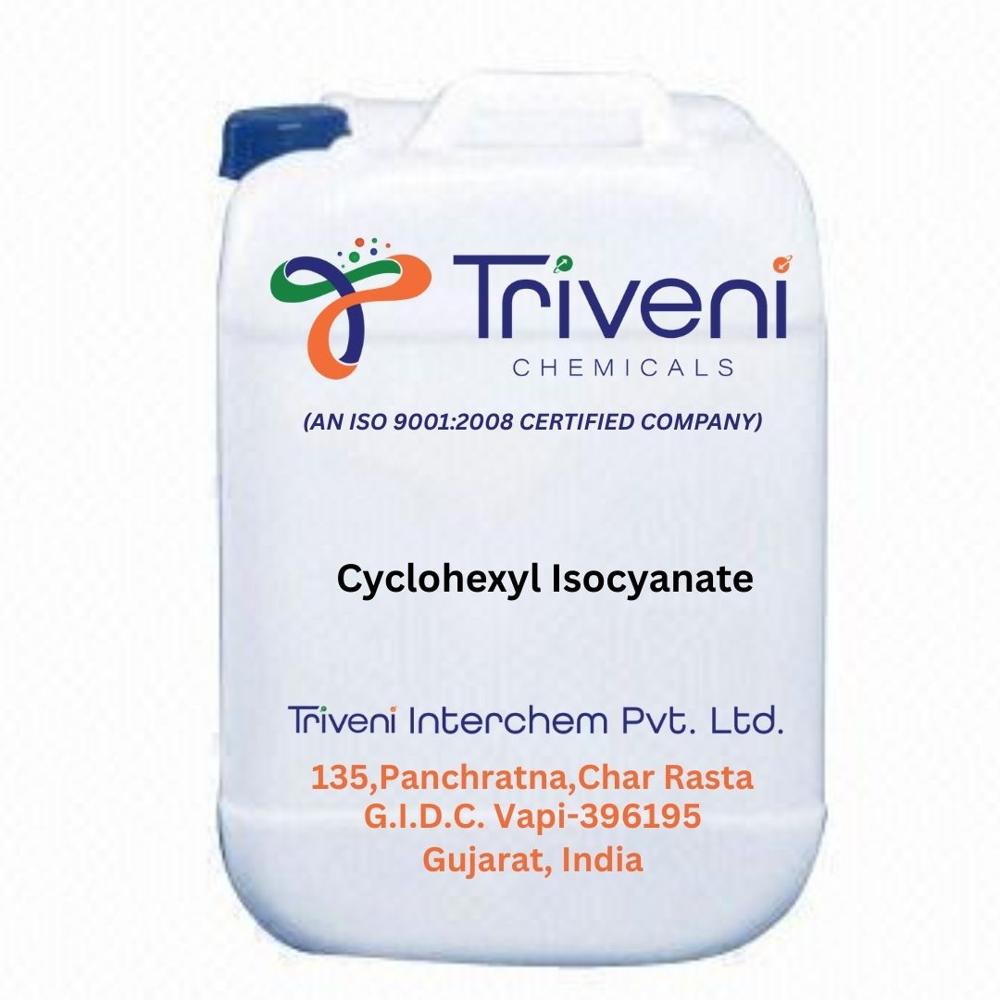
Technical profile of Cyclohexyl Isocyanate, a high-purity raw chemical material supplied by Triveni Chemicals for industrial manufacturing and laboratory synthesis.
Technical Specifications:
CAS Number: 3173-53-3
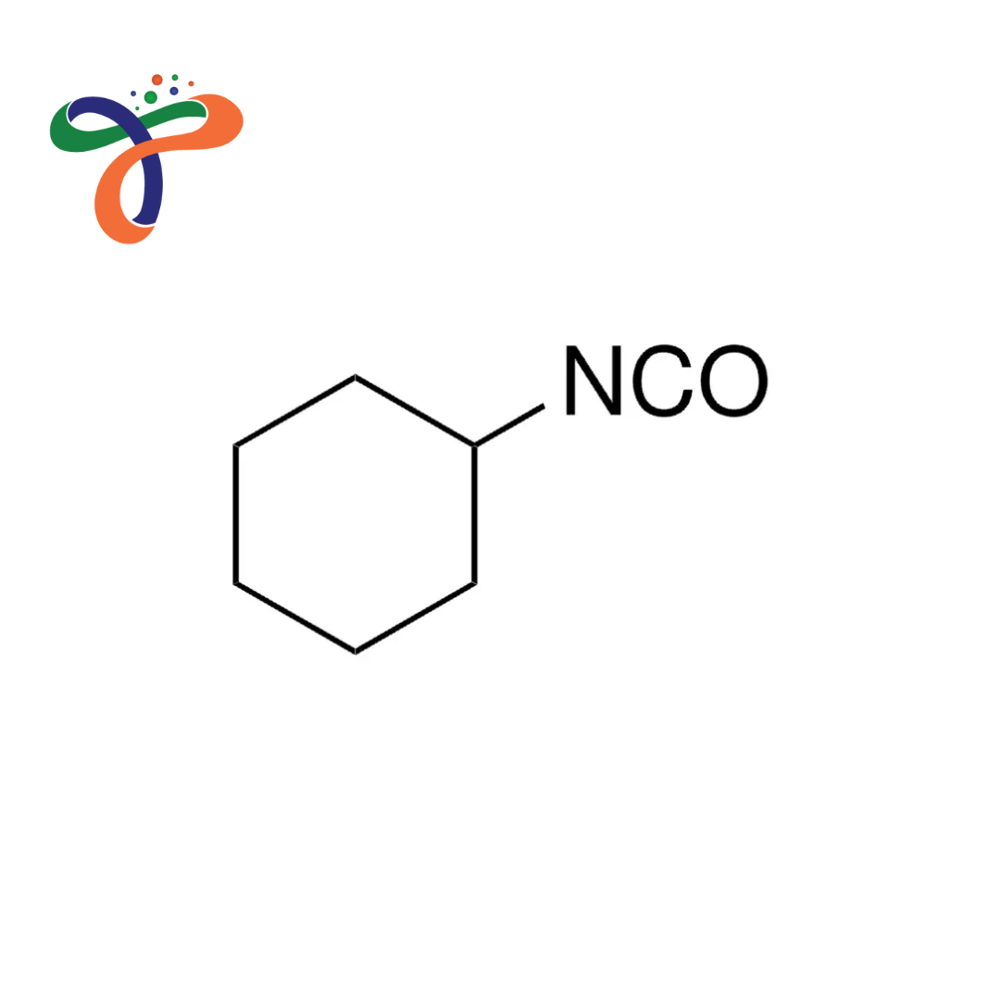
Synonyms: Isocyanatocyclohexane
Chemical Formula: C7H11NO
Industrial Uses & Applications:
It Is Used As A Reactive Intermediate In The Manufacture Of Pharmaceuticals, Agrochemicals, Polyurethane Resins, And Specialty Chemical Products. It Is An Aliphatic Isocyanate That Readily Reacts With Alcohols, Amines, And Water To Form Urethanes, Ureas, And Corresponding Derivatives.
Industrial Applications and AdvantagesCyclohexyl Isocyanate is highly valued for its reactive isocyanate group, making it essential in the synthesis of polymers, resins, and especially as an intermediary in polyurethane production. Its chemical structure allows for the creation of specialized urea and carbamate derivatives used in pharmaceuticals, such as antidiabetic drugs, and agricultural chemicals, like herbicides. This broad application range underlines its importance in industrial chemistry.
Physical and Chemical PropertiesThis compound presents as a colorless liquid and is characterized by a slight solubility in water but excellent solubility in common organic solvents like ether and acetone. With a melting point of -15C and a refractive index of 1.5, its reactivity is ideal for chemical synthesis processes. The high purity (98-99%) enhances its effectiveness in producing high-grade end products.
FAQ's of Cyclohexyl Isocyanate (3173-53-3):
Q: How is Cyclohexyl Isocyanate typically used in industrial settings?
A: Cyclohexyl Isocyanate is employed as a chemical intermediate, primarily in the production of polyurethanes, specialty polymers, and resins. It is also integral in synthesizing agricultural chemicals and pharmaceuticals, particularly for creating herbicides and antidiabetic drugs.
Q: What are the benefits of using Cyclohexyl Isocyanate in synthesis processes?
A: Its high reactivity with amines and alcohols enables efficient formation of urea and carbamate derivatives, streamlining the production of complex molecules in pharmaceuticals and agrochemicals.
Q: Where is Cyclohexyl Isocyanate commonly sourced and supplied from?
A: It is manufactured and supplied in various countries, with India being a notable provider for industrial and laboratory requirements, ensuring access to high-purity material for large-scale applications.
Q: When should Cyclohexyl Isocyanate be handled with special care?
A: Due to its high reactivity and potential to cause irritation, it should always be handled in well-ventilated environments, using appropriate protective equipment to ensure safety during storage and use.
Q: What is the process for synthesizing derivatives using Cyclohexyl Isocyanate?
A: Cyclohexyl Isocyanate reacts efficiently with a range of amines and alcohols to form ureas and carbamates, making it a useful building block in the creation of new chemical entities for various industrial applications.
Q: How soluble is Cyclohexyl Isocyanate in water and organic solvents?
A: It is only slightly soluble in water but dissolves readily in organic solvents like ether and acetone, facilitating its incorporation into different chemical reaction systems.







 Send Inquiry
 Send Inquiry
 Send Inquiry
 English
 Spanish
 French
 German
 Italian
 Chinese (Simplified)
 Japanese
 Korean
 Arabic
 Portuguese