Back to top
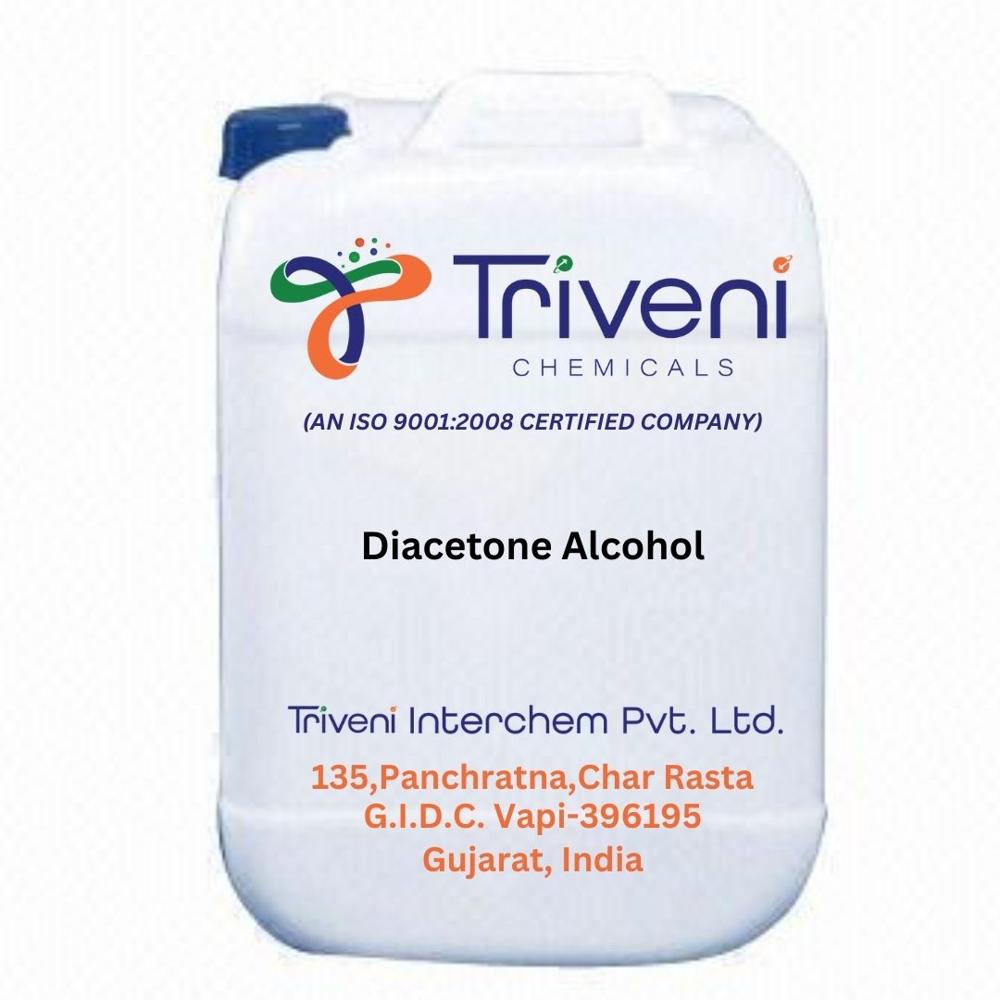
Diacetone Alcohol (123-42-2)

Diacetone Alcohol (123-42-2)

Price 109.0 INR/ Kilograms

MOQ : 1 Kilograms

Diacetone Alcohol (123-42-2) Specification

  • Molecular Formula
  • C6H12O2
  • Properties
  • Diacetone alcohol is a versatile, high-boiling solvent primarily used in lacquer thinners, wood stains, and printing inks. It is essential in the production of metal cleaners and hydraulic fluids, acting as a critical intermediate for synthesizing methyl isobutyl ketone (MIBK) and other specialty chemicals.
  • Application
  • Industrial
  • Usage
  • Solvent for coatings, inks, cleaners
  • Physical Form
  • Liquid
  • CAS No
  • 123-42-2
  • Solubility
  • Fully soluble in water; miscible with most organic solvents
  • Appearance
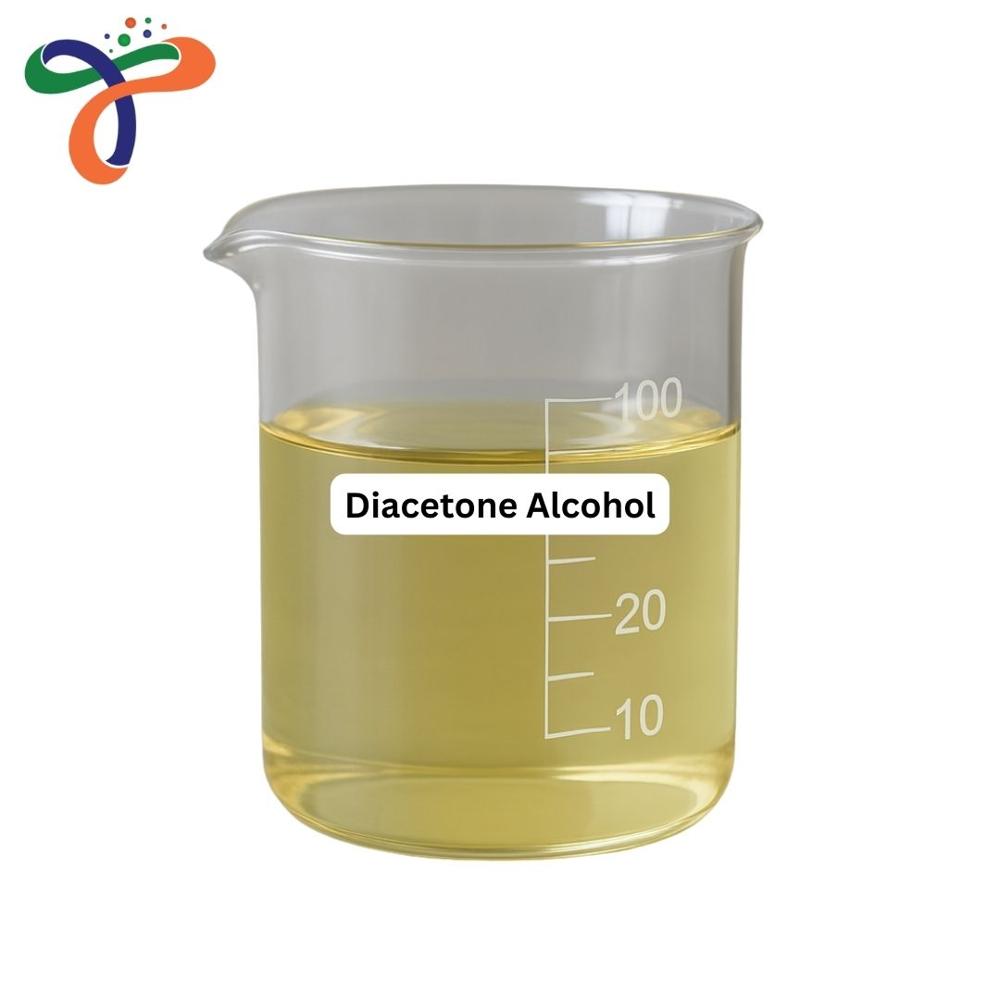
  • Colorless to pale yellow liquid
  • Purity
  • 98 99%
  • Refractive Rate
  • 1.421
  • Molecular Weight
  • 116.16 g/mol Grams (g)
  • Melting Point
  • -5 C
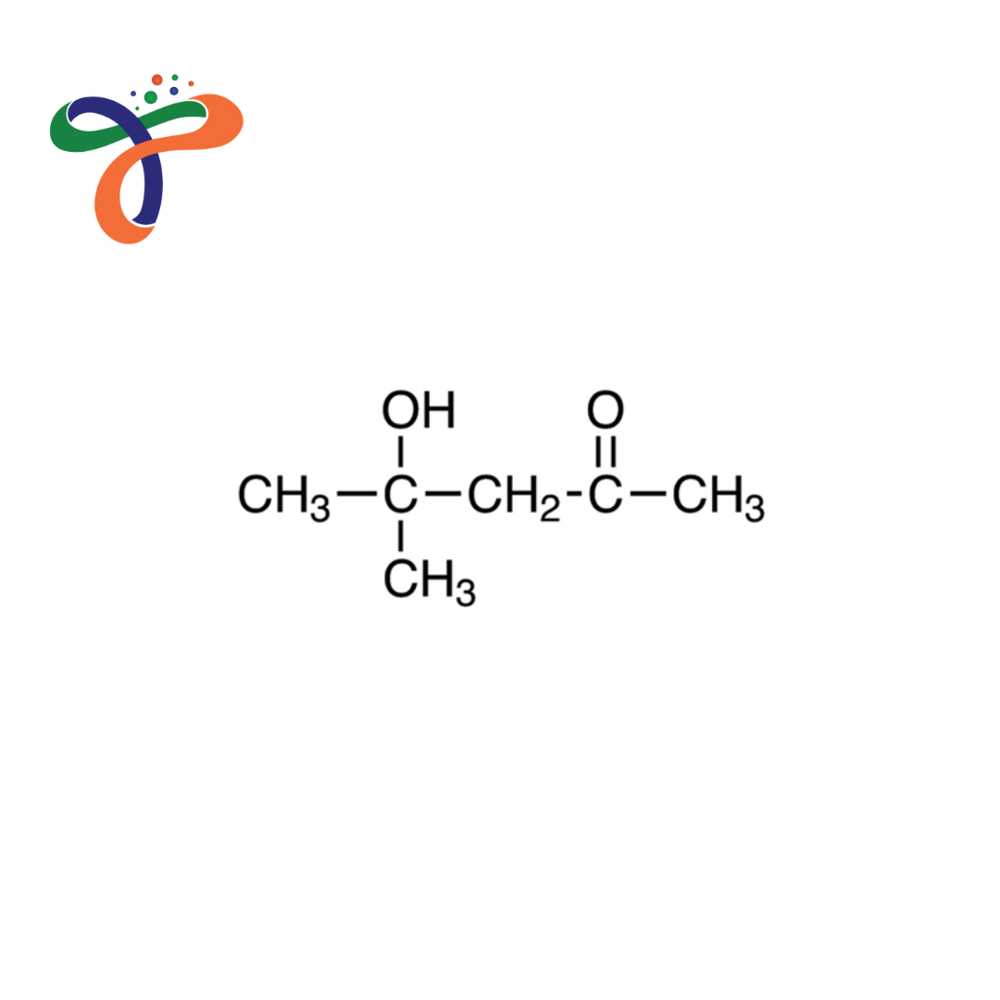
  • Structural Formula
  • C6H12O2
 

Diacetone Alcohol (123-42-2) Trade Information

  • Minimum Order Quantity
  • 1 Kilograms
  • Payment Terms
  • Cash in Advance (CID)
  • Supply Ability
  • 5000 Kilograms Per Month
  • Delivery Time
  • 10 Days
  • Main Domestic Market
  • All India
 

About Diacetone Alcohol (123-42-2)

We are Supplier, Exporter and Contract Manufacturer.
Technical profile of Diacetone Alcohol, a high-purity raw chemical material supplied by Triveni Chemicals for industrial manufacturing and laboratory synthesis.

Technical Specifications:
CAS Number: 123-42-2
Chemical Formula: C6H12O2

Industrial Uses & Applications:
It Is Widely Used As A Solvent For Resins, Coatings, Inks, Adhesives, And Paints, As Well As An Intermediate In Organic Synthesis. It Is A Hydroxy Ketone That Offers Good Solvency And Slow Evaporation, Making It Valuable In Coating Formulations. Diacetone Alcohol Is Combustible And Has Relatively Low Volatility Compared To Many Solvents.


Versatile Industrial Solvent

Diacetone Alcohol's broad compatibility with numerous substances makes it invaluable in the production of coatings, inks, and cleaning solutions. Industries rely on its unique properties for efficient formulation and high product performance, ensuring consistent results in both mixing and end-use applications.


Critical Intermediate for Chemical Synthesis

Beyond its effectiveness as a solvent, Diacetone Alcohol is a vital intermediate in the manufacture of methyl isobutyl ketone (MIBK) and specialty chemical products. Its role in these processes streamlines chemical manufacturing, offering high yields and purity in final compounds.

FAQ's of Diacetone Alcohol (123-42-2):


Q: How is Diacetone Alcohol typically used in industrial applications?

A: Diacetone Alcohol is primarily used as a solvent in coatings, inks, cleaners, and lacquer thinners. Its full solubility in water and organic solvents makes it suitable for diverse formulations, offering excellent solvency power and stability.

Q: What benefits does Diacetone Alcohol offer over other solvents?

A: It stands out for its high boiling point, low odor, and strong solvency, making it especially effective in producing metal cleaners, hydraulic fluids, and stable coatings. Its compatibility provides flexibility in product design and application.

Q: When should Diacetone Alcohol be chosen as a solvent?

A: This solvent should be selected when formulations require high purity, outstanding solvency, and miscibility with both water and organic compounds, especially in industrial processes that benefit from its chemical stability and performance.

Q: Where is Diacetone Alcohol commonly manufactured and supplied?

A: Diacetone Alcohol is widely produced and supplied in India, used industrially by manufacturers of coatings, printing inks, cleaners, and specialty chemicals.

Q: What is the process for producing Diacetone Alcohol?

A: It is typically synthesized via the catalytic self-condensation of acetone under controlled conditions, resulting in a colorless to pale yellow liquid with high purity and uniform characteristics.

Q: Can Diacetone Alcohol be used as an intermediate in chemical synthesis?

A: Yes, it is a crucial intermediate in the synthesis of methyl isobutyl ketone (MIBK) and other specialty chemicals, supporting downstream production processes within the chemical industry.

Q: What are the properties that make Diacetone Alcohol suitable for industrial use?

A: Its notable properties include a molecular weight of 116.16 g/mol, melting point of -5C, refractive rate of 1.421, high purity (98-99%), and ease of mixing with water and most organic solvents, making it highly adaptable in industrial applications.
Tell us about your requirement
product

Price:

Quantity
Select Unit

  • 50
  • 100
  • 200
  • 250
  • 500
  • 1000+
Additional detail
Mobile number

Email

More Products in Industrial Chemicals Category

1-Bromonaphthalene (90-11-9) (C10H7Br)

1-Bromonaphthalene (90-11-9) (C10H7Br)

Price 1950.0 INR / Kilograms

Minimum Order Quantity : 25 Kilograms

Usage : Intermediary in organic synthesis; precursor for aromatic compounds and research reagents

Properties : 1 Bromonaphthalene (C H Br) is a colorless to pale yellow oily liquid with molecular weight 207.07 g/mol. It is insoluble in water, soluble in ethanol, ether, and chloroform, and stable under normal conditions. Flammable and irritant, it is used as a solvent, intermediate, and refractive index standard in laboratories.

Melting Point : 58 C

Molecular Weight : 207.06 g/mol Grams (g)

Copper Nitrate (3251-23-8)

Copper Nitrate (3251-23-8)

Price 350.0 INR / Kg

Minimum Order Quantity : 25

Usage : Copper Nitrate Is An Inorganic Compound Widely Used In Various Industrial And Chemical Applications. In The Chemical Industry, It Serves As A Precursor For The Production Of Copper Salts, Such As Copper Oxide And Copper Sulfate, Which Are Essential For Electroplating And Other Processes. Copper Nitrate Is Also Used In The Manufacture Of Fertilizers And In Pyrotechnics For Creating Vibrant Blue And Green Colors In Fireworks.

Properties : Analytical reagent; oxidizing agent; used in inorganic synthesis

Melting Point : 110 C

Molecular Weight : 187.56 g/mol Grams (g)

Titanium Tetrachloride (7550-45-0)

Titanium Tetrachloride (7550-45-0)

Price 230.0 INR / Kilograms

Minimum Order Quantity : 25 Kilograms

Usage : Lewis acid catalyst in organic synthesis; chlorinating agent in titanium pigment production; precursor for titanium tetrachloride in metallurgy

Properties : Titanium tetrachloride is a highly reactive, volatile inorganic liquid primarily used as the key intermediate for manufacturing titanium dioxide pigments and titanium metal. It is a critical precursor in chemical vapor deposition (CVD) to produce thinfilm coatings and as a catalyst in various polymerization reactions.

Melting Point : 24 C

Molecular Weight : 189.68 g/mol Grams (g)

Fumed Silica (60.08 g/mol)

Fumed Silica (60.08 g/mol)

Price 550.0 INR / Kilograms

Minimum Order Quantity : 25 Kilograms

Usage : Fillers for plastics, rubber, coatings; thickening agent; catalyst support; additive in adhesives and paints

Properties : It Has An Extremely Small Particle Size And High Surface Area, Which Gives It Excellent Thickening, AntiCaking, And Reinforcing Properties. Fumed Silica Is Widely Used In Coatings, Adhesives, Sealants, Silicone Rubber, Inks, Cosmetics, And Pharmaceuticals.

Melting Point : 1713 C

Molecular Weight : 60.08 g/mol Grams (g)