Lithium Bromide Anhydrous About
We are Supplier, Exporter and Contract Manufacturer.
Technical profile of Lithium Bromide Anhydrous, a high-purity raw chemical material supplied by Triveni Chemicals for industrial manufacturing and laboratory synthesis.
Technical Specifications:
CAS Number: 7550-35-8
Industrial Uses & Applications:
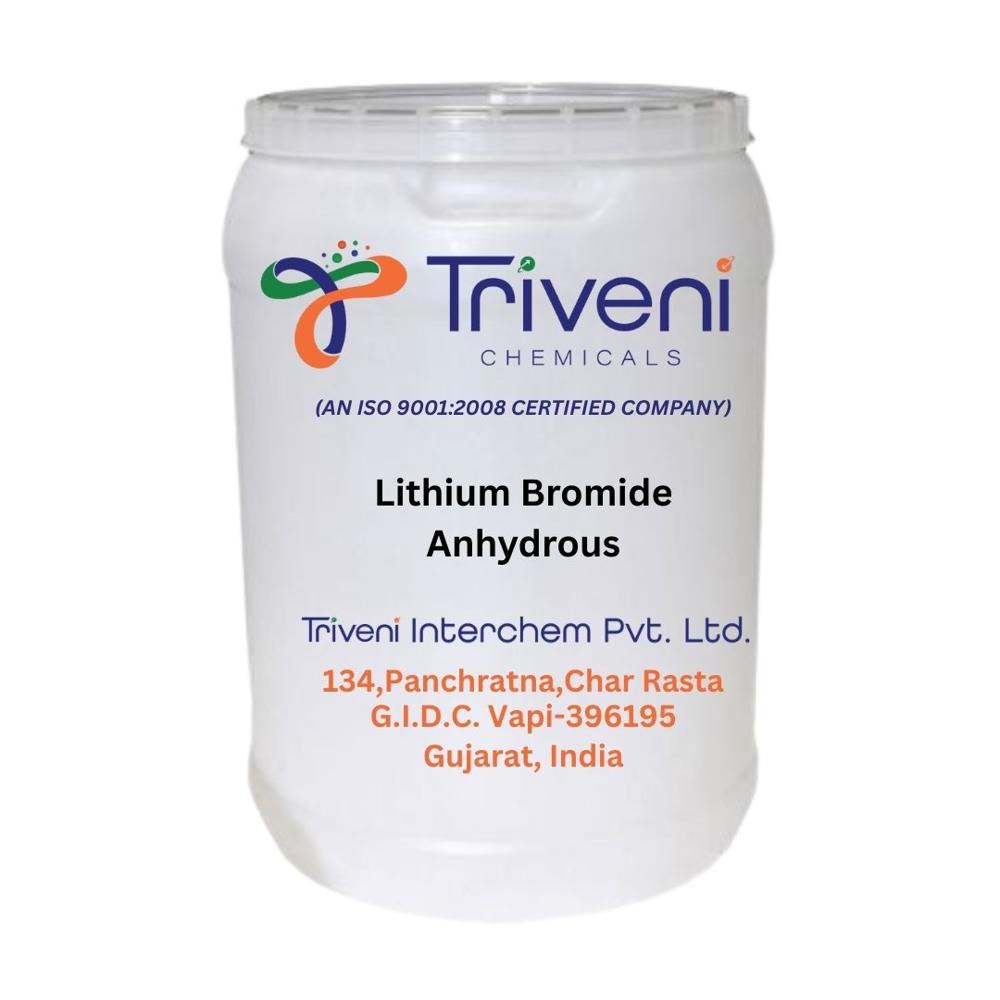
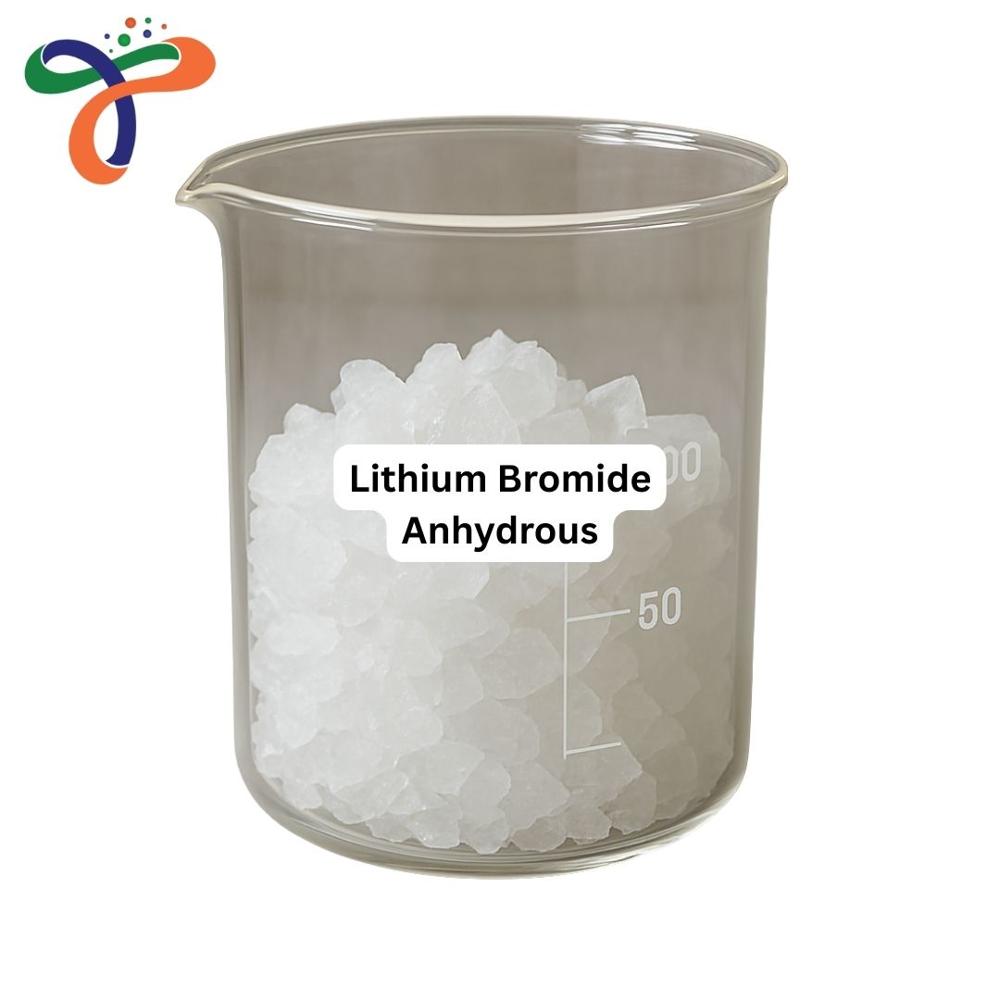
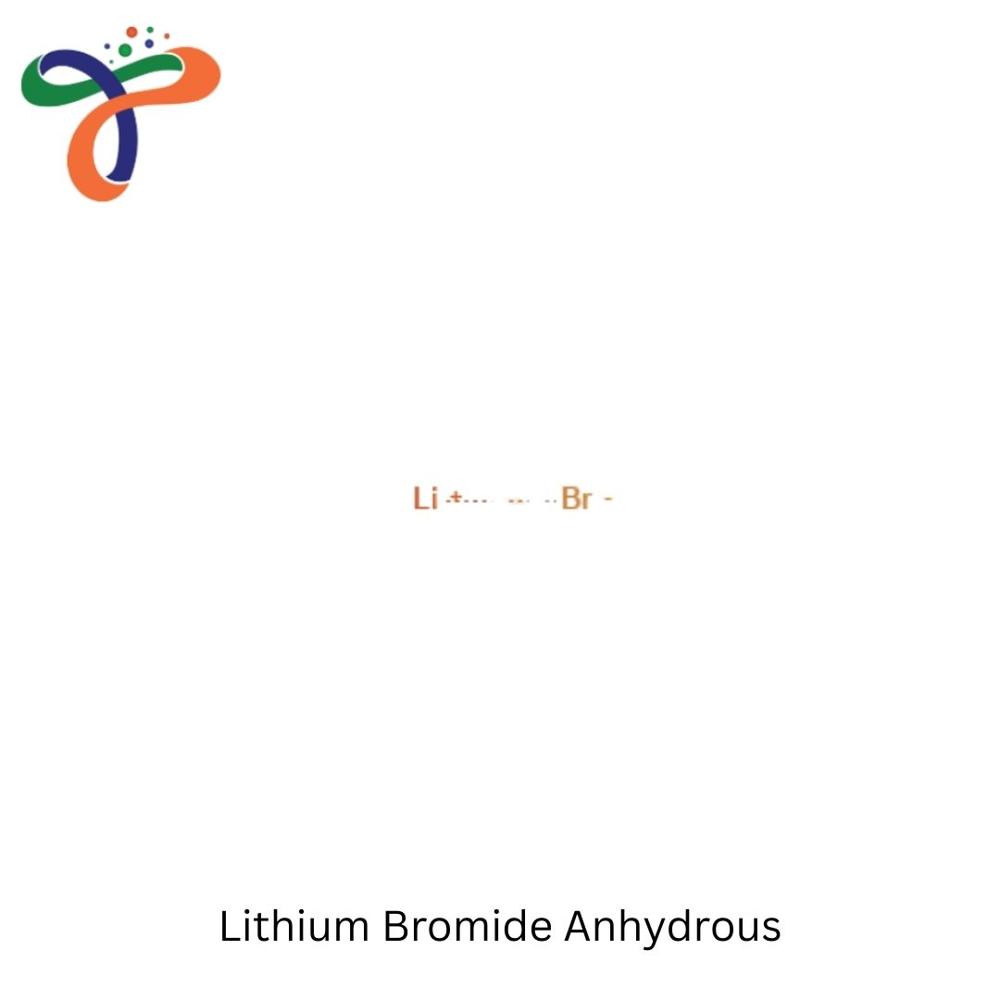
Lithium Bromide Anhydrous Is An Inorganic Halide Salt With The Chemical Formula Libr, Supplied In A Water Free Form. It Appears As A White To Off White Crystalline Solid And Is Highly Soluble In Water And Polar Solvents. The Anhydrous Grade Is Strongly Hygroscopic And Readily Absorbs Moisture From The Air.
Efficient Desiccant for Industrial ApplicationsLithium Bromide Anhydrous acts as a potent desiccant, making it ideal for managing humidity in various industrial settings. Because of its efficacy in absorbing water vapor, it is extensively used in absorption refrigeration systems and air conditioning units. This property ensures optimized climate control and improved system performance, especially where humidity management is critical.
Key Ingredient in Advanced Refrigeration ProcessesLithium Bromide Anhydrous plays an essential role in absorption refrigeration, replacing conventional refrigerants due to its exceptional water solubility and hygroscopic nature. Its application ensures efficient thermal energy transfer, enabling more sustainable and environmentally friendly cooling solutions for industrial plants and large-scale commercial air conditioning systems.
FAQ's of Lithium Bromide Anhydrous:
Q: How is Lithium Bromide Anhydrous typically used in industrial environments?
A: Lithium Bromide Anhydrous is primarily utilized as a desiccant and absorber in industrial air conditioning and absorption refrigeration systems, where it helps control humidity and improve energy efficiency.
Q: What benefits does Lithium Bromide Anhydrous provide over other desiccants?
A: Its superior moisture absorption capacity and high solubility in water make Lithium Bromide Anhydrous exceptionally effective for humidity control, leading to enhanced performance and lower maintenance requirements in refrigeration processes.
Q: When should Lithium Bromide Anhydrous be applied during industrial processes?
A: It is typically introduced at stages where moisture control or absorption refrigeration is required, such as during air conditioning in large buildings or as a catalyst in the synthesis of pharmaceuticals.
Q: Where can Lithium Bromide Anhydrous be obtained for industrial use?
A: This compound is available from chemical manufacturers and suppliers in India, catering to various industrial sectors including HVAC, chemical, and pharmaceutical industries.
Q: What is the process for using Lithium Bromide Anhydrous as a desiccant in refrigeration systems?
A: Lithium Bromide Anhydrous is dissolved in water to form a solution, which then absorbs heat and moisture from the surrounding air within the system, effectively reducing humidity and cooling the air.
Q: How does Lithium Bromide Anhydrous benefit pharmaceutical manufacturing?
A: Due to its drying properties and catalytic abilities, Lithium Bromide Anhydrous speeds up certain chemical reactions, enhances product purity, and ensures controlled environmental conditions during pharmaceutical synthesis.






 Send Inquiry
 Send Inquiry
 Send Inquiry
 English
 Spanish
 French
 German
 Italian
 Chinese (Simplified)
 Japanese
 Korean
 Arabic
 Portuguese