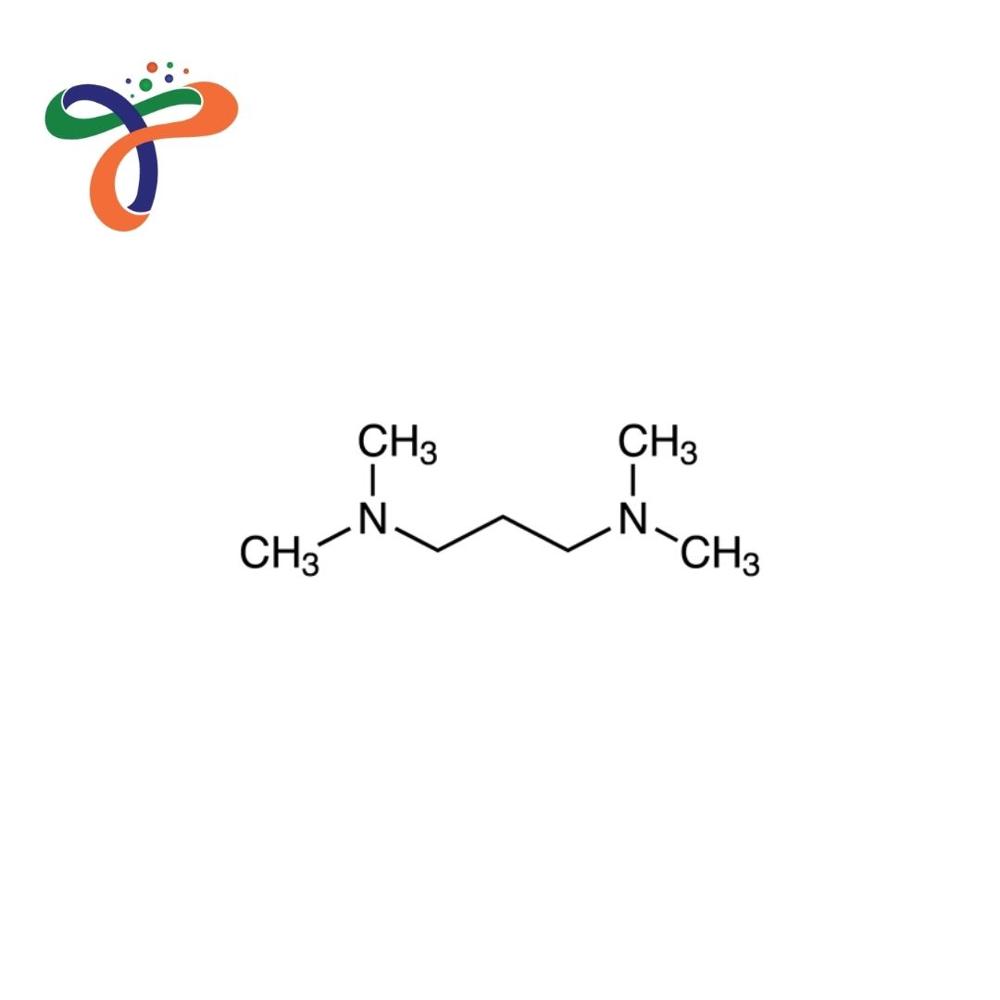
About N,N,N,N-Tetramethyl-1,3-Propanediamine (110-95-2) (C7H18N2)
We are Supplier, Exporter and Contract Manufacturer.
Technical profile of N,N,N,N-Tetramethyl-1,3-Propanediamine, a high-purity raw chemical material supplied by Triveni Chemicals for industrial manufacturing and laboratory synthesis.
Technical Specifications:
CAS Number: 110-95-2
Synonyms: N,N,N',N'-Tetramethyltrimethylenediamine
Chemical Formula: C7H18N2
Industrial Uses & Applications:
It Is Mainly Used As A Catalyst And Ligand In Organic Synthesis, Polymerization Reactions, And Organometallic Chemistry, Particularly In Grignard And Lithium Based Reactions. It Is A Tertiary Diamine With High Basicity And Good Coordinating Ability Toward Metal Ions.
Efficient Catalyst for Polyurethane and Epoxy ResinsN,N,N,N-Tetramethyl-1,3-Propanediamine functions as an advanced catalyst in the production of both polyurethane foams and epoxy resin curing. Its tertiary diamine structure ensures rapid and complete curing, resulting in improved material performance. This catalyst is vital for manufacturers aiming to optimize production speed and product quality across various industrial sectors.
Versatile Applications in Chemical SynthesisBeyond its catalytic roles, N,N,N,N-Tetramethyl-1,3-Propanediamine acts as a key intermediate for producing surfactants, water treatment chemicals, and functionalized resins. Its high purity and solubility make it suitable for complex synthesis routes, supporting innovation in specialty chemical manufacturing and advanced material development.
FAQ's of N,N,N,N-Tetramethyl-1,3-Propanediamine (110-95-2) (C7H18N2):
Q: How is N,N,N,N-Tetramethyl-1,3-Propanediamine commonly used in industry?
A: This compound is primarily utilized as a highly efficient catalyst in the production of polyurethane foams and as a curing agent for epoxy resins. Its ability to expedite chemical reactions also makes it suitable for synthesizing surfactants, water treatment chemicals, and advanced polymers.
Q: What benefits does this diamine offer in the manufacturing process?
A: Its tertiary structure facilitates rapid and thorough curing or catalysis, improving production speed and product consistency. This results in higher-quality polyurethane and epoxy products, with reduced processing time and greater resource efficiency.
Q: Where is N,N,N,N-Tetramethyl-1,3-Propanediamine manufactured and supplied from?
A: This chemical is manufactured and supplied by various industrial chemical companies in India, catering to both domestic and international markets.
Q: When should this chemical be added during resin or foam production?
A: For optimal results, it is typically added during the initial mixing stages of polyurethane or epoxy resin formulations, ensuring uniform catalysis and complete curing throughout the material.
Q: What is the process for using this compound as a catalyst in polyurethane foam production?
A: It is blended with polyols and isocyanates during foam formulation. Its catalytic action enables fast and controlled foam formation, promoting the desired cell structure and physical properties in the final product.
Q: How soluble is N,N,N,N-Tetramethyl-1,3-Propanediamine, and does this impact its usage?
A: It is highly soluble in water, allowing for straightforward mixing and incorporation into aqueous or solvent-based formulations, thus broadening its utility across diverse chemical processes.






 Send Inquiry
 Send Inquiry
 Send Inquiry
 Call Me Free
 English
 Spanish
 French
 German
 Italian
 Chinese (Simplified)
 Japanese
 Korean
 Arabic
 Portuguese