Sodium Amide (7782-92-5) About
We are Supplier, Exporter and Contract Manufacturer.
Technical profile of Sodium Amide, a high-purity raw chemical material supplied by Triveni Chemicals for industrial manufacturing and laboratory synthesis.
Technical Specifications:
CAS Number: 7782-92-5
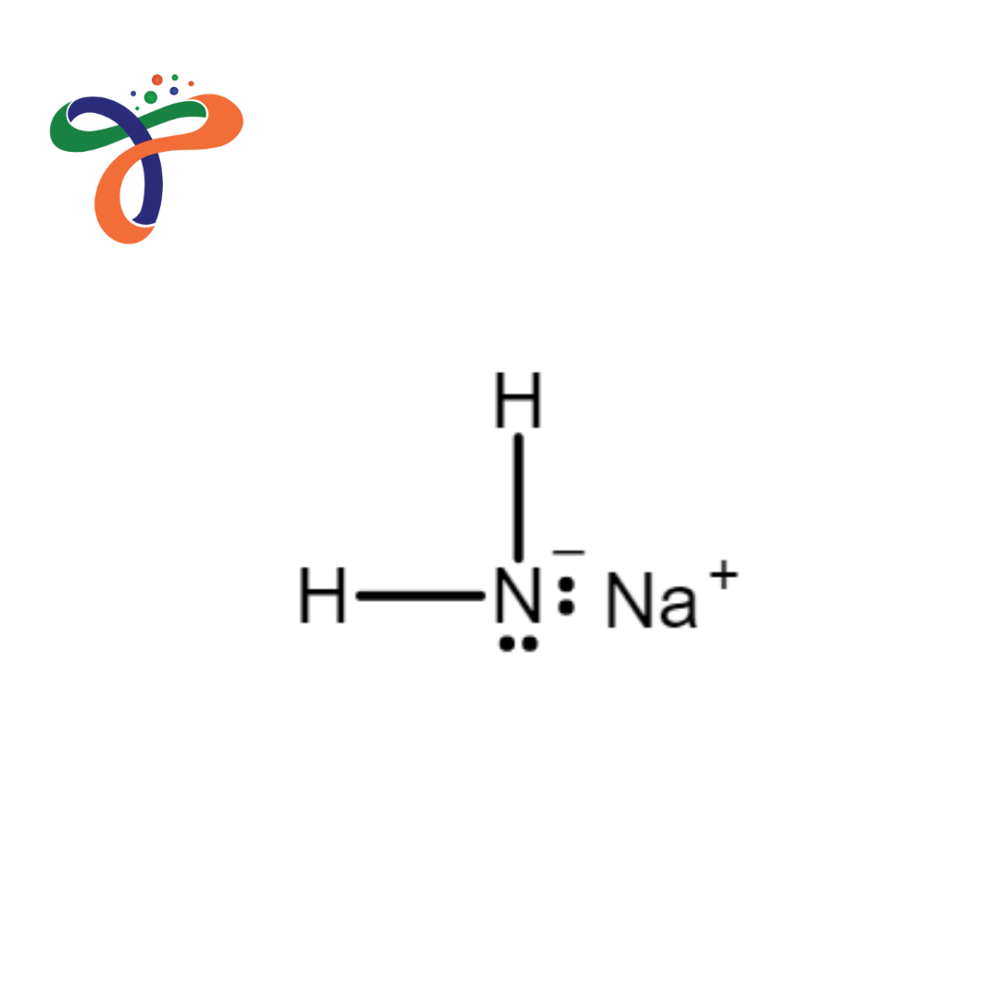
Chemical Formula: NaNH2
Industrial Uses & Applications:
Sodium Amide Is A Strong Inorganic Base Widely Used In Chemical And Industrial Synthesis. It Is Primarily Applied As A Powerful Reagent In Organic Reactions Such As Condensation, Alkylation, And Amination, Particularly In The Manufacture Of Pharmaceuticals And Specialty Chemicals.
Powerful Base for Organic SynthesisSodium amide is widely recognized as one of the strongest inorganic bases used in industrial and laboratory organic synthesis. Its capacity to deprotonate terminal alkynes and initiate various critical transformations makes it invaluable for the production of alkynes, amines, and related compounds. Its efficiency and reliability in facilitating extensive organic reactions are key assets in chemical production.
Handling and Storage PrecautionsGiven its extreme reactivity, sodium amide must be handled with rigorous care. Exposure to moisture or air can cause hazardous reactions, leading to the generation of ammonia and sodium hydroxide. It is essential to store sodium amide under an inert atmosphere, such as nitrogen or argon, in tightly sealed containers, away from any sources of water or humidity to preserve its purity and safety.
FAQ's of Sodium Amide (7782-92-5):
Q: How should sodium amide be handled and stored safely?
A: Sodium amide must be handled under an inert atmosphere, such as nitrogen or argon, due to its sensitivity to air and moisture. It should be stored in tightly sealed containers in a dry, cool area to prevent contact with water or humidity, which could trigger hazardous reactions.
Q: What are the primary industrial uses of sodium amide?
A: Sodium amide is primarily utilized as a strong base in organic synthesis, especially for deprotonating terminal alkynes and generating acetylide anions. It also facilitates dehydrohalogenation reactions and the synthesis of amines, making it an essential reagent in chemical manufacturing.
Q: When is sodium amide chosen over other bases in organic reactions?
A: Sodium amide is selected when a particularly strong base is required, such as in the deprotonation of terminal alkynes or when generating nucleophilic species like acetylide anions, due to its high reactivity and effectiveness in facilitating transformations that weaker bases cannot achieve.
Q: Where is sodium amide commonly used?
A: Sodium amide finds widespread use in industrial chemical laboratories and manufacturing facilities across India and globally, particularly in the synthesis of fine chemicals, pharmaceuticals, and various organic compounds.
Q: What process occurs when sodium amide reacts with water?
A: Upon contact with water, sodium amide undergoes a vigorous reaction, producing ammonia gas and sodium hydroxide, both of which are hazardous. Therefore, it is considered insoluble in water due to this rapid chemical reaction rather than simple dissolution.
Q: What benefits does sodium amide offer in organic synthesis?
A: Its major benefit is its strength and reliability as a base, enabling unique synthon formation and facilitating the efficient synthesis of complex molecules, which are otherwise challenging with less reactive bases.







 Send Inquiry
 Send Inquiry
 Send Inquiry
 Call Me Free
 English
 Spanish
 French
 German
 Italian
 Chinese (Simplified)
 Japanese
 Korean
 Arabic
 Portuguese