Triethylsilane (617-86-7) (C6H16Si) About
We are Supplier, Exporter and Contract Manufacturer.
Technical profile of Triethylsilane, a high-purity raw chemical material supplied by Triveni Chemicals for industrial manufacturing and laboratory synthesis.
Technical Specifications:
CAS Number: 617-86-7
Synonyms: Triethylsilicon Hydride
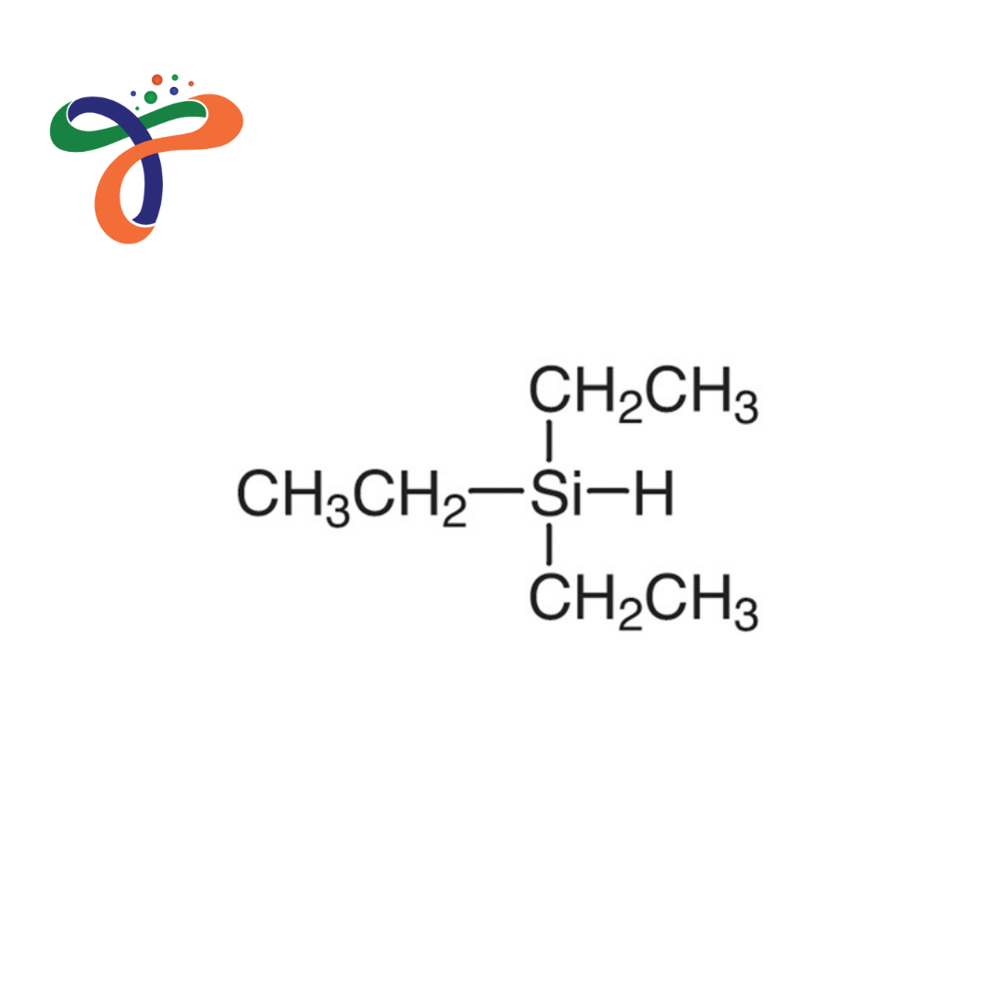
Chemical Formula: C6H16Si
Industrial Uses & Applications:
It Is Widely Used As A Reducing Agent And Hydride Source In Organic Synthesis, Particularly In Pharmaceuticals And Specialty Chemical Manufacturing. It Is An Organosilicon Compound That Readily Participates In Hydrosilylation And Reduction Reactions.
Versatile Applications in Organic SynthesisTriethylsilane is particularly valued in synthesis protocols that demand mild and selective reduction, especially for deoxygenating carbonyls or reducing carbocations. Its compatibility with various organic solvents and ability to act as a hydride source in tandem with Lewis acids enhance its versatility across research and industrial settings.
Physical and Chemical CharacteristicsThis substance appears as a colorless liquid with a refractive index of 1.393 and a low melting point of -120C. It demonstrates high solubility in many organic solvents, facilitating its use and handling in a variety of reaction conditions.
Sourcing and Supply in IndiaTriethylsilane is available from numerous reputable manufacturers and suppliers within India, ensuring consistent quality and reliable access for industrial and laboratory requirements. Its widespread availability supports diverse applications in chemical synthesis projects nationwide.
FAQ's of Triethylsilane (617-86-7) (C6H16Si):
Q: How is triethylsilane typically used in organic synthesis?
A: Triethylsilane is primarily used as a mild hydride donor and selective reducing agent for the deoxygenation of carbonyl groups and the reduction of carbocations. It is also employed in hydrosilylation reactions and as a key intermediate in the preparation of various organosilicon compounds.
Q: What are the benefits of using triethylsilane over other reducing agents?
A: The main advantage of triethylsilane is its mild and selective reducing properties, which allow for precise transformations without affecting sensitive functionalities. Its effectiveness when paired with Lewis acid catalysts enhances the selectivity and control in synthetic routes.
Q: When should triethylsilane be chosen for a reduction process?
A: Triethylsilane is best chosen when a chemist requires gentle reduction conditions, particularly for delicate substrates or when deoxygenating carbonyl groups and reducing carbocations without unwanted side reactions.
Q: Where can I purchase triethylsilane in India?
A: Triethylsilane can be sourced from multiple chemical manufacturers and suppliers across India who offer high-purity grades suitable for industrial and laboratory use. Always select a reputable supplier to ensure product quality and consistency.
Q: What is the recommended process for handling triethylsilane in the laboratory?
A: When handling triethylsilane, it should be done in a well-ventilated area while using protective equipment, as it is a volatile liquid. Avoid contact with water; instead, use compatible organic solvents for dilution, and store in tightly sealed containers away from moisture.
Q: How does the solubility of triethylsilane affect its usage in reactions?
A: Triethylsilane is immiscible with water but dissolves well in organic solvents like diethyl ether, benzene, and toluene. This property facilitates its integration into a wide array of organic synthetic protocols, ensuring good reagent dispersion and effective reaction progress.






 Send Inquiry
 Send Inquiry
 Send Inquiry
 English
 Spanish
 French
 German
 Italian
 Chinese (Simplified)
 Japanese
 Korean
 Arabic
 Portuguese